Pax Silica: The Cost of Being Chosen
Whether Pax Silica strengthens or weakens the geopolitical standing of the Philippines depends more on how Manila leverages its frontline role. ...


Whether Pax Silica strengthens or weakens the geopolitical standing of the Philippines depends more on how Manila leverages its frontline role. ...
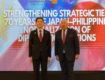
Seventy years after establishing diplomatic relations, the Philippines and Japan have built one of Asia's most durable bilateral partnerships. The next seventy years, however, will demand more than expanded defense cooperation or stronger economic ties. ...

ASEAN-India’s maritime cooperation is one aspect of their broader Comprehensive Strategic Partnership (CSP). They cover vast gamut of areas that include trade, technology, investment, AI, talent, green, sustainability, mobility, connectivity, etc. ...

The governance of undersea cable networks is not really well set up, and control is quite split among different parties. The strategic character of undersea cable routes makes their protection increasingly vital. ...

Research itself cannot create growth, rather its application does. Nepal’s sustained economic transformation should be based on continued practice of research and development, generating knowledge, fostering innovation and building productive human capital inside the country. ...

The global race for semiconductor dominance has proven that the real currency of power is not silicon, but intellectual property. ...

On June 16, 2026, the Pentagon dropped "Indo" from INDOPACOM, reverting to the pre-2018 name Pacific Command. ...

Japan’s immigration framework diverges from a Western-style open-door policy. It embodies a unique regime of strict and conditional inclusion that treats foreign workers primarily through the lens of economic utility. ...

The demographic structure of Sri Lanka after independence has not given the slightest clue about a permanent Jewish population. ...
Nepal's Rasuwa Flooding: The Warning was there but Who Listened?
The most uncomfortable lesson from Nepal’s August 26, 2026 flooding is not that the Himalayas are dangerous. Nepal has always known that. ...