
24 July 2026, NIICE Commentary 12581
Tanmoyee Bhattacharjee
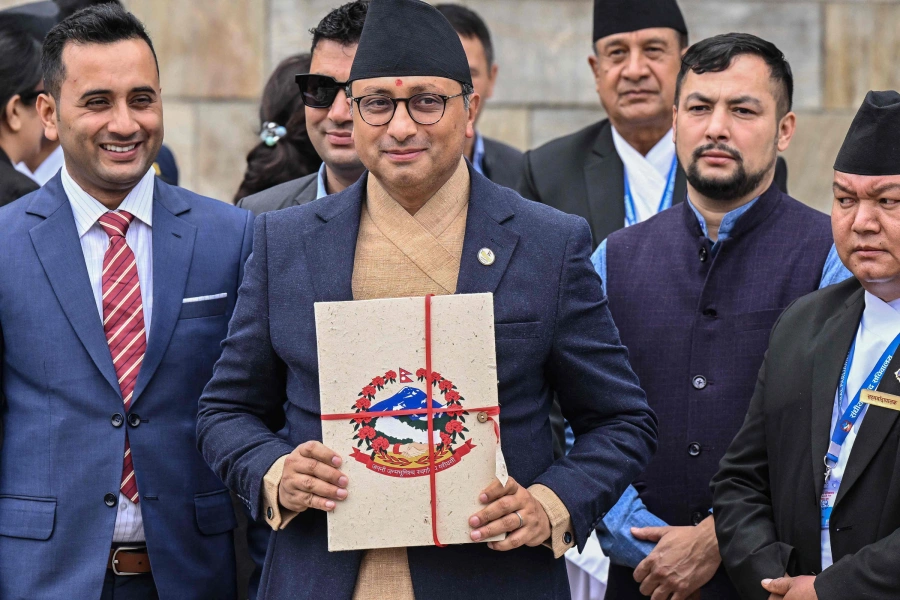
In the evolving landscape of international relations, small states often face the challenge of projecting influence with limited resources. Nepal, historically known for a foreign policy defined by non-alignment and geographical proximity to two Asian giants, is currently undergoing a strategic pivot. The fiscal year 2026/84 budget presented by the government marks a significant departure from traditional administrative foreign policy toward a more proactive, result-oriented approach. With an appropriation of Rs 8.73 billion for the Ministry of Foreign Affairs (MoFA), the government has explicitly signaled that economic diplomacy and the promotion of soft power are no longer secondary concerns but the primary engines of its international engagement. Minister Khanal reiterated, "Government is giving a special focus on economic diplomacy, promotion of soft power and effective mobilization of public diplomacy so that Nepal's image would be bolstered in the international arena." This article explores how this budgetary shift functions as a catalyst for institutionalizing Nepal’s soft power and enhancing its economic utility on the global stage.
Key Details of the 2026 Diplomatic Budget
The 2026 budget allocation for the Ministry of Foreign Affairs represents a calculated effort to modernize the country’s diplomatic apparatus. Out of the total Rs 8.73 billion, Rs 1.55 billion is designated for capital expenditure, while Rs 7.18 billion is allocated to recurrent expenditure. This distribution underscores a dual commitment: sustaining the day-to-day operations of an extensive network comprising 44 embassies, 31 permanent missions and 10 consulates across 183 countries, while simultaneously investing in infrastructure and modern diplomatic tools.
The Foreign Minister, Shisir Khanal, has prioritized several key programs that form the backbone of this new policy. He explicitly identified "economic diplomacy" as a cornerstone of the new administration's policy, focusing on strengthening bilateral trade, investment, and connectivity with both India and China to bolster national economic prosperity, strengthening trade, tourism and investment flows through the active mobilization of diplomatic missions.
From the soft power positioning, initiatives such as the "Lumbini Fellowship," the "International Dialogue Series," and the second edition of the "Sagarmatha Sambad" are designed to boost Nepal’s international stature and cultural footprint. A major focus on digitalizing passport distribution and streamlining services for Nepali nationals abroad, specifically addressing labor welfare, rescue operations, and repatriation efforts. Utilizing the existing network of 183 diplomatic relationships to act as a bridge for regional cooperation and cultural promotion, including leveraging Buddhism (Buddha Jayanti) as a global soft power asset.
Analysis: Nepal’s Journey from Traditionalism to Geo-economics
In his 1918 essay The Crisis of the Tax State, economist Joseph Schumpeter observed that the true nature of a government is never found in its speeches, but in its budgets. He wrote: “The spirit of a people, its cultural level, its social structure, the deeds its policy may prepare - all this and more is written in its fiscal history.” A systemic analysis of Nepal’s 2026 budget represents a transition from traditional diplomacy which historically focused on maintaining peace and sovereign relations to active geo-economics.
For Nepal, which is heavily reliant on remittances and facing obstacles to attract consistent Foreign Direct Investment (FDI), the focus on economic diplomacy is a necessary evolution. By mandating that embassies prioritize trade and investment, the government is attempting to turn its diplomatic missions into commercial outposts. The shift here is from seeing embassies as mere political liaison offices to viewing them as integral components of the national economic value chain.
The budget report highlights amendments to the Foreign Investment and Technology Transfer Act (FITTA), specifically removing prior approval requirements for investment repatriation and expanding the scope of foreign investment to include "project-linked" and "hybrid" instruments. Through these the government is essentially giving its diplomatic missions a market oriented leaning.
The government’s commitment to a 'facilitative' rather than 'regulatory' state is most clearly manifested in the newly announced 'Investment Express' system. By mandating that all critical decisions ranging from tax and customs to visa applications be consolidated under a single-roof Special Economic Administration Zone the state is dismantling the bureaucratic silos that have historically stifled foreign investment.This institutional shift ensures that Nepal’s diplomatic missions now require to effectively portray the country as an investment-ready destination on the global stage.
By mobilizing soft power assets, specifically the cultural significance of Lumbini, the environmental stature of Mount Everest, and the country’s traditions in yoga and meditation, the government aims to bolster its international credibility. Moreover, Nepal possesses immense "intangible" assets, particularly its cultural heritage (Lumbini, the birthplace of Buddha) and its natural beauty. By institutionalizing these through the "Lumbini Fellowship" and the "Sagarmatha Sambad," the state is moving away from event-based cultural promotion toward a sustained public diplomacy strategy. This strategy is critical for Nepal by positioning itself as a hub for international dialogue, Nepal increases its "value" to the international community, thereby gaining political leverage in diplomatic bargains.
The move toward AI-driven e-assessments, digital excise stamps, and mandatory electronic invoice systems reflects a national brand of a “modernising Nepal”. This digital-first strategy creates a narrative that Nepal is a predictable, transparent, and modern destination - a key pillar of soft power.
The budget also highlights the government's sensitivity to the welfare of the diaspora. The budget introduces mechanisms for Non-Resident Nepalis (NRNs) to participate in the secondary stock market, issue diaspora bonds, and co-invest in startups and innovation sectors. It strengthens frameworks for insurance, social security, and labor exploitation control. It also includes a "Returnee Migrant Programme" designed to reintegrate returning workers by leveraging their acquired skills, knowledge, and experience. The government has committed to technological and legal infrastructure to ensure voting rights for NRNs and is formalizing a legal framework to allow remote work for foreign employers while residing in Nepal. The NRNA has expressed gratitude to the government, interpreting the budget as a 'historic and positive' step.
The Way Forward
While the budgetary prioritization is a welcome step, the transition from paper to performance requires addressing several structural challenges. To ensure the budget produces results, the government must implement Key Performance Indicators (KPIs) for embassies.
Missions should be evaluated based on measurable outcomes, such as the volume of FDI facilitated, the number of tourist arrivals from their jurisdiction, and the efficiency of consular service delivery. Economic diplomacy cannot succeed in a vacuum. The MoFA must work in closer tandem with the private sector. Platforms like the "International Dialogue Series" should be used to connect Nepali businesses with global investors, turning diplomatic gatherings into economic deal-making forums. The commitment to technology-friendly passport and consular services is crucial.
Moving forward, the government should invest in a unified digital portal that allows the diaspora to access legal aid and register grievances in real-time, reducing the bureaucratic lag that often hampers diplomatic responsiveness. Programs like the "Lumbini Fellowship" require long-term funding models that can weather political changes. Establishing a dedicated foundation or endowment for these programs would ensure their continuity and institutional memory.
Conclusion
The 2026 budget marks a decisive moment in Nepal’s foreign policy evolution. By anchoring its diplomatic strategy in the bedrock of economic interest and soft power, Nepal is attempting to navigate the complexities of a competitive global environment with greater agency. The success of this policy will not be measured by the number of diplomatic missions alone, but by the ability of these missions to foster tangible economic prosperity and project a positive, modern image of the nation. If implemented effectively, this diplomacy on a budget could transform Nepal into an active participant and shaper of the global economy.
Tanmoyee Bhattacharjee is a Research Intern at NIICE and currently pursuing her Master's at the Central University of Gujarat, India.
