
30 June 2026, NIICE Commentary 12591
E V A Dissanayake
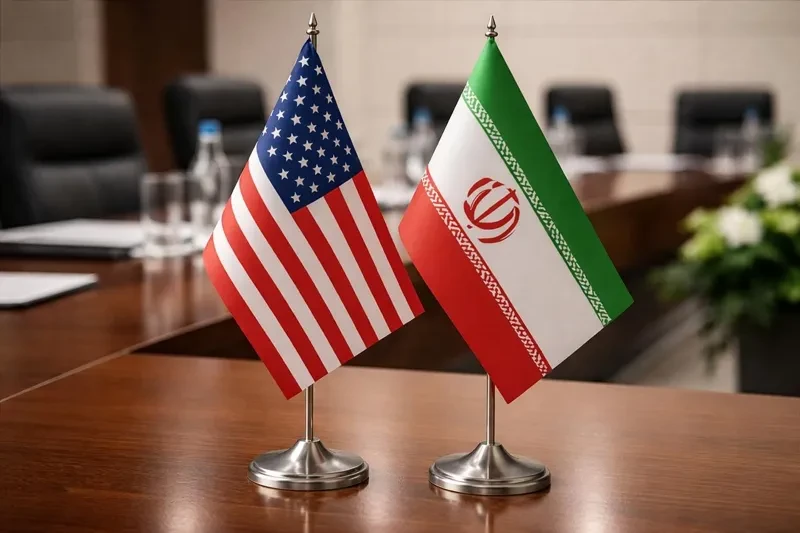
The 14-point U.S.-Iran Interim Peace Agreement, signed on 17 June 2026, was initially framed as a major diplomatic breakthrough intended to halt escalating hostilities, stabilize maritime security in the Gulf, and open a 60-day window for negotiating a comprehensive settlement. However, within weeks of implementation, the agreement has entered a phase of severe strain marked by renewed military strikes, mutual accusations of non-compliance, and unresolved disputes over the Strait of Hormuz and Iran’s nuclear programme. The rapid deterioration of the ceasefire raises a central analytical question: does the agreement represent a genuine strategic breakthrough, or is it merely a temporary and fragile pause in an enduring geopolitical rivalry between the United States and Iran?
While the agreement temporarily reduced the risk of full-scale war and restored diplomatic engagement, subsequent escalations demonstrate that it is best understood as a tactical de-escalation rather than a durable peace settlement. The persistence of structural mistrust, regional security competition, and conflicting strategic objectives continues to undermine its implementation. From a Structural Realist perspective, the agreement reflects the logic of temporary cooperation under conditions of insecurity rather than a transformation of U.S.-Iran relations.
Strategic Context of the Agreement.
The agreement emerged from a period of heightened military confrontation and severe disruption to regional stability. The Gulf region, particularly the Strait of Hormuz, experienced escalating tensions that threatened global energy flows and maritime trade security. As approximately one-fifth of global oil shipments pass through the Strait, any disruption carries immediate international economic consequences. The initial agreement aimed to guarantee open navigation, reduce military escalation, and create a structured negotiation framework addressing sanctions, regional security, and Iran’s nuclear programme.
At the time of signing, the agreement was interpreted as a pragmatic response by both states to escalating costs of confrontation. The United States faced concerns over regional destabilization, energy price volatility, and overextension of military commitments, while Iran faced sustained economic pressure and strategic isolation. In this context, the agreement reflected converging short-term interests rather than deep political reconciliation.
Breakdown of Implementation and Renewed Escalation.
Despite initial optimism, the agreement has rapidly deteriorated due to mutual accusations of violations and renewed military activity. Iran has accused the United States of conducting strikes against Iranian targets in violation of the ceasefire, while U.S. officials have alleged that Iran has launched attacks on American assets and allied positions in the Gulf region. These accusations have undermined trust and weakened the credibility of the implementation framework.
The situation further escalated when Iran reportedly launched drone and missile strikes against U.S. allied positions in Bahrain and Kuwait, prompting retaliatory U.S. military strikes on Iranian territory. These developments signal a collapse in ceasefire discipline and demonstrate the absence of effective enforcement mechanisms within the agreement. Rather than stabilizing the security environment, the agreement has entered a cycle of escalation reminiscent of prior periods of U.S.-Iran confrontation.
A key point of contention remains the Strait of Hormuz. The original agreement required Iran to ensure uninterrupted commercial shipping and eliminate toll-based restrictions. However, disagreements persist over the extent of Iranian control over maritime access and broader questions of sovereignty and enforcement. Similarly, disputes over uranium enrichment limits and verification mechanisms remain unresolved, further complicating implementation efforts.
Diplomatic Strain and Attempts at Salvage.
Despite escalating tensions, diplomatic channels have not been fully severed. Reports indicate that both parties are preparing for renewed talks in Doha, Qatar, aimed at salvaging the ceasefire and restoring the negotiation framework. These discussions reflect a recognition by both Washington and Tehran that uncontrolled escalation carries significant risks, even in the absence of trust.
However, the persistence of military activity alongside diplomatic engagement highlights a pattern of “dual-track behavior,” where states simultaneously negotiate and engage in coercive signaling. This reflects the unstable equilibrium characteristic of adversarial relationships where diplomacy does not fully replace deterrence logic.
Structural Realist Interpretation
From a Structural Realist perspective, the rapid deterioration of the agreement is not unexpected. Structural Realism argues that the international system is anarchic and that states must rely on self-help mechanisms to ensure survival. In such an environment, cooperation is inherently limited by uncertainty regarding other states’ intentions and the absence of a central authority capable of enforcing agreements.
The U.S.-Iran case illustrates this logic clearly. Although both states had incentives to reduce conflict temporarily, neither side could credibly commit to long-term restraint. Once accusations of violations emerged, mutual distrust quickly reasserted itself, leading to renewed escalation. The agreement did not eliminate the underlying security dilemma but merely suspended it under conditions of temporary necessity.
Mearsheimer’s offensive realist perspective further reinforces this interpretation by emphasizing that great powers and regional powers alike seek to maximize relative security and influence. In this context, both the United States and Iran continue to perceive each other’s strategic posture as threatening, particularly regarding military presence in the Gulf, alliances with regional actors, and nuclear capabilities. As a result, any perceived deviation from the agreement is likely to be interpreted as a hostile move, triggering reciprocal escalation.
Regional Implications
The breakdown of the agreement has significant implications for regional security architecture. The Gulf region remains highly sensitive to military escalation due to its concentration of energy infrastructure, maritime chokepoints, and competing regional alliances. Renewed hostilities risk drawing in additional regional actors and exacerbating proxy conflicts.
States such as Saudi Arabia and Israel continue to view Iran’s regional influence and nuclear ambitions as central security concerns. At the same time, Iran perceives U.S. alliances in the region as encirclement strategies. This mutual perception of threat reinforces instability and complicates any long-term peace framework.
The partial reopening of diplomatic engagement, however, indicates that neither side seeks uncontrolled escalation. Instead, both actors appear to be managing conflict intensity while preserving bargaining leverage. This reinforces the idea that the agreement functions more as a crisis management tool than a transformative peace settlement.
Strategic Assessment: Breakthrough or Fragile Pause?
The evidence suggests that the agreement should not be interpreted as a strategic breakthrough in U.S.-Iran relations. While it temporarily reduced confrontation and created a structured diplomatic channel, its rapid deterioration demonstrates the absence of durable trust and enforceable compliance mechanisms.
Instead, the agreement represents a fragile pause shaped by immediate strategic pressures rather than long-term reconciliation. It reflects the logic of deterrence and temporary convergence of interests rather than a shift in the underlying structure of regional politics. As such, it is vulnerable to collapse whenever either party perceives strategic advantage in escalation or believes the other has violated commitments.
Diplomacy under Strain: The Reversion to Strategic Competition.
The U.S.-Iran 14-point Interim Peace Agreement illustrates both the possibilities and limitations of diplomacy in a highly polarized regional security environment. Although it initially reduced the risk of large-scale war and opened pathways for negotiation, subsequent military escalation and mutual accusations have placed the agreement under severe strain.
From a Structural Realist perspective, this outcome is unsurprising. The international system continues to generate insecurity, mistrust, and competitive behavior, particularly in strategically significant regions such as the Gulf. The agreement did not resolve these structural tensions but temporarily managed them under conditions of necessity.
The planned talks in Doha may offer a critical opportunity to prevent further escalation and restore the diplomatic framework. However, unless deeper issues-including nuclear governance, sanctions policy, and maritime security-are addressed, the agreement is likely to remain fragile. Ultimately, the 14-point framework should be understood not as the resolution of conflict but as an unstable and evolving phase in the long-standing strategic rivalry between the United States and Iran.
E. V. A. Dissanayake is an Independent Researcher from Sri Lanka. She is a Robert Bosche Stiftung Fellow and a Visiting Scholar of Columbia University, USA.
