
02 July 2026, NIICE Commentary 12597
Shradha Arjyal Joshi
Cicero once wrote, “The welfare of the people is the highest law.” It remains thoughtful yet relevant today as it was centuries ago. Democracy, in its simplest term, refers to a government formed by the people, for the people, and of the people. The democratic system allows members of society to participate and perform in socio-political and economic affairs. As stated in the Universal Declaration of Human Rights and the Vienna Declaration and Program of Action 1993, the very essence of the democratic foundation lies in the observance of human rights. Democracy is based on the freely expressed will of the people in determining their own political, economic, social, and cultural systems alongside their full participation in all aspects of their lives.
Despite democracy placing people as its sovereign authority, the mechanism in which the power is exercised can differ as per a nation’s social structure and economic development. In contemporary times, development is no longer confined solely to economic and financial growth; it also encompasses socio-political, cultural, and environmental dimensions. Development and democracy go hand in glove with one another. Both of which stem from people’s rights and needs, the interaction between them is dynamic and mutually reinforcing.
A parliament is truly representative of the people in all its diversity and is indispensable for the democratic process. It is essential because it is really reflective of the people in all of their variety. Parliaments, as one of the most important institutions of the state in a democratic system, are vital for the progression of democracy and good governance. It bears the responsibility of ensuring administration by and for the people through their elected member/representatives. Parliament has the democratic obligation to discuss legislation. So, what defines a parliament as the representative body of a country? Certainly, the ability of parliament to serve as a forum for lawmaking, discussion, and expression on issues of either local or national significance, as well as the alteration of such discussions into policies. A parliament is necessary for democracy to exist, but the two are not synonymous. Thus far, it is the most sought-after political system that connects people and the government. A democratic system thrives on the principle of political equality, which states that political power should be dispersed widely and evenly among its people. A democratically elected parliament is the real voice of the people and should be answerable to them. As an essential branch of the government, the parliament has a vital role in defending democracy and good governance by creating standards and norms and maintaining checks and balances. It helps to identify problems and policy challenges that require quick attention and support in overcoming bureaucratic inertia.
Democracy is not merely the right to vote in frequent elections. It also upholds the expectation that the elected representatives will address and resolve various issues troublesome for the public and of national interest. This has become crucial yet challenging in the aftermath of political bedlam, reshaping Nepal’s terrain in 2025 and establishing a new yet political order under Prime Minister Balendra Shah. An unprecedented number of voters, especially young citizens, demanded an end to established political elites and a halt to traditional politics. Their voice was unanimous on ending corruption and establishing an accountable government, reform state institutions. The electoral message remains clear: democracy should produce tangible results, not merely promises.
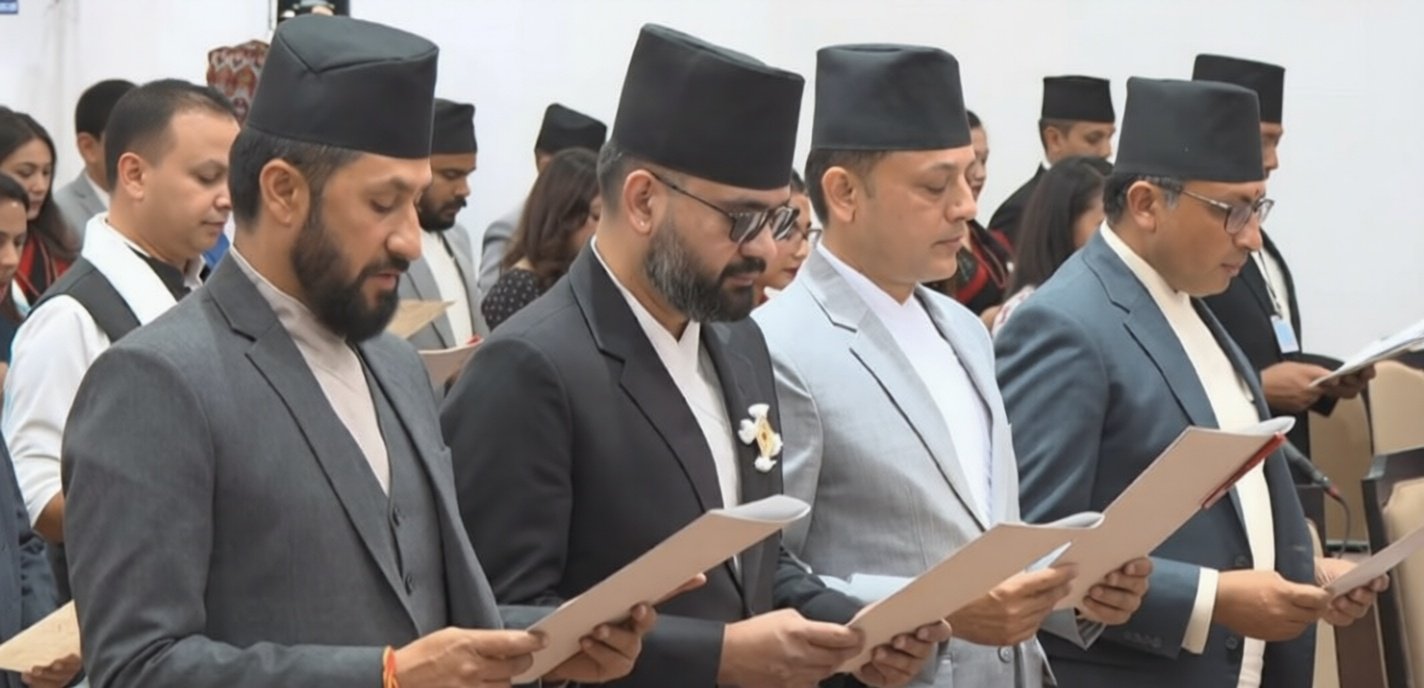
In a dignified and important institution like Parliament, where discussions and debates on policymaking and national issues should take place, it is unfortunate that Nepal’s parliament at recent gathered accusations, counteraccusations, and constant confrontation in the proceedings. The manner in which old and new representatives, political parties are increasingly treating parliament as a political battleground raises serious concerns. When the federal parliament resumed a month earlier, lawmakers were expected to focus on the country’s economic future, but it witnessed political disagreements, procedural conflicts, and controversy surrounding Prime Minister Balendra Shah’s statement on the border issue with India. In a flash, it created public disarray, followed by a strong voice of criticism from foreign policy experts and topographers that a controversial statement from a sitting prime minister to a Parliament was not just inappropriate but wrong; they argued that such a sensitive issue required greater factual precision and diplomatic caution.
It becomes reasonable for the opposition to demand Prime Minister answer on the controversial statement and issues pertaining to national interest. On the other hand, the government shouldn’t avoid characterizing criticism as obstruction. This insufficient interaction among legislators and minimal mechanism to confront conflicting issues has led to recurring turmoil within the parliament.
Democratic accountability demands analysis of government decisions and public statements. The parliament definitely enables opposing viewpoints to question and demand accountability on national issues. Yet when the political conflict continues to dominate lawmaking agendas, critical discussion on socio-economic reform gets pushed aside. Disputes have caused parliamentary activities to be delayed; government officials continue to defend their stances, and oppositions interrupt proceedings. This kind of scenario is now getting frequent and has started to garner public disappointment. There is also skepticism about whether democracy can deliver change to the nation. Political freedom hasn’t yet served to economic transformation as Nepal’s economy still struggles with poor infrastructure, low industrial productivity, unemployment, and limited export competitiveness. During mid-February to mid-March, remittance inflows stood at Rs. 188.64 billion. Remittance has been sustaining the country’s macroeconomic stability, but it also portrays unfortunate baggage as a labor-exporting economy.
Parliamentary discussions and debates make democracy alive. However, the persistent parliamentary conflicts put the risk of policy congestion at a very crucial time when the nation seeks major economic actions such as infrastructural expansions, trade and energy initiatives, and digital transformation. If parliamentary debates and obstructions are prolonged, ultimately, the development suffers. Development without accountability and the rule of law weakens democracy. The challenge, therefore, is not choosing between democracy and development but ensuring that each strengthens the other.
The democratic future relies less on who wins the parliamentary battle and more on whether its political leaders, both in government and opposition, can build consensus for an agenda on development. The present situation demands greater political and democratic maturity from both the government and opposition. Whilst the former needs to demonstrate responsiveness and accountability. The latter must strike a balance between being responsible.
Nepal continues to grapple with the prevalent challenges of unemployment and corruption. Hundreds and thousands of young people are compelled to chase opportunities abroad. On the one hand, they look to the new government with hope; on the other, the persistent economic crisis forces them to leave their homeland and labor on foreign soil as MPs continue to trade charges across the parliamentary aisle. Their worries of daily life continue beyond parliamentary theatrics.
The critical question confronting Nepal’s new political order is therefore not whether democracy can survive, but whether democratic institutions can translate political legitimacy towards promised economic transformation and maintain public trust. Nepal’s development resides not in political competition but in democratic maturity. If the parliament remains trapped in cycles of confrontation and clash of words, the journey of protest to parliament may remain unfulfilled.
Shradha Arjyal Joshi is a Researcher and Development Professional focusing on Political Economy and Diplomacy.
