
5 April 2026, NIICE Commentary 12424
Dr Dayal Singh Satha & Dr Chander Shekhar
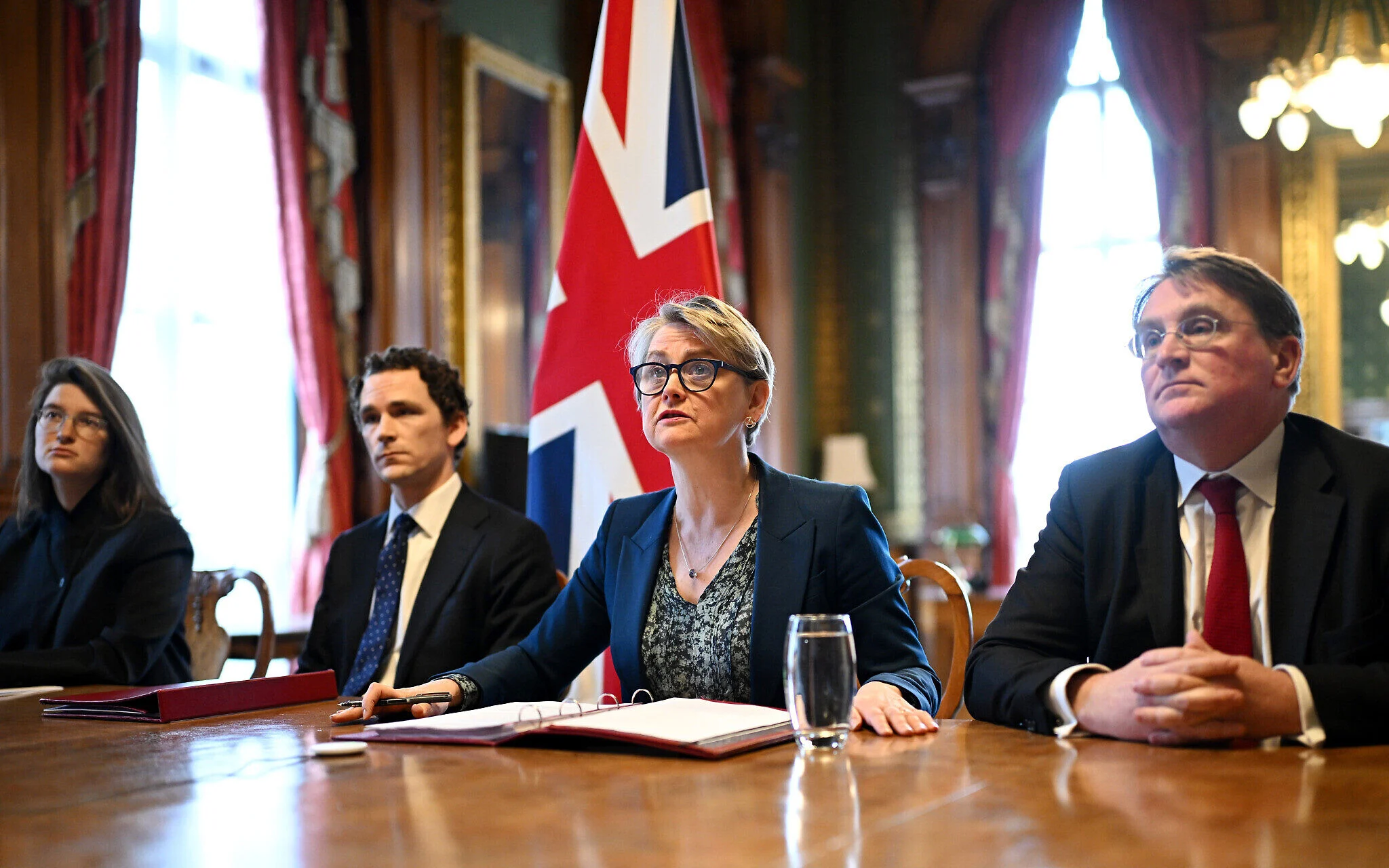
The war in the Middle East has opened up the vulnerabilities of the global economy. The Strait of Hormuz has evolved into another critical narrow chokepoint in global energy supply chains. The Israel-US and Iran conflict has affected the freedom of navigation, which was an anticipated event. The countries, which are dependent on this channel, are most affected as it has grappled them into global inflation and its cascading effects, disturbing existing social harmony and adding future anxiety among states and non-state actors. Given the medium term affects of it, the countries are cautious to deliberate on its potential reopening. The UK Prime Minister had signalled in the past week that the country would host a meeting of nation states to deliberate on reopening the Hormuz and present constructive solutions. On 02 April, the meeting was hosted by the UK on the situation in West Asia and its future effects. More than 60 countries attended the meeting, including several multilateral organizations, such as the International Maritime Organization, the European Union, etc. India was represented by the Foreign Secretary Vikram Misri. The talks mark a significant moment in the ongoing war to de-escalate it from proliferating into other regions and set the stage for dialogue and diplomacy, and avoid converting into a large-scale war.
The Middle East Crisis: Four-Point Action Plan
The UK-led talks issued a chair’s statement as far as the Middle Eastern conflict is concerned. While recognizing the relevance of the Strait of Hormuz in energy supply. It was seen that the maritime transport route, backbone to international trade and commerce, does not just involve supplying natural gas, oil, etc, but also involves the supply of essential products such as fertilizers, which are essential for agriculture and farming in the Global South. The Strait carries around a quarter of global seaborne oil trade and significant volumes of liquefied natural gas and fertilizers.
The closure of Hormuz is “a direct threat” to the international economy, and disruption to the shipping lines has effects on inflation, economic order, humanitarian concerns, etc. According to the statement, ‘Iran has held the global economy hostage, therefore, countries have called for the unconditional reopening of the strait and respect for freedom of navigation’. In the aftermath of talks, the leaders have come up with four-point action plans to deal with the Middle East crisis. This is a multi-dimensional and calibrated response to the unfolding long-term issue.
First, diplomatic pressure on Iran through the UN would push it to permit and provide free transit through the passages.
Second, Leaders agreed that there is a need to explore economic and political options, namely, sanctions, which would force Iran to open the chokepoint.
Third, Collective work with the International Maritime Organization is required for the safety, security and well-being of seafarers, and
Fourth, Joint arrangements between multiple entities need to step up to support greater market and ensure timely information sharing.
Leaders ensure that these options can be utilized “to secure freedom of navigation”. The first two action plans did not work. Sanctioning Iran has been a common phenomenon after the 1979 Islamic Revolution, which led to comprehensive sanctions on Iran and turned two ‘old allies' into bitter enemies. Expanded under the Clinton administration, assertive militarily under the Trump administration, impacted Iran’s political and economic trajectories ahead.
India and Diversification
India, whose energy requirements come mostly from the Middle East and other regions after diversification, is witnessing another test, like the COVID-19 pandemic and the Ukraine-Russia war, to navigate the crisis. It has already deployed early measures to maintain the status quo. Indian Foreign Secretary underscored in the talks the importance of freedom of navigation. He stated that “the impact of the crisis on India’s energy security and the fact that India remains the only country to have lost mariners in attacks on merchant shipping in the Gulf”. Besides, as the voice of the Global South, it is committed to fostering confidence among developing countries and assisting neighbouring countries on request in terms of gas, oil, and other resources. As per the Petroleum Ministry’s spokesperson, “India’s crude supply is secure, and about 70 percent of it comes from outside the Strait of Hormuz”.
In Parliament, the Prime Minister underlined on 23rd March the significance of the Strait of Hormuz, the Middle East, which has been connected with India from ancient times. He has acknowledged that essential items, such as oil, gas and fertilizer, come to India through this route. In the war, it becomes highly challenging. India has always favoured dialogue and diplomacy as the only solutions to the problems. Apart from that, India has also ensured the safety and security of Indian flagged ships and seafarers operating in the Persian Gulf.
Conclusion
The UK-led talks on the Middle East situation are productive and optimistic as it brings diverse stakeholders to address the issues of common security of global energy supply, and offer a pragmatic solution. The opening of Hormuz is in global interest, which though require dialogue and diplomacy between parties, as the use of force would make it worse only. “Operation Epic Fury” has damaged all progress achieved in a few years.
Four Points Action Plan has already demonstrated results, something more needs to be done as Iran is losing trust in the US, Israel, and other Arab countries. Iran is an outlier case, which is not Syria or Venezuela, but a former Civilization and Empire, it knows how to respond Israel and Trump’s military assertiveness and expand it globally.
Dr Dayal Singh Satha is a faculty member at Parul University, Gujarat, India & Dr Chander Shekhar is a Researcher at the Center for International Politics, Organizations and Disarmament, Jawaharlal Nehru University, New Delhi, India.
