
7 April 2026, NIICE Commentary 12432
E V A Dissanayake
Navigating Strategic Vulnerability: Why Maritime Chokepoints Matter
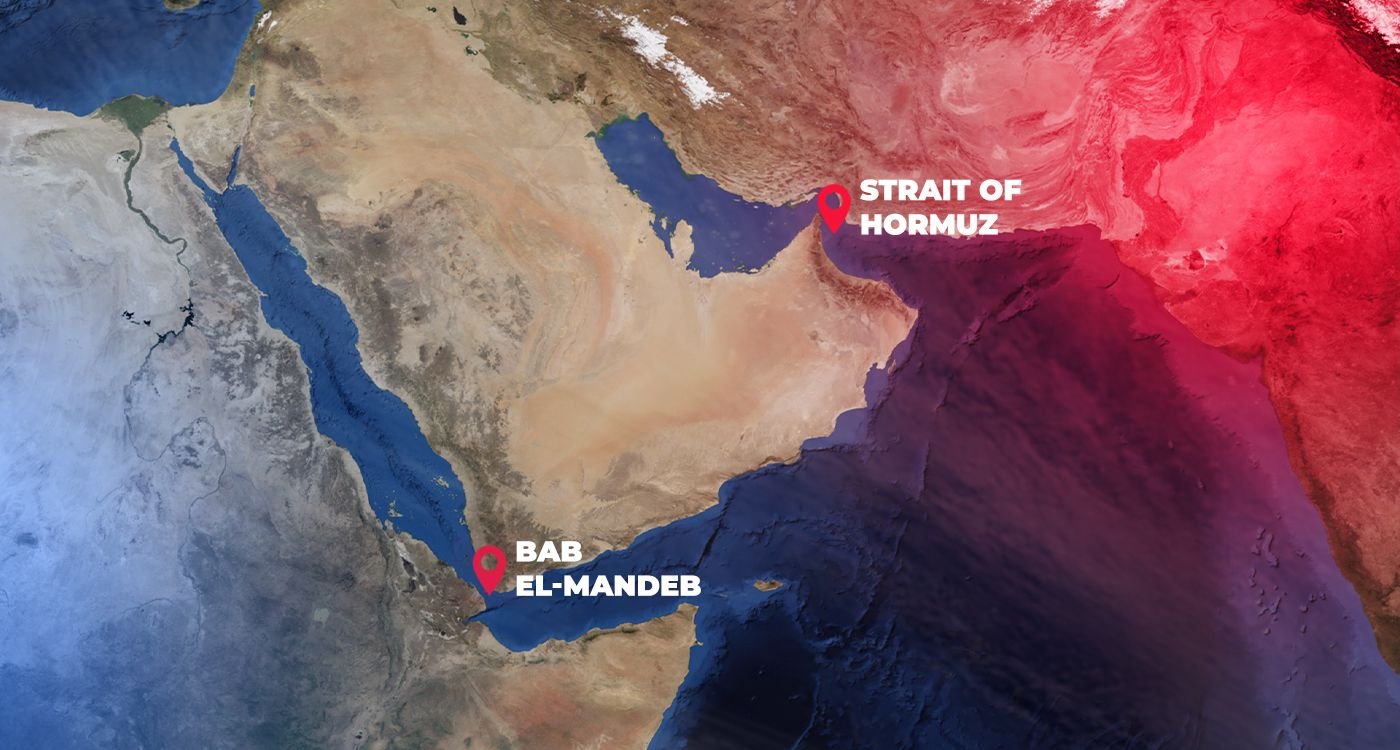
The ongoing Iran war has transformed two of the world’s most critical maritime chokepoints, the Strait of Hormuz and the Bab el-Mandeb Strait, into epicenters of global insecurity. Together, these narrow waterways form the backbone of energy and trade flows connecting Asia, Europe, and Africa. Disruptions in either strait reverberate across supply chains, energy markets, and geopolitical alignments. The current conflict demonstrates how modern warfare increasingly targets maritime infrastructure rather than territory, weaponizing geography to exert strategic pressure on the international system. Understanding the strategic, economic, and security implications of these disruptions is essential for policymakers, industry leaders, and the international community as a whole.
The Strait of Hormuz: An Energy Lifeline Disrupted
The Strait of Hormuz, recognized as the world’s most critical energy transit chokepoint, is a crucial route for roughly 20% of global petroleum and liquefied natural gas (LNG) passing daily under normal conditions. Following joint U.S. - Israeli strikes on Iran, a swift Iranian response repeatedly warned of the closure of the strait to hostile ships and that attacks on transiting vessels would be met with force.
As a result, the partially enforced closure of the Hormuz Strait witnessed dramatic reductions in shipping traffic, spikes in insurance premiums, and global energy volatility. According to satellite tracking and maritime data, vessel transits dropped by more than 70 - 90%, with hundreds of tankers and cargo ships idling in nearby anchorages or rerouting to alternate paths. Rather than imposing a traditional physical blockade, Iran’s strategy has been to harness maritime risk and insurance dynamics to deter commercial shipping, effectively freezing traffic without overt declaration of a blockade.
The reduction in traffic has severe economic implications. Major shipping firms, incurring tens of millions of dollars in weekly costs due to stranded vessels, and the global energy markets are responding with volatility, with oil benchmarks such as Brent crude surging above $100 per barrel, reflecting fears of prolonged supply disruption. The International Energy Agency (IEA) warns that the closure of Hormuz involves “the greatest global energy security threat in history,” given its outsized role in global hydrocarbon flows.
Beyond market impacts, the collapse of routine transit has engendered deep uncertainty in global supply chains. The suspension of routine vessel movements, many of which carry containerized goods, industrial equipment, and critical commodities in addition to energy products, has triggered broader logistical bottlenecks and a spike in war-risk insurance premiums that further depress ship-owner willingness to transit through the region.
Bab el-Mandeb: The Red Sea Gateway at Risk
While Hormuz has dominated headlines, the Bab el-Mandeb Strait, a slender channel connecting the Red Sea with the Gulf of Aden and the Indian Ocean, represents another chokepoint of equal strategic importance. Narrowing to just 26 kilometers at its tightest point, the strait funnels commercial traffic toward the Suez Canal, one of the world’s foremost maritime trade routes.
Under normal conditions, Bab el-Mandeb acts as a critical junction for flows of crude oil, refined products, and containerized freight between Europe, Asia, and the Middle East, with a substantial share of Persian Gulf exports transiting this route en route to global markets. However, the geopolitical shockwaves emanating from the Iran war have elevated this passageway from a strategic waypoint to a potential flashpoint.
Reports indicate that Iran-aligned Houthi forces in Yemen have signaled their readiness to engage in maritime operations supporting Iran, potentially targeting commercial traffic through Bab el-Mandeb if they enter the conflict’s broader theatre. The Houthis previously disrupted Red Sea traffic during earlier conflicts, and their renewed threat raises the likelihood that Bab el-Mandeb could become a secondary maritime front in the broader confrontation between Iran and Western -aligned forces.
If so, the combined vulnerability of both Hormuz and Bab el-Mandeb would compound risks to global shipping. Maritime analysts have warned that the simultaneous compromise of these chokepoints could jeopardize a significant portion of global seaborne oil trade, approaching 25-30% of total crude flows, with ripple effects affecting freight rates, insurance markets, and energy price stability. Even in the absence of a full blockade, as major shipping companies withhold services or reroute around Africa’s Cape of Good Hope, the suspension of routine commercial navigation due to perceived risk can be functionally equivalent to closure.
Dual Chokepoint Vulnerability: Shocks to Global Trade
The combined stress on the Strait of Hormuz and Bab el-Mandeb constitutes a dual chokepoint crisis with profound implications for global commerce. In recent weeks, ship-owners have increasingly diverted vessels away from both the Persian Gulf and Red Sea routes, electing instead to sail around the Cape of Good Hope despite the significant additional time, fuel, and cost such a detour entails.
The financial logic driving such decisions underscores how risk perception, amplified by conflict and insurance market reactions- can alter maritime behavior without the need for formal interdictions. When war-risk coverage is withdrawn or priced prohibitively, the economic viability of Gulf transits collapses, effectively freezing what had been regular flows of energy and goods.
This dual disruption threatens sustained inflationary pressures in importing economies. Higher freight rates and extended transit times elevate costs for manufacturers dependent on just-in-time supply chains, while energy-intensive sectors face pricing shocks that erode competitiveness. Financial institutions such as Barclays have warned that prolonged transit disruption through Hormuz alone could result in losses of 13–14 million barrels per day of export capacity, posing systemic risk to global energy markets.
The human and operational dimensions of this crisis are stark. Thousands of seafarers are reportedly stranded aboard idle vessels, unable to change crews or proceed to ports of call due to both security risks and port congestion. Such conditions not only degrade labor welfare but also erode operational continuity in international maritime logistics.
Strategic Calculus behind Maritime Instability
Iran’s maritime strategy reflects a deliberate leveraging of maritime geography to exert coercive influence well beyond its territorial waters. By effectively controlling access to the Strait of Hormuz and signaling potential proxy action in Bab el Mandeb, Tehran can shape global energy flows without engaging in overt, full-scale naval warfare.
This strategy transforms maritime geography into a tool of coercive diplomacy. Rather than confronting adversaries directly, Iran can impose costs on the global economy, thereby pressuring external powers to seek de-escalation. Targeting shipping lanes allows Iran to bypass conventional military asymmetries.
The use of proxy forces, such as the Houthis, as extensions of Iranian strategic intent exemplifies how non-state actors are embedded in modern geopolitical competition. These dynamics blur the traditional dichotomy between state and non-state conflict, creating zones of hybrid maritime insecurity where commercial traffic becomes an instrument and a victim of broader geopolitical struggles.
Beyond Energy: Broader Impacts on Global Supply Chains
The reverberations of chokepoint disruptions extend far beyond crude oil markets. Container shipping lines have introduced war-risk surcharges and suspended bookings for Gulf transits, disrupting the flow of manufactured goods, electronics, and consumer products that also rely on these corridors. Freight cost inflation has begun to be passed through supply chains, contributing to higher costs for producers and consumers worldwide.
Moreover, delays and rerouting impact perishable goods, intermediate inputs for global manufacturing, and raw materials that anchor broader economic activity. These pressures threaten to slow global growth and accentuate existing vulnerabilities in supply networks already strained by pandemic after-effects and geopolitical fragmentation.
Securing Maritime Lifelines: Strategic Policy Imperatives
The Iran war underscores the critical importance of maritime chokepoint security in the twenty-first century. For the international community, responding to this dual chokepoint crisis demands coordinated multilateral action. Proposals for international naval task forces, enhanced information-sharing mechanisms, and legal frameworks to safeguard neutral shipping must be pursued in parallel with diplomatic efforts to de-escalate hostilities.
Beyond military measures, energy-importing states must accelerate diversification of supply routes, bolster strategic petroleum reserves, and invest in alternative transportation infrastructure to mitigate over-reliance on a limited number of narrow passages. Strengthening regional cooperation among Indian Ocean states, East African littoral countries, and Gulf partners could also provide contingencies that buffer global commerce against similar crises in the future.
Geopolitics, Maritime Risk, and Global Stability
The twin chokepoint crisis at the Strait of Hormuz and Bab el-Mandeb illustrates the profound ways in which regional conflict can disrupt global trade and economic stability. What began as a localized confrontation has reverberated through global supply chains, energy markets, and shipping networks, revealing the fragility of interconnected economic systems in the face of maritime insecurity.
Ensuring the security of these vital sea lanes is not merely a regional concern but a global imperative. The current crisis reinforces the need for resilient infrastructure, diversified logistics routes, and robust international cooperation to manage and mitigate the strategic use of geography in modern conflict.
E. V. A. Dissanayake is an Independent Researcher from Sri Lanka. She is a Robert Bosche Stiftung Fellow and a Visiting Scholar of Columbia University, USA.
