30 March 2026, NIICE Commentary 12300
Kaustav A. Dass
Remote working has been a concept which has been in existence since the 1970’s when NASA engineer Jack Nilles coined the term “telecommuting” and eventually workers from IBM started working from home to test the effectiveness of telecommuting, what started as an experiment turned to be a norm in 2020 when the pandemic hit and today with many companies trying to shift to fully remote or hybrid model of work citing several factors such as work-life balance- Sri Lankan Government has seen this as an opportunity to bolster not only its tourism but also a long term economic plan which is to be built on a reliable revenue generator.
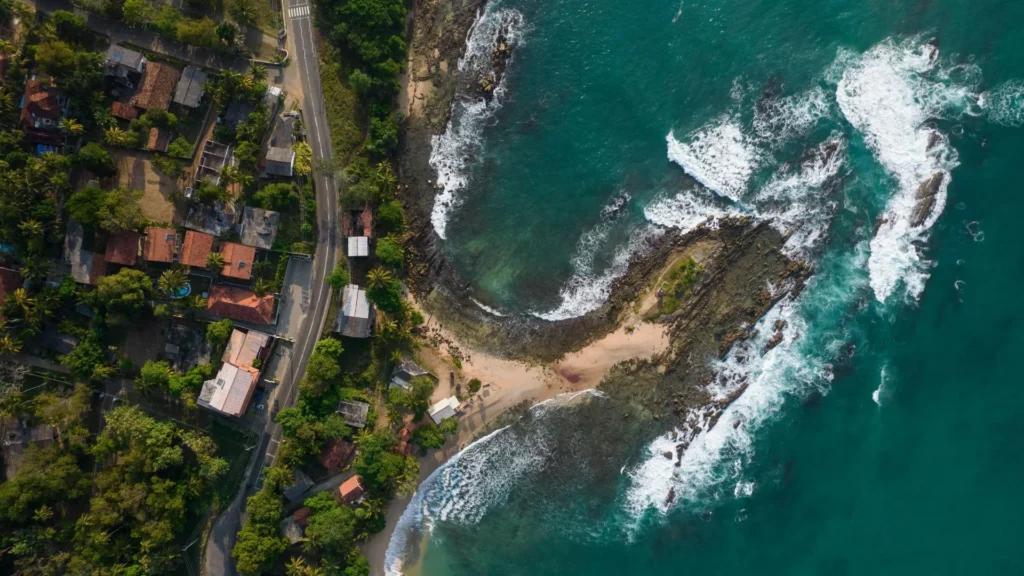
Tourism in Sri Lanka
Tourism has played a central role in the Sri Lankan economy, being the third largest Foreign Exchange contributor. In the year 2025, Sri Lanka witnessed a surge in tourist arrivals by marking a 17.6% year on year increase.
Recently, in a tourism exhibition event held in India, Prof. Ruwan Ranasinghe, the Deputy Tourism Minister of Sri Lanka, during a panel discussion and interviews, stated that the Sri Lankan Government has targeted 3 million tourists to visit Sri Lanka, out of which 750000 tourists are targeted from India.
In terms of revenues, the Government of Sri Lanka has set a target of $4 Billion tourism revenue for the year 2026. While the Government of Sri Lanka has been working on making the tourism sector more efficient, it is also trying to use it as a gateway for attracting investments apart from the hospitality sector, and the Digital Nomad Visa seems to be the pathway to that vision.
Origins of the Digital Nomad Visa and Impact
The system of Digital Nomad Visa was first implemented in Estonia, with the origins traced to their “E-Residency” initiative implemented in 2014, which gave companies the liberty to hire skilled workers and operate businesses without them being physically present in Estonia. Implementation of this step led to the establishment of over 30,000 Estonian companies. Eventually, as the COVID pandemic hit in 2020 and led to lockdowns, the Government of Estonia at that time implemented the “Digital Nomad Visa”. As the beneficiaries of this initiative used to stay within Estonia, the revenue from housing rents led to a positive impact for the property owners in the country.
Adoption in Sri Lanka
Sri Lanka has already been receiving a considerable number of tourists. During the initial stages of this year (2026), around 1,31,898 tourists had already visited the island nation and exceeded the trends of the year 2025. The introduction of the Digital Nomad Visa will build on a sector that has already consolidated and helped sustain the Sri Lankan economy.
As per Hans Wijayasuriya, who serves as Advisor to Hon. President of Sri Lanka, Mr. Aruna Dissanayake, the Government of Sri Lanka intends to increase the Digital Economy to $15 Billion within the next 4 years. With the Digital Nomad Visa Scheme, tourists/ Non-Sri Lankans can have extended stays and continue their work remotely while renting accommodations as well as local schooling for their children.
While tourists looking to have extended stays in Sri Lanka will definitely be taking advantage of the benefits, many of the companies can avail this opportunity to have their presence in the island nation without the need for physical infrastructure. As the companies and their employees adapt this process, there is also a possibility that the same companies would like to tap into the Sri Lankan workforce, especially the youth, looking for remote working opportunities.
Initiative to boost the Digital Economy
This initiative seems in line with the vision of the Sri Lankan Government to work on its digital economy, as in January 2026, the Government of Sri Lanka received a $50 million grant from the World Bank to support its digital transformation initiative. Working on that phase, in March 2026, the Sri Lankan Government had reported that they are in the final phase of implementing the digital biometric system, post which the citizens will be able to avail banking, welfare, and other services without the need to visit Government Offices. Government officials are of the opinion that once Governance is digitized, there will be demand for digital solutions and services and more aspiring entrepreneurs will be encouraged to start digital-based companies.
Future of Sri Lankan Artificial Intelligence
Artificial Intelligence has been another integral domain on which the Government of Sri Lanka has put specific emphasis for an efficient Digital Economy. In January 2025, Deputy Minister of Digital Economy Mr. Eranga Weeraratne held a stakeholder meeting which was attended by Ms. Malin Herwig (Deputy Resident Representative, UNDP Sri Lanka) and experts from the domain of AI (Artificial Intelligence), and several aspects regarding security, privacy and implementation of AI were discussed. Incorporating the inputs from the session, the policy was approved by the Cabinet of Ministers in June 2025 and announced during the National AI Expo in September 2026.
Subsequently, the President of Sri Lanka, Mr. Anura Kumara Dissanayake, visited India during the AI Summit 2026 on invitation from Prime Minister of India, Narendra Modi, and engaged with AI domain experts and companies, and took part in the Leader’s Plenary, highlighting the need to reduce the gap between AI empowered nations and others. These steps indicate that the Government is diversifying its revenue streams in a sustainable and adaptable way from the traditional tourism economy by establishing it as a Foundation.
Kaustav A. Dass is a Personal Assistant to the Hon. Consul General of Sri Lanka (Consulate General of Sri Lanka in Mumbai, India).