
14 May 2026, NIICE Commentary 12497
Augustine R K
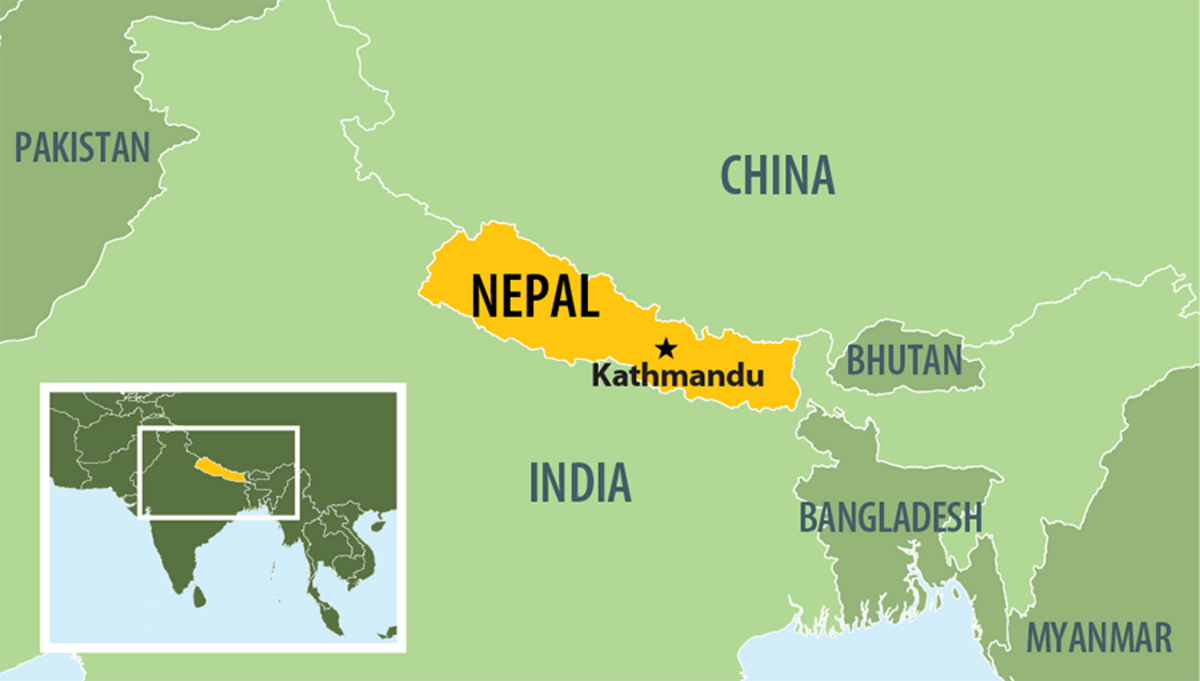
Nepal’s geopolitical position is often framed as one of constraint, reflecting the challenge of strategic neutrality for small states situated between major powers. Yet, the challenge isn’t just being between the two giants, India and China, but it’s managing that position better than the giants can leverage it. The challenge is further complicated by the need to maintain internal coherence, a condition that influence Nepal's actual ability to sustain foreign policy continuity.
The formation of a new government in Nepal has brought the country's foreign policy priorities back into focus. In practice, Nepal does not operate within a symmetrical geopolitical environment. Its external relations are characterised by structural asymmetries in trade, transit, and geography, which limit the possibility of equal balance with its two neighbours. The 1950 Nepal-India Treaty of Peace and Friendship is a key instrument in sustaining long-term bilateral relations between the two countries, while the 1960 Treaty on Trade and Transit formalised the freedom of transit route. However, on the other side of the equation, these treaties deeply integrated Nepal with India, ranging from open borders to economic cooperation to culture, established a dependency framework, that for now, is logistically inescapable, as “almost entire” (approximately 90%-98%) of Nepal’s third-country trade transits pass through India. While China's current engagement with Nepal is focused on big infrastructure projects through its global development strategy, critics argue that China’s central Nepal policy is driven by security requirements. Yet these relationships are constrained by geography. These constraints mean that Nepal’s ability to operationalize a fully balanced hedging strategy remains limited in practice, even if diversification efforts continue. In addition, there are overdependence risks, such as economic pressure (for example, the 1989 economic blockade and 2015 India's ‘unofficial blockade’ against Nepal), political influence through tight ties, and potentially limited policy independence. In response to India's unofficial blockade in 2015, Nepal inked a Transit Transport Agreement (TTA) with China in 2016 to reduce dependence on Indian ports for third-country trade. The proposed Trans-Himalayan Multi-Dimensional connectivity network, which is part of China's Belt and Road Initiative (BRI), is strategically viewed as a potential alternative to the near-total reliance on Indian transit routes. Nonetheless, the 2023 Nepal-India Transit Treaty and the 2025 Nepal-India Letter of Exchange (LoE) indicate India's willingness to reestablish confidence with Nepal in opposition to the growing Nepal-China relationship. In this regard, the transit options presented by both India and China appear to indicate that geography is no longer a challenge for Nepal; however, transit politics will continue to play an important role in the regional geopolitics of Nepal, India, and China, as the limit of success is directly linked to India and China.
Similar ‘in-between’ countries like Mongolia or Bhutan present a significant lesson on how foreign policy is practiced under constraint. Nepal and Mongolia are in a similar geographical situation as both are stuck between two big powers. Mongolia is situated between Russia and China, however, unlike Nepal, Mongolia has a ‘Third Neighbor Policy.’ It had established ties with the US, Japan, South Korea, North Korea, and the EU to add “value to the acts of cautious balancing of Russia and China, and the projection of Mongolia’s place in the international arena,” despite often interpreted “as a euphemism of a pro-United States (US) stance.” Mongolia has clear separation from both Russia and China with no open borders or deep societal integration, and it is actively balancing with third partners. While, Nepal had attempted for similar diversification as Mongolia, but Nepal’s situation is defined by extreme economic dependence, physical dependent for trade access, and deeper cultural integration with India. In the case of Nepal and Bhutan, both are Himalayan state between India and China. Bhutan has limited engagement with China, and is closely align with India with a trade-off for more security, and reduced autonomy, prioritising security through reliance. Unlike Bhutan, Nepal tries to balance between India and China, and while this gives Nepal has more strategic freedom than Bhutan, it also comes with more pressure and risk. Furthermore, Nepal’s geography differs from the two countries in that Mongolia has open steppe terrain, making both Russia and China accessible; Bhutan is more insulated and leans south; however, Nepal had difficult geography (unlike both), and the combination of high dependence (like Bhutan), active balancing (like Mongolia), and a more constrained situation (unlike Mongolia) creates a highly unique strategic challenge. It is perhaps the most complex of the three, as it must simultaneously reduce dependence, maintain balance, and overcome geographical barriers.
Given the distinctive asymmetric challenges, which reinforce imbalance, Nepal’s experience highlights the limits of viewing strategic neutrality as a symmetrical balancing act between India and China. In this sense, Nepal’s strategic space lies not in eliminating asymmetry, but in actively shaping how it is distributed and experienced. ‘India first, but not India only’ approach by engaging both India and China whether through transit, infrastructure cooperation, or trade diversification could help Nepal to develop long-term alternative routes and partners despite the short-term limitations. This positioning may allow it to selectively accommodate overlapping interests, thereby converting geopolitical pressure into limited strategic leverage.
It could also adopt a hard cap rule to define informal limits so that no single country dominates in areas such as trade, infrastructure financing, and in strategic sectors (e.g. energy, telecom, hydropower). On the other hand, instead of simply being ‘landlocked,’ it can turn geography into its advantage by relying on the concept of “balancing” or as a “land-linked” bridge economy between the two giants, but it often lacks operational clarity. Within the external environment, it frequently focuses on external options to leverage partnerships into regional relevance without taking into account the domestic political instability and institutional conditions that influence Nepal's actual ability to maintain foreign policy continuity. Therefore, without clear economic logic, institutional capacity and internal stability, “land-linked” bridge economy narratives illustrate rhetorical rather than transformative, and at the same time, Nepal cannot be a “bridge” unless both neighbors allow it.
Nepal’s geopolitical tightrope and engagement with both India and China as equal strategic variables can be understood as a management of different forms of influence, rather than a pursuit for perfect balance. Even within a neutral framework, India is likely to remain more embedded in Nepal’s economy due to structural dependency, and China’s role will continue to be more project- and investment-driven. Strategic neutrality, therefore, doesn’t mean to erase asymmetry, but its strategic management, as the goal is not to eliminate influence, but to ensure that no single influence becomes dominant.
In this context, Nepal's strategic shift lies not in reducing or fighting dependence outright, but in managing and diversifying it gradually. The effectiveness of this strategy will depend on Nepal’s capacity to manage this asymmetry with consistency and moderation, backed by institutional stability and policy continuity; otherwise, the approach can be compromised, regardless of intent.
Augustine R K is an independent researcher who holds an LLM in International Relations from Peking University, China.
