
22 January 2025, NIICE Commentary 12275
E V A Dissanayake
The international system is currently at a critical juncture, characterized by a shift away from unipolarity toward a more fragmented, multipolar landscape. At the heart of this transformation is BRICS, a grouping that has transitioned from an economic concept into a formidable political coalition.
As India prepares to assume the BRICS chairmanship in 2026, the group faces a profound paradox: the office of the chair possesses immense narrative-shaping influence but remains devoid of coercive authority. The success of New Delhi’s leadership will be measured by its ability to navigate the competing visions of global order held by core members while managing the structural risks of institutional overstretch. This commentary examines the evolving role of BRICS in this era of systemic uncertainty, arguing that India’s tenure is a pivotal test of whether the bloc can move beyond its internal heterogeneity to effectively voice the pragmatic demands of the Global South through "Building Resilience and Innovation for Cooperation and Sustainability."
BRICS in an Era of Systemic Uncertainty
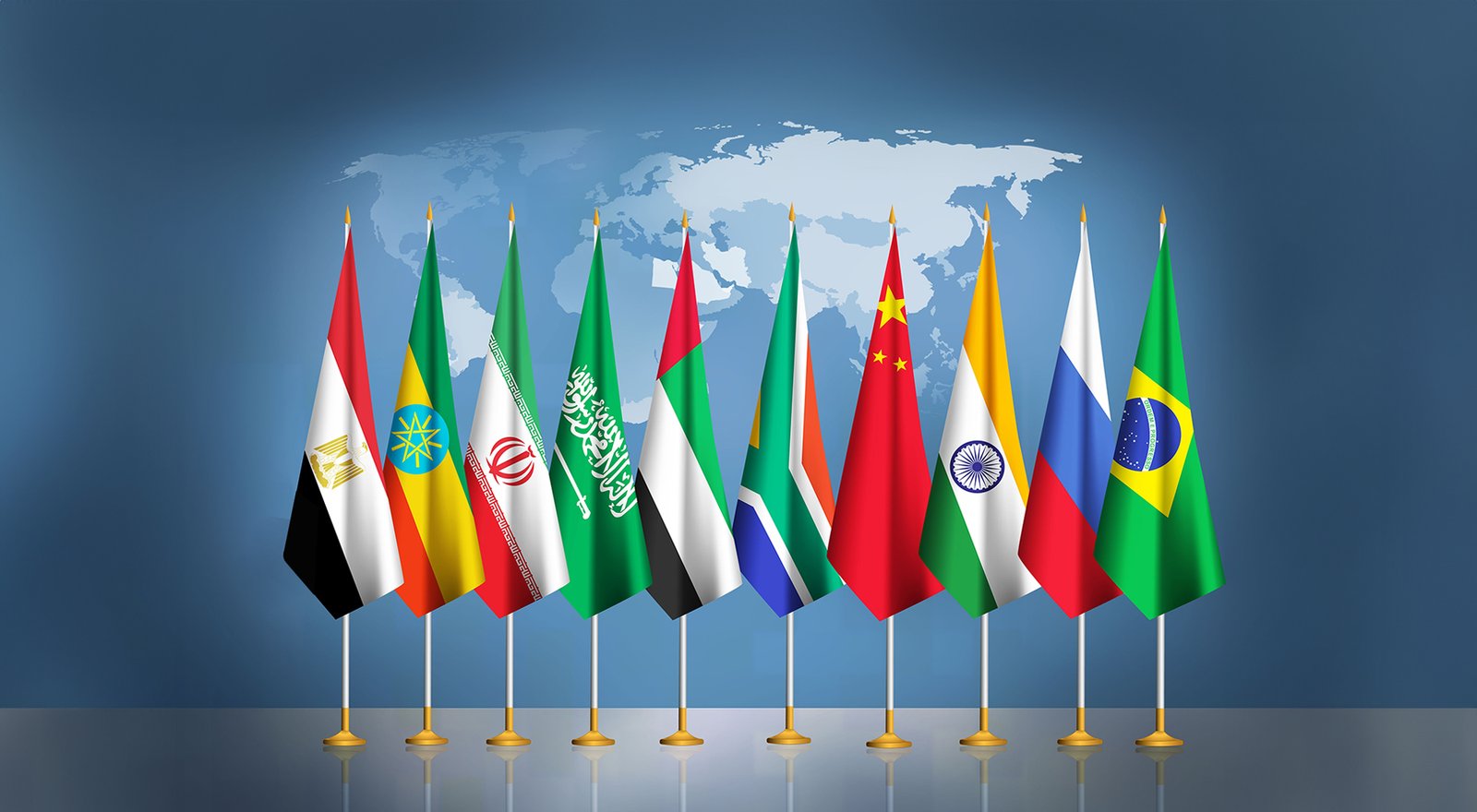
The international system is currently undergoing a period of profound transformation. Strategic competition among major powers, a declining confidence in global institutions, and the growing assertiveness of the Global South have intensified debates over the future architecture of global governance. Within this landscape, BRICS, originally comprising Brazil, Russia, India, China, and South Africa, and now expanded to include additional members, has emerged as a prominent forum for non-Western states to articulate demands for greater representation in international affairs.
While the recent expansion has strengthened the group's symbolic legitimacy, it has also magnified internal divergences. These differing national priorities raise questions about the grouping’s capacity to act collectively even as its global visibility increases. In this environment, the 2026 chairmanship under India acquires particular significance. Although the chair confers no coercive authority, it provides substantial agenda-setting influence. As stated by the Minister of External Affairs, S. Jaishankar (2023), BRICS remains one among a “plethora of ad hoc arrangements” rather than a central pillar of foreign policy, underscoring both the flexibility and limitations of the chair in guiding the grouping’s narrative.
BRICS after Expansion: Scale without Coherence
The recent enlargement of BRICS represents a pivotal moment in its evolution. The inclusion of new members such as Egypt, Ethiopia, Iran, the United Arab Emirates, and Indonesia has enhanced the group's economic weight and symbolic reach. The expansion of the bloc has significantly bolstered its symbolic legitimacy and collective economic weight. Collectively, BRICS now accounts for a substantial share of the global population and GDP.
Nevertheless, numerical growth has not yet translated into the group’s strategic coherence. As the expanded grouping brings together states with divergent political systems and foreign policy objectives, it simultaneously becomes exposed to deep-seated strategic divergences among its members.
While some members view BRICS as a platform for reforming existing institutions, others see it as a counterweight to Western frameworks. This diversity creates significant challenges for unified action. Consequently, analysts emphasize that the group's strength lies more in its normative influence than in its formal institutional capacity.
The BRICS Chairmanship: Influence without Authority
The potential of the chairmanship must be understood through its structural limitations. BRICS functions on consensus, lacks a legal charter, and has no enforcement mechanisms. Thus, the chair cannot impose policy outcomes. Instead, influence is exercised through the determination of thematic priorities, the scheduling of high-level interactions, and the framing of summit declarations.
For India, the current chairmanship underscores a preference for flexibility rather than ideological alignment. This approach views BRICS as a forum for dialogue rather than a hierarchical organization, a perspective that aligns with ongoing debates regarding the grouping's true purpose.
Competing Visions and Strategic Risks
BRICS is animated by multiple, often competing, interpretations of the global order. China frequently positions the group within a multipolar narrative that complements its infrastructure initiatives, while Russia utilizes it as a diplomatic counterweight to geopolitical tensions. Conversely, members like Brazil and newer entrants often favor a reformist approach, seeking greater participation in existing governance structures rather than their total replacement.
These structural constraints and persistent geopolitical tensions represent significant ‘fault lines’. Furthermore, there is a risk that BRICS could become primarily reactive, defined more by its opposition to Western initiatives than by a positive, coherent agenda. While the chairmanship can provide procedural continuity and moderation, it cannot unilaterally resolve these deeper strategic divergences.
BRICS at a Crossroads
BRICS stands at a pivotal moment. Expansion has increased its visibility but exposed fundamental questions regarding strategic clarity. The current chairmanship offers a vital opportunity to stabilize the grouping, ensuring it remains a platform for negotiation and coordination.
While BRICS is unlikely to transform the global order in the immediate future, it retains a potent capacity to influence the normative environment and sustain pressure for institutional reform. The success of the chairmanship will serve as a test of whether the grouping can reconcile its internal diversity with purposeful global engagement.
E. V. A. Dissanayake is an Independent Researcher from Sri Lanka. She is a Robert Bosche Stiftung Fellow and a Visiting Scholar of Columbia University, USA.
