


The GenZ Uprising: Causes, Consequences, and the Road Ahead
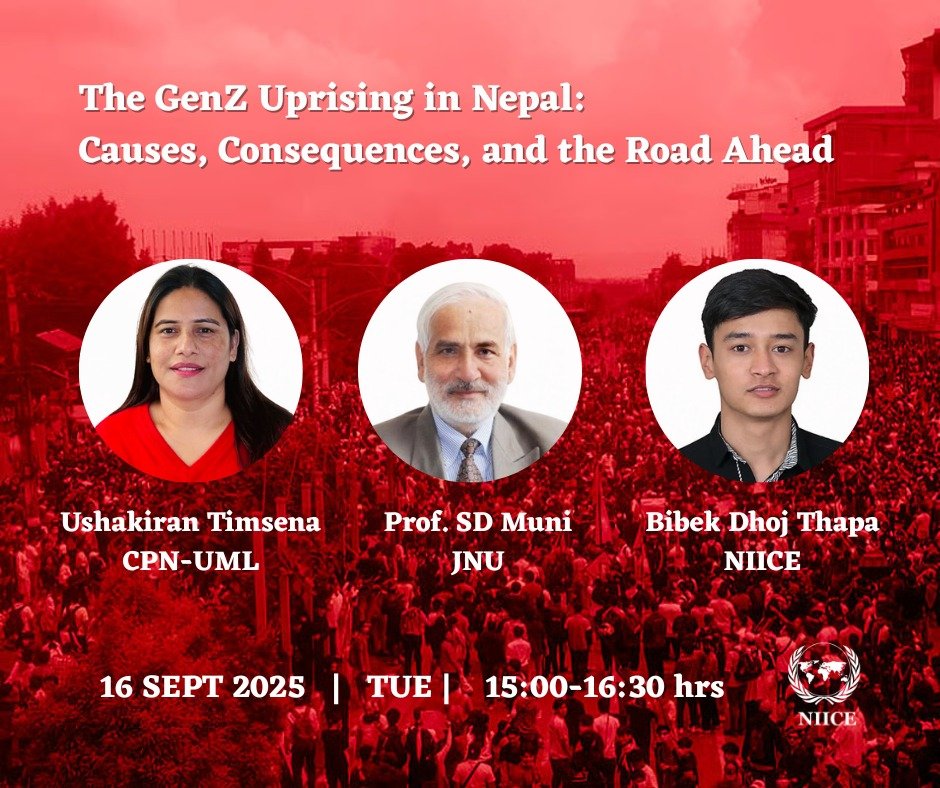
On 16 September 2025, a webinar was convened by Nepal Institute for International Cooperation and Engagement (NIICE), a dialogue series, focused on the Genz uprising, causes, consequences, and the future, featuring three distinguished speakers: Prof. S.D. Muni, Professor Emeritus at Jawaharlal Nehru University and a leading authority on South Asian politics; Usha Kiran Timilsina, a central committee member of the CPN-UML and a rising political figure advocating for accountability and reform; and Bibek Dhoj Thapa, Program Coordinator and Research Associate at NIICE, whose research focuses on technology and international relations.
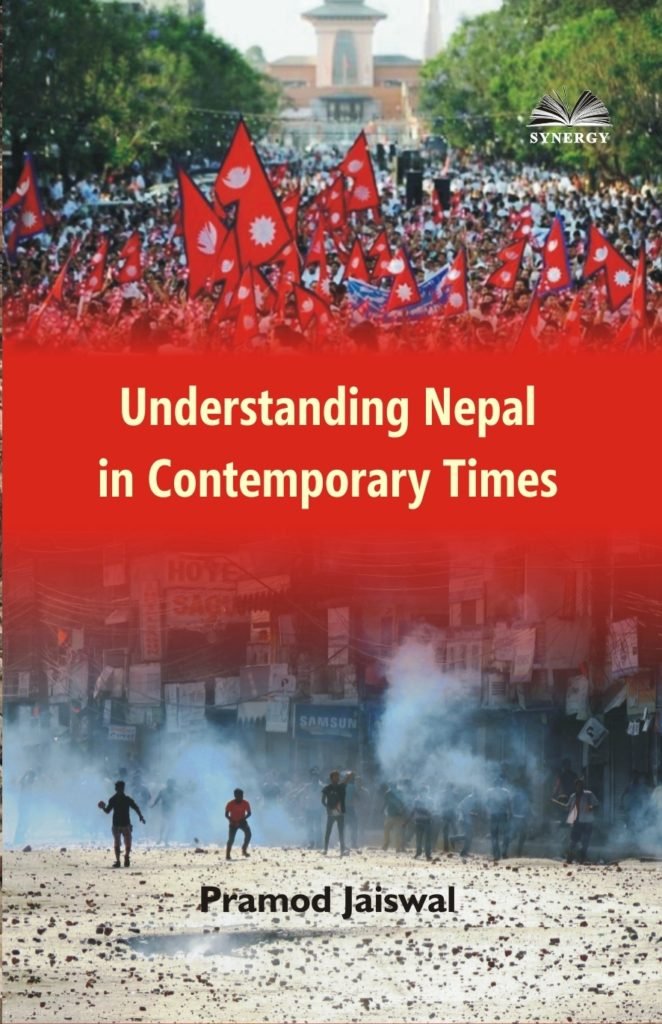
Speaking as a representative of Nepal’s Generation Z, Bibek Thapa situated the protests within the larger historical trajectory of Nepal’s civil transition and constitutional promulgation. Thapa argued that corruption has become deeply institutionalized, with political leaders protecting themselves while ordinary citizens are left powerless. Thai institutionalized corruption, he noted, has left the public with undeniable proof of wrongdoing and a growing sense of frustration. According to Thapa, this frustration erupted into protests, which were later met with state violence. The principle of reasonable force was disregarded as protesters were subjected to tear gas and live ammunition, leading to the deaths of many young demonstrators. Thapa condemned this act as a direct violation of freedom of speech and democratic rights. Additionally, Thapa explained that Generation Z does not want a repetition of past failures and believes that Nepal’s political leaders have long proven themselves incompetent. Thapa emphasised the need for thorough investigation, the imposition of term limits for the prime minister, ministers and members of parliament, and political reservations for young people so that new leaders can bring about changes as needed in the contemporary system. For Thapa, this is a decisive moment for Nepal’ youth, including those living abroad, to return and work toward changing the country for the better.
Usha Kiran Timilsina framed the protests as part of a longer chain of discontent that dates back to the promulgation of the constitution. Timilsina argues that citizens’ dreams and expectations have consistently been left unfulfilled, leading them to lose faith in established political parties. The repeated dissolution of parliament, even under majority governments, contributed to this erosion of trust, while government data further confirmed the persistence of corruption at the highest levels. Within Timilsina’s party, Timilsian admitted that many theoretical commitments never translated into practice, which only deepened the public’s skepticism. For Timilsina, the way forward lies in restructuring Nepal’s politics and focusing on rebuilding trust between parties and the people. Timilsina stressed that credible elections must be prepared in a way that restores legitimacy, and that the youth, who have emerged as the real opposition in Nepal today, are central to this process. Unlike past leaders, whose agendas were often self-serving, Timilsina pointed out that young protesters have demonstrated clarity of purpose and vision. In responding to questions about the future of political parties, Timilsina stated that survival depends on whether they can act selflessly, accept citizens’ voices, and genuinely commit to change.
Prof S.D. Muni began by questioning the degree to which political leadership bears responsibility for the current crisis. Muni traced Nepal’s political instability back to the anti-Rana revolution, emphasizing that personal ambition and vested interests have consistently undermined democratic aspirations. Muni noted that young people have historically been at the forefront of political transformation in Nepal, citing figures like B.P. Koirala and Girija Prasad Koiral . Yet today’s Generation Z, Muni observed, is unique in being more confident, globally exposed, tech-savvy, and passionate. Muni warned, however, that unless young people develop a coherent agenda and engage directly with entrenched interests such as the bureaucracy and business elites, their movement risks losing direction. Additionally, Muni stressed that ideological clashes within Nepal’s politics must be set aside in favor of a broader roadmap for national welfare and development. Without such a roadmap, he cautioned, even the most passionate protests will fail to achieve meaningful results.
Turning to external dynamics, Muni reflected on India’s role in Nepal’s political trajectory. While India often claims to act on the basis of ideals, Muni argues that is foreign policy is usually shaped by strategic interests. Nonetheless, Muni pointed out that India and Nepal share civilizational cultural ties that cannot be overlooked, and he expressed hope that future Indian governments would support a confident and progressive Nepal Furthermore, responding to a question on geopolitical rivalry, Muni interpreted the Dalai Lama’s recent remarks as a sign of China’s deep sensitivities regarding Tibet and Nepal’s role in the region. He argued that both India and the US would resist the consolidation of Chinese influence in Nepal, especially near the Tibetan border. Muni further placed Nepal’s protests in a regional context, drawing parallels with youth-led movements in Sri Lanka and Bangladesh, where the government perceived as pro-China also faced mass discontent.
Overall, the webinar underscored three interconnected perspectives on Nepal’s democratic trajectory. Bibek Thapa represented the urgency and determination of Generation Z, calling for accountability, reform, and youth inclusion in politics. Usha Kiran Timilsina highlighted the internal failings of established parties while stressing the need for restructuring and trust-building. Prof. S.D. Muni provided historical depth and a geopolitical lens, urging Nepal’s youth to pursue a coherent roadmap that can balance domestic reform with external pressures. Together, the discussion emphasized that while corruption, failed leadership, and geopolitical rivalries continue to weigh on Nepal’s political future, the mobilization of young people offers a critical opportunity for change. Whether this moment becomes a turning point will depend on how effectively the youth can channel their frustrations into constructive reform and how political parties and regional actors respond to their demands.
Recent Comments