25 September 2026, NIICE Commentary 12755
Shaad Warsi
The Exhaustion of the Non-Proliferation Bargain
The global nuclear governance architecture is experiencing profound structural exhaustion. Established during the height of the Cold War, the NPT (Nuclear Non-Proliferation Treaty) was anchored to an explicit, reciprocal compromise: non-nuclear weapon states renounced nuclear devices in exchange for unhindered access to peaceful nuclear technology, while the five recognized nuclear weapon states committed under Article VI to negotiate nuclear disarmament in good faith. When the treaty was granted an indefinite extension during the 1995 Review and Extension Conference, non-nuclear states anticipated a concrete roadmap toward the elimination of atomic arsenals. Decades later, that foundational premise has been hollowed out by intense great-power competition.
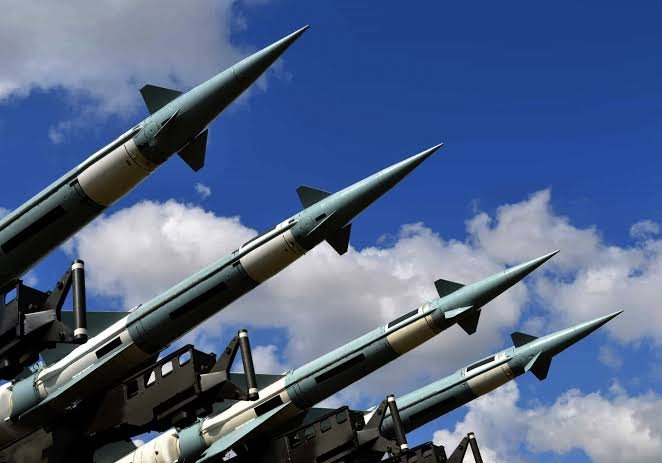
Rather than pursuing verifiable reductions, the P-5 (Permanent Five) members of the UN (United Nations) Security Council have initiated comprehensive modernisation programmes across their strategic triads. As documented in the SIPRI Yearbook World Nuclear Forces overview, the gradual decommissioning of surplus Cold War armaments has been replaced by the active operational deployment of qualitatively superior vectors. The modernization of the US (United States) Sentinel intercontinental ballistic missile network, the deployment of hypersonic glide systems by China, and the stationing of non-strategic warheads in Belarus by Russia illustrate that nuclear possession remains the undisputed zenith of state power. For security planners across the Global South, this vertical expansion demonstrates that the non-proliferation regime operates not as an equitable disarmament instrument, but as an institutional mechanism designed to freeze the global distribution of power and preserve an oligopoly of force.
Structural Asymmetry and Strategic Hedging
This institutionalised imbalance has introduced destabilising incentives across the developing world. Conventional international relations literature frequently treats deterrence as an interaction between symmetrical, status-quo actors operating under rational calculations. Yet the strategic reality confronting non-aligned states is characterized by profound structural asymmetry. As examined in foundational scholarship on asymmetric security conflicts, weaker or non-aligned actors caught in imbalanced security relationships face intense pressures that drive non-traditional balancing behaviours. When dominant states deploy prompt-strike vectors, integrate AI (Artificial Intelligence) into early-warning networks, and expand missile interceptors, regional stability deteriorates rapidly.
Confronting this deficit, regional actors inevitably adopt strategic hedging as an indispensable doctrine. Across Southern Asia, historical bilateral balance has evolved into a compressed trilemma linking China, India, and Pakistan. Technological shifts by one state compel immediate doctrinal responses by the others. As SIPRI notes in its assessments on escalating nuclear competition, regional forces are shifting toward canisterised solid-fuel systems and sea-based continuous deterrence to secure second-strike survivability. Concurrently, selective exceptionalism exhibited by the NSG (Nuclear Suppliers Group)—granting waivers based on geopolitical alignment while restricting others—strips the non-proliferation order of moral coherence. In debates on regime compliance and double standards, structural partiality has consistently eroded global norms. Denied structural parity, sovereign middle powers view autonomous deterrents as their only reliable shield against coercive diplomacy.
The Fragility of Third-Party Security Guarantees
The contemporary environment has further exposed the vulnerability of relying on third-party security umbrellas. Non-proliferation diplomacy long asserted that extended deterrence could suppress horizontal proliferation. However, shifting domestic political alignments within guarantor capitals and rising multipolarity highlight the classic alliance dilemma: partner states fear either abandonment during existential crises or entrapment within a great power’s confrontation.
Furthermore, international multilateral forums have repeatedly failed to preserve territorial integrity or reverse conventional coercion against states that lack independent deterrent capabilities. This institutional impotence sends an unmistakable message to the Global South: international legal norms offer fragile protection against calculated aggression unless backstopped by material defensive capacity. When multilateral governance structures cannot guarantee sovereign survival, the drive to acquire autonomous deterrent capabilities ceases to be an act of revisionist defiance and becomes a rational defensive calculus. By failing to construct universal, non-discriminatory, and legally binding security assurances, the existing non-proliferation architecture inadvertently accelerates the proliferation incentives it was designed to contain.
Restructuring Global South Non-Proliferation Diplomacy
Restoring systemic strategic stability requires abandoning the paternalistic assumptions that have historically governed global non-proliferation discourse. A stable arms-control architecture cannot function as an exclusionary regime imposed by heavily armed states upon the rest of the world. It requires a fundamental restructuring that addresses the security dilemmas and systemic grievances of developing states.
To establish meaningful progress, the P-5 states must demonstrate demonstrable adherence to their legal obligations under Article VI of the NPT. Bilateral arms-control agreements between Washington and Moscow are no longer sufficient to govern a multipolar nuclear environment. Multilateral mechanisms must be established to place legally binding caps on warhead modernisation and the induction of destabilising counterforce technologies. Without verifiable restraint from the established nuclear powers, calls for non-proliferation across developing regions lack normative legitimacy.
In Southern Asia, regional confidence-building measures must be insulated from external great-power rivalries. Given the geographic contiguity of regional nuclear powers, flight times are compressed to mere minutes, significantly increasing the probability of miscalculation. Regional diplomacy must prioritise formalising bilateral no-first-use agreements, establishing hardened communication hotlines to mitigate inadvertent escalation, and strictly segregating conventional precision munitions from nuclear delivery architectures.
Finally, the Global South must assert active agency in reshaping international security norms. The negotiation of the TPNW (Treaty on the Prohibition of Nuclear Weapons) demonstrated an enduring refusal by developing states to accept the legitimacy of nuclear hegemony. Yet normative prohibitions alone cannot alter material power realities. The Global South must bridge the gap between aspirational abolitionism and practical crisis stability, demanding that global disarmament forums address the structural inequalities that make atomic arsenals appealing in the first place.
A Precarious Strategic Horizon
The post-Cold War presumption that nuclear weapons would gradually recede into strategic irrelevance has been thoroughly disproven by contemporary great-power posturing. Asymmetric deterrence is inherently brittle: it lowers the threshold for military miscalculation, accelerates regional arms races, and subjects non-aligned states to persistent systemic insecurity. If global governance forums continue to defend an asymmetrical status quo while dismissing the strategic vulnerabilities of the Global South, the remaining scaffolding of the international non-proliferation regime will collapse. Genuine strategic stability cannot be imposed through coercive cartels or kinetic containment; it demands an equitable global consensus founded on sovereign reciprocity, verifiable disarmament commitments, and the dismantling of structural hierarchies.
Shaad Warsi is an Independent researcher focusing on structural power asymmetry, international security governance, and the strategic dynamics of the Global South.