5 November 2026, NIICE Commentary 12862
Chunauti Tripathi
Resilience is not measured by how urgently we respond after a disaster, but by what we change before the next one arrives. Every time a major disaster strikes Nepal, public attention returns to a familiar set of words: resilience, adaptation and preparedness. Images of destruction circulate, demands for accountability grow louder, and promises of reform follow. Yet, as public attention fades, the urgency to act often fades with it. Until the next disaster. The uncomfortable question is not whether Nepal understands its risks. It is whether that understanding translates into lasting changes in policy, infrastructure and spending.
A Country Living with Risk
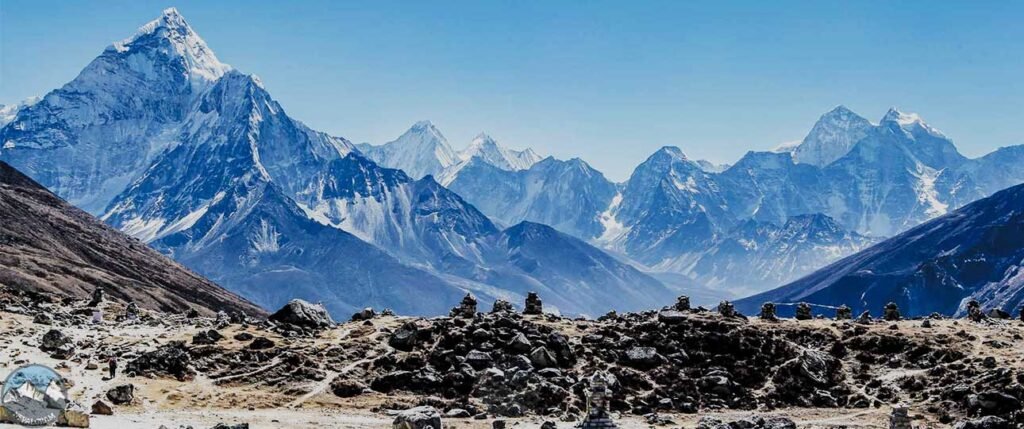
Nepal cannot change its geography. It is a steep, seismically active mountain country, ranked the 11th most earthquake-prone country in the world by UNDP. The 1934 earthquake killed more than 8,000 people in Nepal, according to a study of its fatality rates. In 2015, the Gorkha earthquake caused around 8,790 deaths and 22,300 injuries and estimated damage and losses exceeding US$7 billion. An earthquake cannot be prevented. But building safety, land-use decisions and the protection of schools are matters of policy. The extent of destruction is not determined by geography alone.
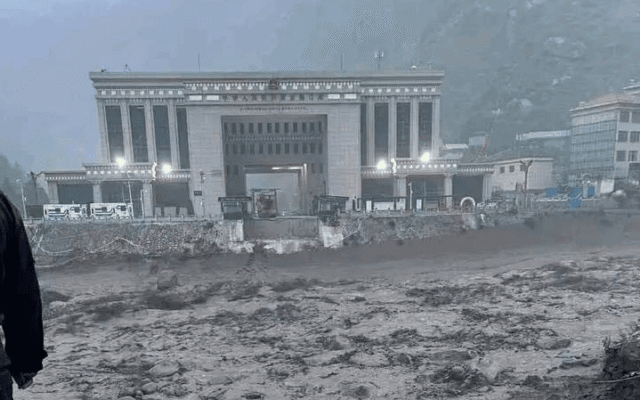
Floods and landslides present a similar challenge. On 26 August 2026, a rock-and-ice collapse from Langtang Lirung sent a debris surge through the Lhende Khola valley and across the Nepal–China border. In its October 2026 assessment, the ICIMOD cited NDRRMA figures of at least 1,451 deaths and 5,745 people missing in Nepal. A World Weather Attribution analysis found that climate change as an important contributing factor in what it called a “compound crisis” that also involved glacier retreat, permafrost thaw and geological instability, as Al Jazeera reported. ICIMOD lists several possible factors, including geological weaknesses, damage from the 2015 earthquake, thawing permafrost and glacier change, and says the precise mechanisms remain under investigation.
The issue is not limited to a single occurrence. From 2015 to 2024, Nepal recorded 8,418 monsoon-related disaster incidents that killed 2,317 people, according to Himal Press. The floods and landslides in September 2024 led to estimated losses of NPR 46.68 billion, according to the government’s preliminary assessment. Disasters may be unavoidable, but the consequences are shaped by decisions made long before they occur.
The Bill Nobody Budgets For
Disasters are also fiscal events. They destroy assets, interrupt economic activity and divert public money from planned investments towards emergency response and reconstruction.
A preliminary Rapid Damage and Needs Assessment, prepared by a joint technical team led by the National Planning Commission and NDRRMA, estimated that NPR 723.31 billion would be required to recover from the August 2026 flood. That is about US$4.78 billion. The estimate is preliminary, and NDRRMA’s chief executive said it could rise, though not substantially.
A senior official of the Coalition for Disaster Resilient Infrastructure told The Himalayan Times that Nepal’s National Disaster Management Fund held about US$35 million in reserves as of 2024, and argued that financing should combine reserves with pre-arranged credit and other risk-financing instruments. When spending exceeds available resources, governments must borrow, seek assistance, raise revenue or redirect money from existing programmes. For example, after the 2015 earthquake, the National Planning Commission directed ministries to cut current spending by 15 per cent, about Rs 68 billion, to help fund reconstruction. Reconstruction can therefore delay investment in education, health and transport.
The economic consequences extend beyond immediate reconstruction costs. Repeated damage reduces the productive life of public infrastructure, while diverting resources from planned investments can delay improvements in connectivity, healthcare and education. For an economy with significant infrastructure and development financing needs, this creates an additional burden, resources that could have expanded productive capacity are repeatedly used to restore what has already been built.
External help will not close the gap. On 22 October, the UN’s Fund for Responding to Loss and Damage provisionally set aside US $21.6 million for Nepal, subject to the submission of a funding proposal, but that covers less than 0.5 per cent of the estimated US$4.7 billion in recovery needs, according to The Kathmandu Post. Disasters are paid for twice: once in what they destroy, and again in what remains unbuilt because resources must be redirected to repair.
Roads that do not Fit the Land
This problem is particularly visible in Nepal’s roads. For a hilly community, the road provides access to hospitals, markets and schools. But in fragile mountain terrain, poorly planned construction creates additional risks. Research in Natural Hazards and Earth System Sciences found that Nepal’s road density more than tripled between 1998 and 2016. Many rural road expansions were informal and lacked adequate drainage, slope stabilisation and engineering assessment. Poor drainage, steep road cuts and unsafe disposal of excavated material can destabilise slopes and feed debris flows.
The consequences are physical and financial. Roads are damaged in the monsoon, repaired with public money and sometimes damaged again because the underlying vulnerabilities remain. Infrastructure that is cheap to build but costly to repair is of poor value. Resilience should not be an optional addition to development. It should be part of how development is planned, financed and evaluated.
What Nepal can do Before the Next Disaster?
Nepal already has disaster risk reduction institutions, policies and early-warning initiatives. The challenge is translating them into consistent action. Three priorities deserve attention.
First, finance preparedness before disaster strikes. Nepal should strengthen its disaster reserve through predictable annual allocations, sized against realistic disaster scenarios. Allocations should reflect historical losses and future risk assessments, rather than ad hoc decisions after emergencies. Reserves should be complemented by pre-arranged contingent credit, appropriate insurance and clear procedures for rapid fund release. In October 2024, the World Bank approved a US$150 million Catastrophe Deferred Drawdown Option for Nepal, an existing example.
Second, make sound engineering a condition for road funding. Road projects should undergo geological and environmental assessment before construction, with designs that account for drainage, slope stability and the safe disposal of excavated material. Maintenance and risk reduction should be budgeted from the start, and compliance should be independently verified. Federal and provincial authorities should ensure that local governments have access to the technical expertise and resources needed to enforce these standards. Otherwise, regulations might just exist on paper while unsafe construction proceeds.
Third, build warning systems around the hazards communities actually face. According to ICIMOD, systems built around rainfall and river levels may not detect sudden mountain collapses. Satellite radar recorded up to 40 centimetres of ground movement at the Langtang site in the 48 days before the collapse, which suggests unstable slopes can be monitored, even if the exact timing of failure cannot be predicted. Nepal should work with China and regional institutions to share satellite, geological, seismic and hydrological data. But warnings matter only when people can act on them. An ICIMOD specialist told Dialogue Earth that many people received SMS alerts on 26 August but did not know what to do or where to evacuate. So, evacuation plans, safe locations and regular drills must accompany better monitoring.
The real test begins after the disaster
Nepal cannot prevent every earthquake, flood, landslide or mountain collapse. It can, however, change how it prepares for them by enforcing safer construction, financing preparedness before emergencies, building roads that respect fragile terrain and ensuring that warnings lead to timely action. Recovery should be judged not by how quickly damaged infrastructure is rebuilt, but by whether the same vulnerabilities are reduced. Public attention will inevitably move on. The real measure of resilience is whether policy changes endure after it does, and whether the next disaster finds Nepal better prepared, rather than repairing the same damage again.
Chunauti Tripathi is a Research Intern at NIICE.