14 June 2026, NIICE Commentary 12556
Naweli Dutta
India and Nepal have an ancient bond with mutually complementary cultures, philosophies, and values, all working with an open border. India and Nepal share a historic relationship based on cultural, religious, and economic ties going back centuries. The first official step between the countries is the ‘Treaty of Peace and Friendship, signed in 1950’, which established a special bond between the two countries, allowing free movement of people and goods, and cooperation in defence and trade. This treaty has been the driving force behind close cooperation between the two countries, wherein India supports Nepal in its development and security. The two countries have maintained strong people-to-people connections along with strategic partnerships. In a reflection of India’s “Neighbourhood First” policy, there are recurrent high-level visits and exchanges between India and Nepal that foster the relationship between the two countries. It has been seen that there have been 17 exchanges at the level of Heads of States between India and Nepal since May 2014.
Relationship between India and Nepal in the Context of Tourism
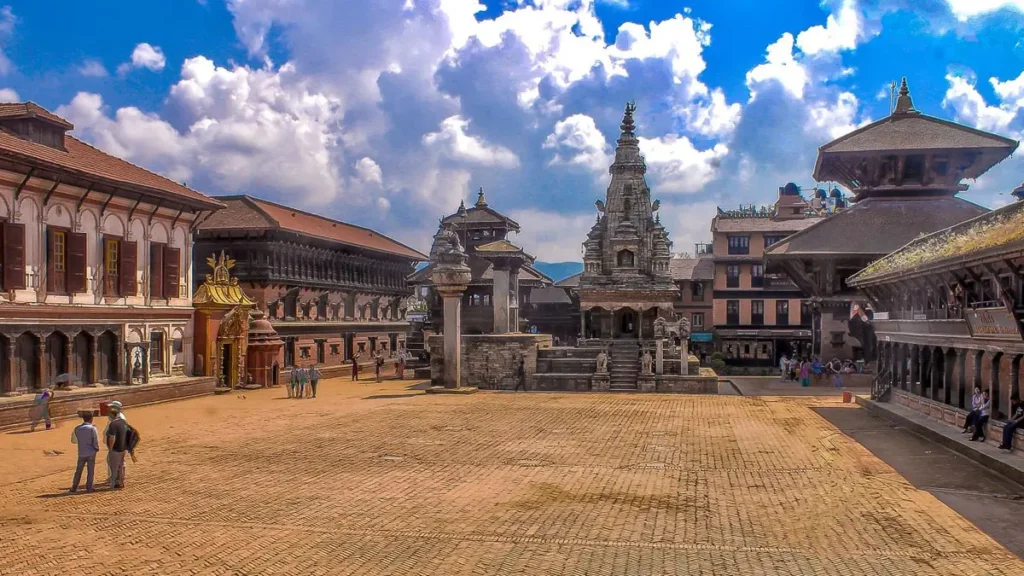
India-Nepal tourism thrives on deep cultural, religious, historical and geographic ties, with India as the largest source of visitors due to open borders and shared pilgrimage sites like Pashupatinath and Lumbini. The tourism relations have strengthened significantly since the 2020s. Recovery began slowly in 2021 after the pandemic lockdown in 2020 because the impact of the pandemic on tourism was evident from early 2020, as the persistent fear of infection and spread of coronavirus across the world had begun to grow. Travel restrictions and lockdowns significantly affected tourist movements in Nepal. A positive shift was seen as international travel resumed with the improvement in the global situation. The country’s popularity for trekking, mountaineering, cultural tourism, and adventure activities helped attract travellers, leading to a strong recovery in tourist arrivals. There has always been a positive growth in the tourism relationship between the two countries. By 2022, India will emerge as Nepal’s top market, comprising a large share of growing arrivals. Tourism is one of the significant factors of Nepal’s economy. It is also a major source of foreign exchange and revenue. Nepal have seen a total of 98,773 tourist arrivals by air by April 2023, out of which 31,437 were Indian visitors according to the Tourism Board of Nepal. The tourism industry of Nepal is growing faster in the post-pandemic era. A steady increase in Nepal’s tourism industry could possibly be seen, raising foreign visitors by 8.8 per cent in 2024 compared to 2023. Despite the increase, a slight one per cent decline in numbers was found amongst the Indian visitors. This decline could possibly be due to road accidents and landslides, according to the Nepal Tourism Board. In 2025, Nepal gained 1.6 million tourists by air, witnessing a 1 per cent growth in the industry from the previous year. Indians made up the greatest part of the 5.01 lakh tourists who arrived in Nepal in early 2025 (January-May), with 1.15 lakh, or over 23%. While India continues to dominate the tourist business, a new trend is emerging among Indian tourists, with a greater demand for leisure travel and ‘soft adventure‘, notably among visitors from Maharashtra, Gujarat, and Delhi. With Indian visitors accounting for 35.2% of all arrivals in 2025, India remains the top source of international tourists for Nepal. The boom is being driven by the development of high-end, luxury resorts throughout the Himalayan nation.
First Tourism Meet in Kathmandu
Embassy of India, Kathmandu, in association with the Nepal Tourism Board, together organised the 1st India-Nepal Tourism Meet on 10th December, 2024. The focus of the event was on the promotion of Mahakumbh 2025 in Prayagraj, Uttar Pradesh and generating B2B connections to foster the implementation of circuit tourism between India and Nepal. Deepak Raj Joshi, CEO, Nepal Tourism Board, appreciated that India was the biggest source of foreign tourists visiting Nepal. Minister of State for Culture, Tourism and Civil Aviation Arun Kumar Chaudhary, in his remarks, mentioned that cross-border tourism, especially through land routes, is a big contributor to tourism in Nepal. Prasanna Shrivastava, Deputy Chief of Mission in the Embassy of India, underscored the developments in physical and digital connectivity that are driving higher tourism flows between India and Nepal.
Economic Changes and Opportunities
Tourism is a major economic sector in Nepal; it is established as a niche adventure and cultural destination with solid contributions to national income. India has been the largest contributor to the industry. According to 2025, the main market in India reached up to 28 per cent, several factors determine, such as the proximity of the two nations, spiritual journey, cultural exploration, and adventurous activities of Nepal, which highly attract Indian tourists. The establishment of the Unified Payments Interface system has made cross-border financial transactions more convenient and thus boosts tourism from India. The launch of the ‘Visit Nepal 2025-2035’ campaign is aimed at increasing Nepal’s visibility in global tourism markets. In 2023, Nepal’s tourism sector generated Rs327.9 billion in revenue, contributed 6.6% to the country’s GDP and supported 1.19 million jobs, making it an important part of the economy. There has been a direct shift in revenue trends and employment, including indirect roles in handicraft and agriculture. Focus on the promotion of eco-tourism, infrastructure like cross-border rail/ roads/air has been turning into positive shifts. Upgrading border points can increase the number of tourists and make it easier for Indian tourists to visit frequently. Joint campaigns, seminars and awareness programs can actually foster enhancing the relationship between India and Nepal.
Conclusion
The study concludes that tourism is one of the most significant industries of Nepal. India, being one of the closest neighbours, has immensely contributed to the sector. India and Nepal have shared history and strategic relations for many years. Tourism remains a cornerstone of Nepal’s GDP, with the potential to drive sustainable economic growth. While the pandemic setback was severe, the sector is showing strong signs of recovery. By investing in infrastructure, diversifying tourism products, and promoting sustainability, Nepal can make tourism not just a source of income but a force for long-term development.
Naweli Dutta is a final-year postgraduate student in Political Science at the University of Science and Technology Meghalaya, India.