
20 January 2026, NIICE Commentary 12271
Abhinav Raj
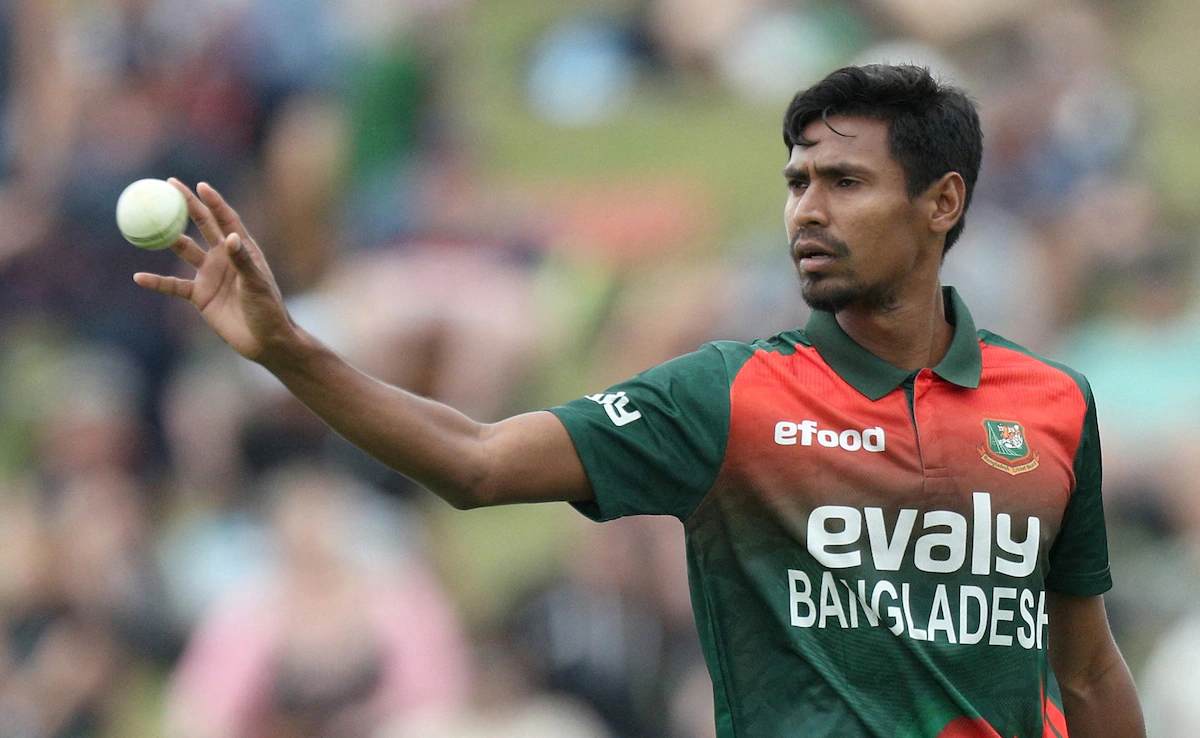
The Mustafizur Rahman controversy represents a watershed moment in cricket governance, where a single administrative directive triggered bilateral sporting collapse between India and Bangladesh. Beginning with BCCI's unprecedented instruction to Kolkata Knight Riders on January 3, 2026, to release Bangladesh's premier pacer ahead of IPL 2026, the incident rapidly escalated into IPL broadcast bans, T20 World Cup relocation threats, and comprehensive bilateral cricket suspension. This essay examines the institutional politicisation enabling such decisions, the T20 World Cup relocation crisis precipitated by the directive, and the systemic governance collapse that followed, demonstrating how national political pressures have irreparably compromised cricket's autonomy as an apolitical institution.
Institutional Politicisation: BCCI Directive and Administrative Overreach
The January 3 Directive: Unprecedented Executive Intervention
The controversy originated with BCCI secretary Devajit Saikia's official communication to KKR management, explicitly directing the franchise to release Mustafizur Rahman from their IPL 2026 squad—a player they had acquired for ₹9.20 crore (US$1.1 million) at the December 2025 mini-auction. Saikia's statement cited "recent developments all across" as justification, without specifying either the nature of these developments or providing affected franchises with appeal mechanisms, marking the first documented instance of BCCI executive intervention in player retention decisions post-auction. This directive contradicted established IPL governance protocols, where franchises exercise autonomous squad management subject to salary cap regulations and fitness clearances—a framework that had successfully accommodated seven Bangladeshi players in the same auction cycle.
Contextual Pressures: Diplomatic Tensions and Security Narratives
The decision emerged against the backdrop of deteriorating India-Bangladesh relations following reports of religious minority violence in Bangladesh during late 2025, with some Indian political figures questioning the propriety of Bangladeshi cricketers' IPL participation. BCCI sources emphasised "no government communication" had been received, yet the directive's timing—coinciding with heightened diplomatic rhetoric—suggested external political influence bypassing formal government-to-board communication channels. Former India cricketer and commentator Shekhar Luthra described the intervention as "ridiculous," emphasising Bangladesh's status as a "friendly neighbouring nation" and questioning whether "cricketing decisions are now being influenced by diplomatic tensions." This marked a dangerous precedent where national political narratives directly dictated commercial sporting participation, eroding franchise autonomy and player contractual rights.
Immediate Cricket Administration Reactions
Bangladesh Cricket Board (BCB) president Aminul Islam Bulbul immediately condemned the directive as "distressing, shocking and angering the people of Bangladesh," framing it as politically motivated discrimination against a national sporting icon. KKR management complied without public protest, requesting replacement player clearance per BCCI instructions, while the IPL Governing Council maintained strategic silence on both the directive's legality and its implications for franchise governance. The episode exposed fundamental governance contradictions: BCCI's dual role as both commercial league operator and national cricket administrator created structural vulnerability to external political pressures, compromising the organisation's commitment to apolitical sporting meritocracy.
T20 World Cup Relocation: Escalation to International Cricket Infrastructure
Bangladesh's Formal Relocation Request
The BCCI directive catalysed BCB's formal request to the International Cricket Council (ICC) on January 5, 2026, to relocate all T20 World Cup 2026 matches scheduled in India—specifically Bangladesh's group stage fixtures in Dharamshala, Lucknow, and Guwahati—citing "security concerns for players and support staff." BCB refused No Objection Certificates (NOCs) for Bangladeshi players' IPL participation and escalated by requesting neutral venue hosting in Sri Lanka, leveraging the island nation's established white-ball cricket infrastructure. This represented unprecedented weaponisation of World Cup scheduling against a co-host nation, threatening ICC's US$500 million commercial broadcast agreements dependent on full India-hosted fixtures.
IPL Broadcast Ban and Commercial Repercussions
Bangladesh government imposed an indefinite ban on IPL telecast and promotion on January 5, directing all broadcasters to suspend coverage "until further orders," explicitly linking the decision to "no logical reason" provided for Mustafizur's release. This severed access to Bangladesh's 170 million population—historically IPL's third-largest overseas market—resulting in immediate 15-20% devaluation of IPL global broadcast rights negotiated in 2022. Sponsors, including SG and local brands, withdrew from Bangladesh player endorsements, while Star Sports' regional advertising revenue collapsed, demonstrating how isolated player selection disputes cascade into comprehensive commercial isolation.
ICC's Impossible Dilemma and Neutral Venue Precedents
ICC faced an acute coordination crisis: approving Bangladesh's relocation request risked alienating the primary revenue generator, BCCI (contributing 70% of ICC funding), while rejection exposed the organisation to accusations of India bias and potential legal challenges under ICC's own Dispute Resolution protocols. Sri Lanka Cricket immediately offered Colombo, Kandy, and Hambantota as alternative venues, citing the successful 2011 World Cup co-hosting precedent and existing broadcast infrastructure compatibility. The standoff threatened the tournament's February 7 kickoff, with India's eight allocated matches (including semifinals) representing 40% of total gate revenue projections.
Systemic Governance Collapse: Bilateral Cricket Breakdown and Long-term Damage
Comprehensive Bilateral Suspension
By January 10, 2026, all India-Bangladesh bilateral cricket ceased indefinitely: BCB rejected future tours citing "player security," while BCCI cancelled Bangladesh's allocation in domestic T20 leagues and associate competitions. The three-match T20I series scheduled for February 2026 in India became the first casualty, followed by Bangladesh's withdrawal from Asia Cup 2026 planning and rejection of 2027 Champions Trophy participation frameworks. This represented cricket's most comprehensive bilateral sporting boycott since India-Pakistan relations deteriorated in 2016, threatening the subcontinental cricket ecology dependent on regular India-Bangladesh rivalry fixtures.
Cricket Officials' Condemnation and Governance Critique
Eight senior administrators issued public rebukes documenting governance failure. BCB's Bulbul declared: "This isn't cricket governance; it's political vendetta against our players." Former India captain Sunil Gavaskar warned: "I don't think the India-Bangladesh series is going to happen," predicting a decade-long isolation. Pakistan Cricket Board chairman Mohsin Naqvi called it "a sad day for Asian cricket," while Sri Lanka Cricket president Shammi Silva offered: "Sport must remain above politics—our stadia are ready." IPL franchise CEOs anonymously confirmed "BCCI instruction came from top level without consultation," exposing internal decision-making opacity. These statements crystallized consensus that politicised administration had supplanted meritocratic governance.
Structural Consequences and Cricket Autonomy Erosion
The Mustafizur Rahman saga inflicted irreparable structural damage: BCCI's intervention established a dangerous precedent that national boards possess unilateral veto power over commercial league participation, undermining IPL's global player market model. ICC governance credibility suffered terminal erosion, with Full Members questioning conflict resolution mechanisms favouring financial heavyweights. Player agency evaporated as national boards weaponised NOCs and security certifications against individual athletes, while franchise autonomy became illusory under executive board oversight. The episode demonstrated cricket's transformation from apolitical meritocracy to diplomatic proxy battleground, where sporting infrastructure serves national political agendas rather than athletic excellence. Recovery requires fundamental governance reform separating national federations from league administration, establishing independent player grievance mechanisms, and formalising ICC arbitration supremacy—measures unlikely given entrenched financial dependencies ensuring perpetuation of politicisation.
Abhinav Raj is a Research Intern at NIICE Nepal. He is currently pursuing Ph. D. in Management from IIT Bombay, Powai, Maharashtra, India.
