
16 January 2026, NIICE Commentary 12256
Abhinav Raj
Sri Lanka's Aragalaya movement of 2022 represented a historic rupture in South Asian democratic politics, where mass street mobilization achieved the unprecedented ouster of an entrenched ruling family through sustained nonviolent pressure. While revolutionary tactics succeeded in removing the Rajapaksas, institutional capture by Ranil Wickremesinghe neutralized demands for systemic constitutional overhaul, exposing the limitations of protest power absent parliamentary leverage. The 2024 electoral repudiation offered reform prospects, yet persistent structural barriers underscore street movements' tactical victories alongside strategic truncation.
Aragalaya Movement: Economic Catastrophe and Revolutionary Breakthrough
Economic Collapse as Mobilization Catalyst
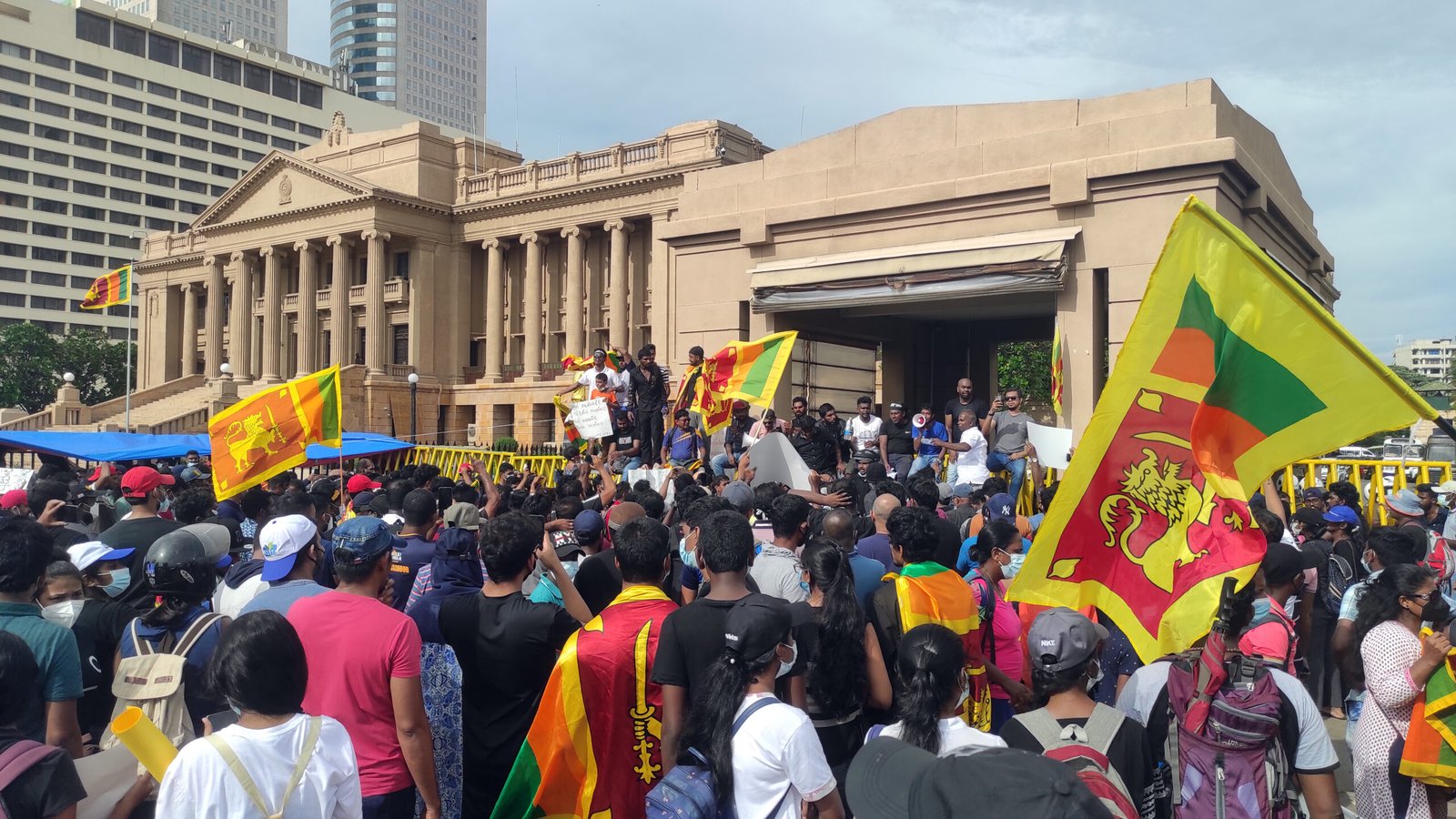
Sri Lanka's first sovereign default in April 2022—following decades of fiscal profligacy under Rajapaksa governance—precipitated Aragalaya "The Struggle", as citizens confronted existential crises: 13-hour daily blackouts, 70% fuel price surges, medicine shortages killing thousands, and inflation peaking at 70% by July. President Gotabaya Rajapaksa's March 16 televised address—condescendingly blaming global factors while dismissing domestic culpability—ignited spontaneous neighborhood vigils that metastasized into the largest civil mobilization in Sri Lankan history, converging on Colombo's Galle Face Green by March 31. Unlike ethno-nationalist protests of prior decades, Aragalaya transcended Sinhala-Tamil divides through multilingual anthems and unified chants of "Go Home Gota," demanding not merely resignations but comprehensive "system change": abolition of the executive presidency, independent institutions, corruption audits, and constitutional rewrite.
Apolitical Youth Leadership and Digital Amplification
The movement's defining characteristic emerged in its explicitly apolitical constitution: youth organizers explicitly rejected traditional parties—JVP, SJB, UNP—as equally corrupt, coordinating through Discord servers and Instagram Live rather than union hierarchies. By April 9, OccupyGalleFace trended globally despite the government shutdown of Facebook, WhatsApp, and 20 platforms, with celebrities like Kumar Gunaratnam and Nanda Malini joining hunger strikes bearing placards reading "Country is for sale, Gota fail". Authorities' April 1 state of emergency declaration—deploying tear gas, rubber bullets, and arresting 600+ protesters—backfired spectacularly: documented police brutality amplified international outrage, while encrypted Signal groups sustained coordination, commemorating the 2019 Easter Sunday bombings (259 dead) as a governance indictment.
Climactic Storming of Presidential Authority
July 9 marked revolutionary apotheosis: 150,000 protesters breached Presidential House and Secretariat perimeters after Mahinda Rajapaksa's resignation, forcing Gotabaya's nocturnal flight to Maldives then Singapore by July 13—the first sitting Sri Lankan president exiled by popular will. The 26-member cabinet collapsed on July 3; within 107 days, Aragalaya achieved what four elections could not: total Rajapaksa displacement from executive and legislative power. This occupation symbolized state monopoly rupture, yet exposed tactical vulnerability absent constitutional mechanisms for power transfer.
Institutional Capture and Legitimacy Vacuum
Wickremesinghe's Parliamentary Coup
Aragalaya's power vacuum enabled Ranil Wickremesinghe's counter-revolutionary consolidation: appointed prime minister May 12 amid peak unrest, the five-time premier—whose United National Party won zero 2020 seats—secured presidency July 20 through Article 40's indirect election, capturing 134 parliamentary votes from Rajapaksa's SLPP against Dullus Alahapperuma's 82. Lacking any popular mandate, Wickremesinghe embodied elite restoration: activist Jeana de Zoysa captured movement betrayal, declaring "134 people... have completely disregarded the wants of the people" as SLPP defectors guaranteed his ascension. Rajapaksa family retainers dominated the legislature, perpetuating patronage networks that protesters explicitly targeted.
Authoritarian Entrenchment Over Reform
Rather than implementing Aragalaya demands, Wickremesinghe escalated repression: July 22 military clearance of Galle Face Green injured 150, with 1,200 arrests under PTA antiterrorism laws. The October 2022 22nd Amendment nominally revived Constitutional Council oversight and curbed 40 presidential appointments, yet preserved executive supremacy over judiciary, police, and elections commission while omitting anti-corruption architecture—dismissed by analysts as "diversionary tinkering" insufficient for systemic overhaul. Middle-class protesters withdrew by November as the IMF's $3 billion bailout stabilized forex reserves, though 25% poverty persisted into 2024.
Enduring Constitutional Deficit
Constitutional scholar Bhavani Fonseka documented continuity in protest demands through 2024: "transparent leadership, fresh elections, abolishing executive presidency, [and] auditing politicians to combat... impunity" mirrored March 2022 platforms exactly. Wickremesinghe's economic stabilization deferred structural reckoning, as SLPP parliamentary math blocked accountability—revealing street power's impotence against constitutional entrenchments privileging elite bargaining.
Electoral Reckoning and Incomplete Transformation
2024 Presidential Mandate Shift
September 21, 2024 elections repudiated Wickremesinghe's stasis: Anura Kumara Dissanayake's NPP secured 42% first preferences against Sajith Premadasa's 33% and Wickremesinghe's humiliating 17% third-place finish—unprecedented for an incumbent. Second-round preferences delivered Dissanayake 56%, eliminating UNP-SLPP duopoly and validating Aragalaya's anti-elite intuition across Sinhala (70% NPP) and Tamil (40% NPP) voters—a historic ethnic realignment.
Supermajority Reform Aperture
November parliamentary elections yielded the NPP a two-thirds majority (157/225 seats), creating a first-in-history constitutional amendment capacity; Centre for Policy Alternatives' 2024 survey documented 75% democratic preference (up 12% from 2020) and 52.3% favoring wholesale constitutional replacement—doubling 2016 baselines. Dissanayake pledged executive abolition and independent institutions, leveraging cross-ethnic legitimacy absent from predecessors.
Persistent Institutional Inertia
Electoral triumph notwithstanding, Aragalaya's "system change" remains incomplete: executive presidency endures, judicial appointments politicized, and corruption prosecutions stalled pending parliamentary ratification. "Democratic erosion stems equally from presidential power vested and parliaments subverted," necessitating amendments plus capacity-building: an autonomous anti-corruption commission, prosecutorial independence, and electoral reform. Aragalaya pierced authoritarian carapace tactically yet required elite defection for durability; street power compels responsiveness but cannot unilaterally rewrite constitutional political economy.
Abhinav Raj is a Research Intern at NIICE Nepal. He is currently pursuing Ph. D. in Management from IIT Bombay, Powai, Maharashtra, India.
