28 April 2026, NIICE Commentary 12460
Dr. Pramod Jaiswal
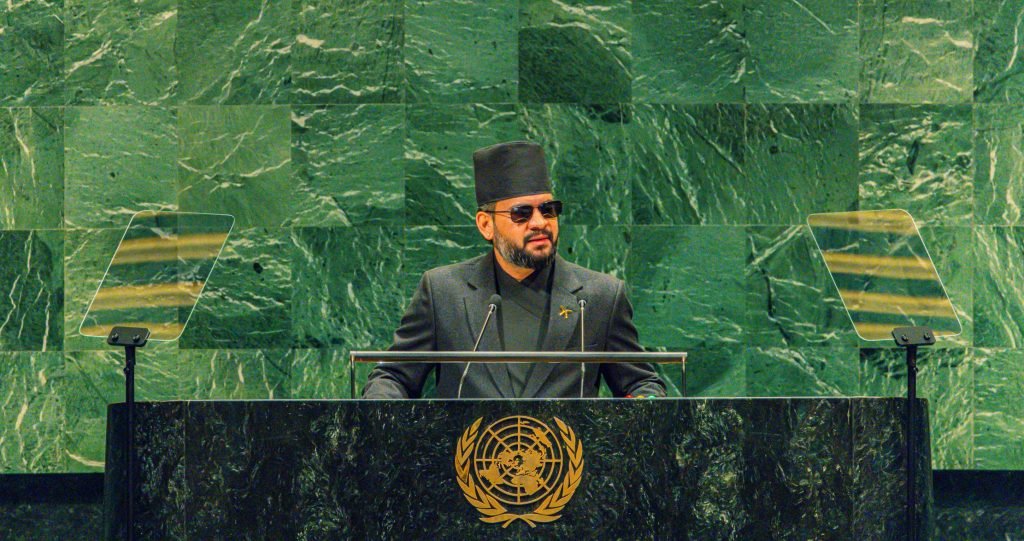
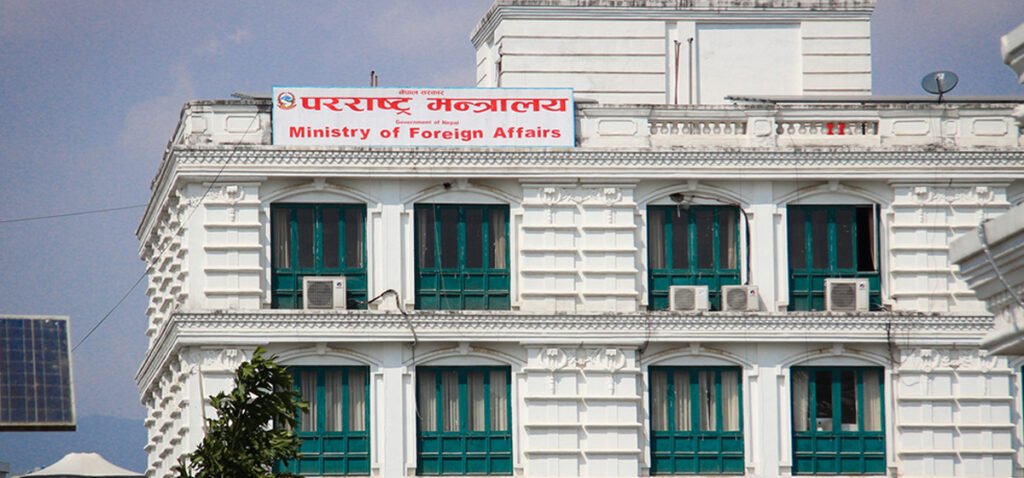
Recent debates in Nepali media surrounding a statement by the Foreign Minister describing Nepal as a “buffer state” have triggered strong reactions, with some arguing that such a characterization undermines national sovereignty. While the sensitivity is understandable, these debates also reveal deeper conceptual misunderstandings about Nepal’s foreign policy. This article identifies and critically examines three major misconceptions: the notion of Nepal as a buffer state, the idea of Nepal as a “vibrant bridge” between India and China, and the interpretation of non-alignment and equidistance.
Misconception 1: The “Buffer State” Debate
The term “buffer state” is often misunderstood in Nepal’s discourse. In international relations theory, a buffer state refers to a sovereign, independent country situated between two larger, potentially rival powers, whose existence helps reduce direct confrontation between them. Importantly, being a buffer state does not imply loss of sovereignty or subordination; rather, it reflects a geopolitical reality shaped largely by external power dynamics.
Nepal fits many characteristics of a buffer state, given its geographical location between India and China, two major powers with complex strategic relations. Historically, Nepal has maintained its independence while navigating pressures from both sides. However, it is critical to note that buffer status is not something a small state unilaterally declares or rejects. Instead, it is largely determined by how major powers perceive and engage with that state.
While it may be politically undesirable for Nepal to be labelled as a buffer state, especially in an era that values agency and strategic autonomy, the structural reality remains. Therefore, the issue is less about denying the label and more about maximizing strategic space within that reality. Public articulation of such terminology may be diplomatically sensitive, and caution is warranted, but denying the underlying geopolitical condition does little to enhance policy clarity.
Misconception 2: Nepal as a “Vibrant Bridge”
Another widely promoted idea in Nepal’s foreign policy discourse is that the country can serve as a “vibrant bridge” between India and China. While appealing in rhetoric, this notion is often overstated and insufficiently grounded in geopolitical realities.
The premise assumes that Nepal can actively facilitate engagement between two major powers with a longstanding strategic competition. However, the ability of a small state to influence relations between significantly larger and more powerful neighbors is inherently limited. Unless both India and China actively seek Nepal’s mediation or facilitation, Nepal’s role as a bridge remains largely symbolic.
Moreover, even from a practical standpoint, the argument is weak. India and China already possess multiple established channels of communication, including diplomatic, economic, and military mechanisms. They also share direct borders with several functional transit points. In contrast, Nepal’s northern connectivity is constrained by the Himalayan terrain, with limited infrastructure and logistical capacity.
Thus, the idea of Nepal as a “vibrant bridge” risks becoming a policy illusion, an aspirational narrative that is not matched by material capabilities or geopolitical demand. A more realistic approach would focus on enhancing Nepal’s own connectivity, trade facilitation, and economic resilience, rather than positioning itself as an intermediary in great power relations.
Misconception 3: Equidistance and Non-Alignment
The third misconception relates to the interpretation of “equidistance” and “non-alignment” in Nepal’s foreign policy.
The concept of equidistance suggests that Nepal should maintain equal relations with both India and China. While theoretically appealing, this notion overlooks the asymmetrical realities of Nepal’s relationships with its neighbors.
Nepal shares an open border with India, characterized by deep historical, cultural, economic, and social linkages. There are extensive people-to-people ties, including cross-border marriages and labor mobility. Economically, India remains Nepal’s largest trading partner. According to recent trade data, over 60–65% of Nepal’s total trade is conducted with India, whereas trade with China constitutes a much smaller proportion, often below 15%. Additionally, Nepal’s currency is pegged to the Indian rupee, and there are unique institutional arrangements such as reciprocal honorary military titles between the two countries’ army chiefs.
In contrast, Nepal’s relationship with China is shaped by geographic and structural constraints. The Himalayan barrier limits connectivity, and differences in political systems, language, and economic integration further widen the gap. While engagement with China has grown in recent years, particularly under initiatives like the Belt and Road Initiative, it does not yet match the depth and intensity of Nepal’s ties with India.
In this context, strict equidistance is neither practical nor necessary. A more appropriate framework would be one of “equiproximity”, maintaining close and constructive relations with both neighbors while recognizing the inherent differences in these relationships. Closely related is the misunderstanding of non-alignment. Nepal has long adhered to the principles of non-alignment, historically associated with the Non-Aligned Movement. However, non-alignment is often misinterpreted as a rigid policy of neutrality or abstention in all global conflicts.
For instance, when Nepal expressed support for Ukraine following the Russian invasion, some critics argued that this violated non-alignment. This interpretation is incomplete. Non-alignment does not require a state to remain silent or indifferent on issues that affect its national interest or the broader international order. A more nuanced understanding recognizes that non-alignment allows for issue-based positioning. If Nepal believes that actions by Russia violate international norms, such as the principles enshrined in the United Nations Charter, it is within its rights to take a stance. Supporting the sovereignty and territorial integrity of states is consistent with Nepal’s own long-term security interests.
Thus, non-alignment should be understood not as passive neutrality, but as strategic autonomy, the ability to make independent decisions based on national interest rather than external alignment.
Need for Clarity and Strategic Consistency
Nepal’s foreign policy discourse is often shaped by aspirational narratives and simplified interpretations of complex geopolitical concepts. The misconceptions surrounding buffer state status, the “vibrant bridge” idea, and equidistance and non-alignment reflect a gap between rhetoric and reality. Recognizing Nepal as a buffer state does not diminish its sovereignty; rather, it highlights the importance of strategic navigation in a challenging geopolitical environment. Similarly, moving beyond the illusion of being a “bridge” allows Nepal to focus on strengthening its own capabilities. Finally, adopting a pragmatic understanding of equidistance and non-alignment can enable more flexible and interest-driven diplomacy. In an increasingly multipolar world, Nepal’s strength lies not in rhetorical positioning but in clear-eyed realism, strategic consistency, and the pursuit of national interest grounded in geopolitical realities.
Dr. Pramod Jaiswal is Research Director at NIICE.