14 Novemeber 2026, NIICE Commentary 12892
Dr. Pramod Jaiswal
Indian Railways has announced a weekly service connecting Janakpur Dham with Ayodhya, just ahead of the Nepali Prime Minister’s visit to Delhi. The real test is whether Nepal can turn the opportunity into lasting tourism and economic gains.
On 14 November 2026, Indian Railways announced a new weekly train between Janakpur Dham in Nepal and Ayodhya in Uttar Pradesh, India. The Press Information Bureau in Delhi released the announcement, which came shortly before the Nepali Prime Minister’s visit to the Indian capital. The timing suggests the two governments want to show that cross-border connectivity is more than a diplomatic talking point.
Two Cities, One Epic
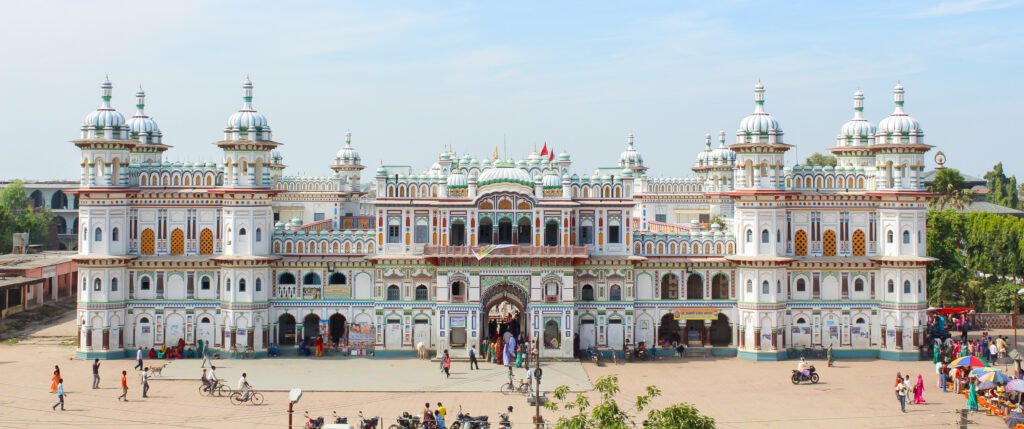
The route links two places at the heart of the Ramayana tradition. Janakpur Dham is revered as the birthplace of Mata Sita, and Ayodhya as the birthplace of Prabhu Shri Ram. For millions of Hindus on both sides of the border, the journey between them retraces a story of marriage, devotion and shared heritage. The Indian government’s announcement itself stresses this civilizational bond, describing the service as a way to give passengers from both countries easier access to these religious and cultural centres.
The Route and Schedule
The service will cover roughly 604 kilometres between Janakpur Dham and Ayodhya Cantt., passing through several towns and cities in Bihar and Uttar Pradesh. Besides the two terminals, the train will make commercial stops at Jaynagar, Madhubani, Shisho, Sitamarhi, Raxaul, Narkatiaganj, Gorakhpur, Basti, Mankapur and Ayodhya Dham.
The stops read like a map of the Mithila and Awadh regions. Sitamarhi is also tied to the Sita legend, and Madhubani is known worldwide for its folk painting. Raxaul and Narkatiaganj are important border-region towns, and Gorakhpur is a major railway and commercial hub of eastern Uttar Pradesh.
The service will run once a week, departing Janakpur Dham on Saturdays and Ayodhya Cantt. on Mondays. That schedule is easy to overlook, but it shapes who will use the train and how Nepal can benefit.
A Weekend Pilgrimage for Madhes
For people in Janakpur and the wider Madhes region, the Saturday departure suits a weekend pilgrimage. A family can leave on Saturday, visit the newly built Ram Mandir in Ayodhya and be back by Monday, with little disruption to work or school. Rail is also usually cheaper and more comfortable than a long road journey, which matters for elderly pilgrims and families travelling in groups.
The train could therefore increase the flow of Nepali pilgrims and tourists from Janakpur and nearby districts to Ayodhya. The temple has drawn very large crowds since its opening, and a direct rail link removes much of the planning, transfers and cost that discourage ordinary travellers.
The Other Side of the Ticket
The same timetable works in reverse, and this is where Nepal should pay attention. The train will bring Indian travellers to Janakpur on Monday, and the return service leaves on Saturday. That leaves visitors a window from Monday to Saturday, and nothing obliges them to spend it in Janakpur alone.
The ticket does not guarantee a long stay or much spending. Janakpur has a magnificent temple and a rich Mithila culture, but a visitor may need only a day or two to see its main sites. If Nepal can hold them for the rest of the week, the picture changes completely.
That requires Janakpur to cultivate itself as the cultural capital of Nepal. Regular Janakpur festivals, literary events, conferences and cultural gatherings would give visitors reasons to come and to return. Nearby religious sites such as Jaleshwor Nath Mahadev Mandir and Dhanushadham can be developed into new attractions. The revival of Ram Leela performances, which have faded in recent years, would be especially worthwhile. Above all, Janakpur needs a wider vision that presents its rich Mithila art, cuisine and traditions as a living experience, not only as a stop on a pilgrimage.
Building the Circuit Around Janakpur
Nepal also needs to build attractions and connections around the new rail link, and some of the best options are already close by. Lumbini, the birthplace of the Buddha, is one of the world’s great pilgrimage sites, and a Janakpur-to-Lumbini route would let travellers combine two of South Asia’s most significant sacred places in one trip. Chitwan, with its national park and wildlife, offers families something beyond temples, including jungle safaris and nature stays. Pokhara may be the most important of all: a major destination for Indian tourists, known for its lakes, mountain views and adventure activities.
The more urgent task is connectivity, and linking it to the local economy.
First, Nepal should link Janakpur with Lumbini, Chitwan, Kathmandu and Pokhara through reliable, well-publicised tourist bus services timed to the train’s arrival, so visitors can step off the train and onto an onward connection.
Second, Janakpur’s airport should be better integrated into the tourism network, with flights to Pokhara and Kathmandu that work for tourists, not just local travellers. A visitor arriving by rail on Monday should be able to fly to Pokhara on Tuesday and return in time for Saturday’s train.
Third, there should be packaged itineraries. Tour operators, hotels and the tourism board can sell a Monday-to-Saturday circuit combining Janakpur, Lumbini, Chitwan and Pokhara, with transport and accommodation included. Marketing in Bihar, Uttar Pradesh and beyond will matter as much as the infrastructure.
Fourth, basic services need attention: clean accommodation, clear signage, trained guides, easy currency and cross-border payment options, and smooth border and immigration processes.
More Than a Tourist Train
The most important test, however, is whether the train can become a lifeline for integrating two economies. The vast populations of Uttar Pradesh and Bihar are Nepal’s nearest and largest potential market. If the service is limited to pilgrims and tourists, its impact will stay narrow. If it also carries traders, students, workers, artisans and families, it can become a tool for deeper economic integration that benefits the many people living along both sides of the border.
The Janakpur-Ayodhya train is a promising symbol of friendship, and symbols matter. But a weekly service is only the beginning. It sends pilgrims in both directions, and what each country gains depends on how well it prepares to receive them.
For Nepal, the question is not only how many Nepali pilgrims will travel to Ayodhya. It is whether Indian travellers arriving in Janakpur will have enough reasons, and enough easy connections, to spend the week exploring Nepal. If Janakpur becomes the gateway to Lumbini, Chitwan and Pokhara, and if the link feeds a wider economic partnership, a single weekly train could do a great deal for Nepal’s economy, and for the ties between two neighbours that share the story of Sita and Ram.
Dr. Pramod Jaiswal is a Research Director at NIICE.