8 November 2026, NIICE Commentary 12885
Victoria Gomez& Taha Ali
Introduction: Nepal’s Geopolitical Dilemma
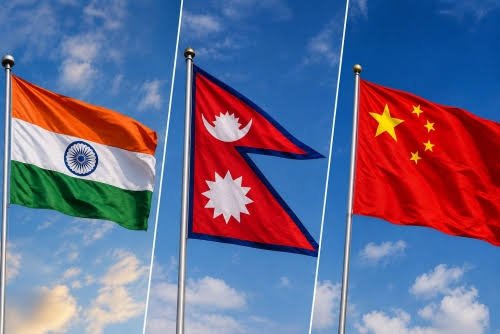
Nepal’s geography offers it opportunities for economic integration but also exposes it to the competing interests of India and China. Its location between two major powers allows Kathmandu to attract investment, negotiate infrastructure partnerships and diversify its external relations. Yet geography alone cannot guarantee strategic independence. Nepal’s experience reveals a deeper problem: the ability to engage competing powers does not necessarily translate into the ability to resist their pressure. Strategic hedging refers to maintaining relations with rival powers while avoiding an exclusive commitment to either. Strategic autonomy goes further, requiring the economic resilience and institutional capacity to make independent choices. For Nepal, the challenge is to convert diplomatic flexibility into substantive freedom of action.
Nepal’s Strategic Hedging Between India and China
Nepal’s foreign policy rests on an enduring contradiction: it seeks the economic advantages of engagement with both India and China while remaining wary of excessive dependence on either. India remains central to Nepal’s trade, transit, energy cooperation and everyday economic life. Their open border sustains extensive social, familial and commercial connections that no infrastructure agreement can easily replicate. Nepal’s electricity exports to India have also demonstrated how geographic proximity can become an economic asset rather than merely a source of vulnerability.
China, meanwhile, offers Kathmandu opportunities to diversify its infrastructure partnerships, expand connectivity and reduce its dependence on a single external partner. Nepal’s engagement with the Belt and Road Initiative reflects this ambition. Chinese investment and proposed cross-border connectivity offer the prospect of widening Nepal’s economic choices and strengthening its negotiating position with New Delhi.
Kathmandu’s engagement with both powers is therefore not simply an attempt to remain neutral. It is an effort to preserve room for manoeuvre in an unequal regional environment. However, the distinction between diplomatic diversification and strategic independence is crucial. Announcing infrastructure partnerships, cultivating political relationships and signing agreements can signal alternatives without necessarily creating viable substitutes. Nepal may gain leverage by keeping both neighbours engaged, but that leverage remains fragile when its economic lifelines, transport networks and domestic institutions cannot support a credible alternative
Why Strategic Hedging Has Not Delivered Strategic Autonomy
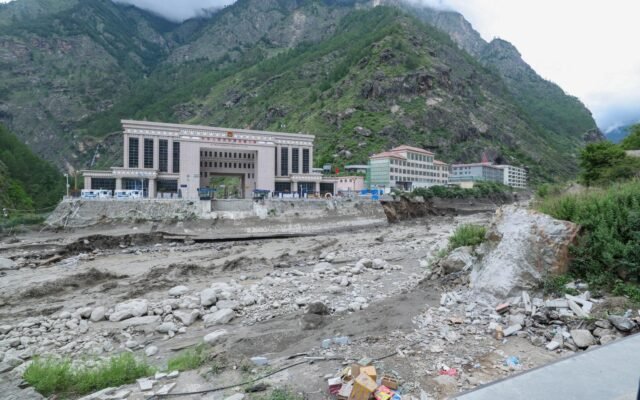
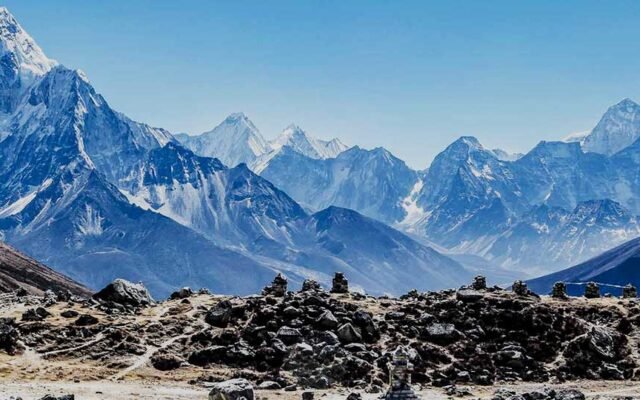
Nepal’s autonomy gap emerges from the distance between the alternatives it can negotiate and those it can realistically sustain. Its dependence on Indian transit routes and access to Indian markets reflects not merely a diplomatic preference but the realities of geography, established infrastructure and commercial networks. China offers a potential alternative, but the Himalayan terrain, high infrastructure costs, difficult logistics and questions of commercial viability limit how quickly northern connectivity can offset Nepal’s existing dependence.
The problem is compounded by domestic political instability. Frequent changes in government and shifting political priorities can interrupt long-term projects, weaken policy continuity and make external partnerships vulnerable to partisan competition. When foreign-policy decisions become instruments of domestic political bargaining, Nepal risks replacing a coherent national strategy with successive attempts to renegotiate its position.
The deeper issue, therefore, is not whether Nepal should move closer to India or China. It is whether the state can develop the capacity to engage both without allowing either relationship to become indispensable. Strategic autonomy requires more than diversified partnerships: it demands a stronger productive economy, reliable institutions, sustainable infrastructure and a consistent foreign-policy framework. Without these foundations, diplomatic hedging may improve Nepal’s bargaining position temporarily while leaving its underlying vulnerabilities intact. Nepal’s strategic independence will ultimately depend less on how successfully it balances its neighbours than on how far it can reduce the costs of saying no to either of them.
From Hedging to Strategic Autonomy: A Way Forward
Nepal’s path toward a concrete strategic autonomy hinges mainly on its diversification of trade routes and partnerships. At an economic and infrastructure level, the creation of trans-Himalayan power corridors, as well as the Belt and Road Initiative (BRI) projects, allows the country to develop potential transit alternatives, especially in the Rasuwa district.
Its hydropower potential like the 456 MW Upper Tamakoshi Hydroelectric Project (UTKHEP) could position Nepal as a regional energy exporter, rendering Indian coercion costlier and granting Kathmandu geopolitical agency to explore agreements with Bangladesh (via the Indian grid). By prioritising internal storage capabilities and proposing this tripartite dynamic in its next projects, Nepal could reduce its reliance on India, especially during dry season.
On the institutional and diplomatic front, Nepal relies on “nimble diplomacy” and “economic pragmatism”. This requires institutional strengthening to maintain consistent foreign policy, alongside multilateral diplomacy to diversify its international partnerships and reinforce its negotiating power, beyond the Sino-Indian duopoly.
Nevertheless, even if diversification offers Nepal greater agency, converting hedging into strategic autonomy does not provide complete independence from its neighbors nor compensate for the limits of the state’s ambitions.
The Risks and Limits of Nepal’s Strategic Ambitions
Since the 1950 Treaty of Trade and Commerce, India remains Nepal’s main trading partner (representing 62.3% of total trade), as the majority of daily necessities are imported from India. Moreover, with no maritime access, Nepal is highly dependent on Kolkata and Visakhapatnam ports for its international maritime commerce.
Nepal could replace one dependency with another, such as China, but its shared frontier is dominated by the Himalayas, which renders the trading routes difficult. This forces Nepal to trade primarily with India despite their deeply asymmetrical relationship, with India absorbing 81.1% of Nepal’s exports. Furthermore, Chinese investments must be evaluated based on their real economic impacts to avoid reproducing the Pokhara International Airport case and the risk of unsustainable debt. Nepal’s attempt to diversify its partnerships instead of bandwagoning can create diplomatic tensions with great powers, as illustrated by the 2022 MCC controversy.
Finally, one of Nepal’s greatest challenges is its limited resources and political inconsistency, undermining long-term planning. The Budhi Gandaki Hydropower Project (BGHPP) is a concrete example of this volatility: awarded to a Chinese firm in 2017, cancelled a few months later by the government that followed and once again reinstated by the next, before being withdrawn from the BRI priority list.
Conclusion: Can Nepal Become Strategically Autonomous?
Ultimately, hedging remains a pragmatic strategy for Nepal to navigate the pressures of its nuclear-armed neighbors without alignment. However, diplomatic balancing alone is insufficient to secure the state’s sovereignty. Nepal’s strategic autonomy depends heavily on domestic economic resilience, reinforced institutional capacity and carefully managed viable partnerships outside of the Indo-Chinese duopoly. Therefore, Nepal’s success should be measured by its ability to make independent and uncoerced decisions for its national interests, not by maintaining equal distance from India and China. Nepal cannot change its geography, but it can change how much that geography determines its strategic choices.