
02 May 2026, NIICE Commentary 12472
E V A Dissanayake
The Taiwan Strait, a 180-kilometer-wide body of water, has long been one of the world’s most precarious geopolitical flashpoints. The “status quo” that once defined cross-Strait relations is no longer a static equilibrium but an increasingly fluid landscape shaped by military posturing, economic coercion, and diplomatic maneuvering. Understanding the evolving dynamics of the China–Taiwan relationship is, therefore, not merely an academic exercise, but a critical requirement for assessing regional and global security.
The Historical Anchors of Modern Tension
To understand the current friction, one must look back to 1949, when the People’s Republic of China (PRC) was established in Beijing, and the Republic of China (ROC) government retreated to Taiwan. While Beijing views Taiwan as a breakaway province that must eventually be reunified, peacefully if possible, by force if necessary, the political identity in Taipei has evolved. Decades of democratic consolidation in Taiwan have birthed a distinct national identity. Recent polls consistently show that a majority of the island’s population identifies as “Taiwanese” rather than “Chinese” or “Both.” This shift in identity is the fundamental driver of the current impasse. Beijing’s “One Country, Two Systems” framework, once proposed as a path to unification, has lost virtually all its appeal in Taiwan, particularly following the political integration of Hong Kong.
The Military “New Normal”
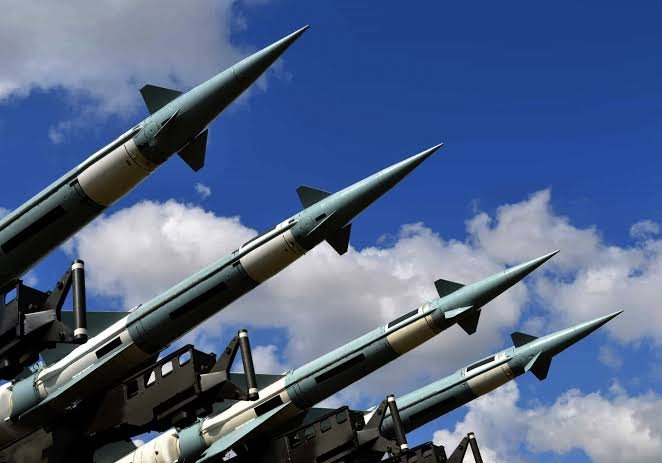
The military dimension of the cross-Strait relationship has entered a phase of “grey-zone” tactics. Unlike a full-scale invasion, which remains a high-risk “black swan” event, Beijing has intensified its use of the People’s Liberation Army (PLA) to normalize a military presence around the island. In late 2025 and early 2026, the world witnessed large-scale exercises like “Strait Thunder,” which simulated blockades and precision strikes. These maneuvers serve a dual purpose: they degrade Taiwan’s military readiness through constant attrition, and they psychologically prepare the international community for a Chinese presence within Taiwan’s Air Defense Identification Zone (ADIZ). Taiwan, in response, has adopted the “Porcupine Strategy.” Recognizing the impossibility of matching the PRC’s raw military spending, Taipei is focusing on asymmetric capabilities – sea mines, anti-ship missiles, and drone swarms, designed to make any potential invasion prohibitively costly. The extension of mandatory military service in Taiwan and the increase in defense spending to record levels signify a society bracing for a protracted period of uncertainty.
The Semiconductor Shield: Economic Interdependence and Vulnerability
The China-Taiwan relationship is unique because it is characterized by deep economic integration alongside profound political hostility. Taiwan is the world’s undisputed leader in advanced semiconductor manufacturing, with Taiwan Semiconductor Manufacturing Company (TSMC) producing over 90% of the world’s most sophisticated chips. This “Silicon Shield” provides Taiwan with a layer of security; a conflict that halts chip production would trigger a global economic depression, affecting Beijing as much as Washington. However, this shield is double-edged. Beijing is aggressively pursuing “semiconductor sovereignty” to reduce its dependence on Taiwanese tech, while the United States is pushing for “friend-shoring” to move production to more secure locations. As the world de-risks, the economic interdependence that once acted as a stabilizer is slowly eroding, potentially removing a key deterrent to conflict.
The Washington Variable and Strategic Ambiguity
The United States remains the most influential external actor. For decades, Washington has maintained a policy of “Strategic Ambiguity”, neither confirming nor denying whether it would intervene militarily to defend Taiwan. This was intended to deter Taiwan from declaring formal independence and deter Beijing from using force. However, the ambiguity is thinning. The years 2025 and 2026 have seen more explicit statements of support from U.S. administrations, alongside increased arms sales and high-level diplomatic visits. The U.S. frames Taiwan as a “frontline of democracy” and a vital node in the “First Island Chain” of Pacific defense. For Beijing, this is viewed as an infringement on its internal affairs and a violation of the three Sino-US Joint Communiqués. The risk of a “proxy” confrontation or a miscalculation in the Strait has never been higher.
Despite continued advancements in the substantive dimensions of U.S.–Taiwan relations, the discourse surrounding Taiwan within Washington is shifting in a potentially troubling direction. Recent remarks by U.S. Treasury Secretary Scott Bessent, describing Taiwan’s dominance in semiconductor production as a “single point of failure” in the global economy, reflect a broader perspective that increasingly frames Taiwan as a strategic liability for the United States.
Information Warfare and the Digital Front
The modern conflict is no longer confined to conventional military capabilities; it increasingly unfolds across digital platforms and information ecosystems. Social media, visual narratives, and algorithm-driven content have become integral tools in shaping perceptions and influencing both domestic and international audiences. The combination of military imagery with cultural identity, often seen in short-form digital content, serves as a microcosm of this evolving information domain.
In this context, Beijing employs elements of “sharp power” to project the inevitability of unification, while Taipei leverages its open digital environment to cultivate international legitimacy and soft power appeal. These competing narratives form a parallel arena of contestation, where perception management is as strategically significant as physical deterrence.
However, it is essential to distinguish between rhetorical escalation in the information space and substantive shifts in strategic posture. Much of the “war of words” is directed toward domestic audiences, reinforcing political legitimacy and national identity. By contrast, more reliable indicators of escalation lie in material developments, such as troop deployments, military exercises, and economic signaling, which offer a clearer measure of the trajectory of cross-Strait relations.
The Path Forward
The China-Taiwan relationship is not a problem to be “solved” in the short term, but a crisis to be “managed” indefinitely. The erosion of “strategic patience” has given way to a more pronounced phase of strategic competition. For the international community, the goal must remain the prevention of kinetic conflict. This requires maintaining open channels of communication between Beijing and Washington to reduce the risk of miscalculation and unintended escalation of a conflict. It also necessitates the respect of red lines and understanding that while Taiwan’s democratic system carries significant global resonance, formal moves toward independence continue to represent a critical threshold for Beijing.
At the same time, economic resilience must be strengthened through sustained efforts toward supply chain diversification, ensuring that interdependence, particularly in the semiconductor sector, remains a stabilizing factor rather than a source of strategic vulnerability, even amidst the trajectory of cross-Strait relations that will continue to fluctuate between the two.
E. V. A. Dissanayake is an Independent Researcher from Sri Lanka. She is a Robert Bosche Stiftung Fellow and a Visiting Scholar of Columbia University, USA.