23 April 2026, NIICE Commentary 12456
Sidhant Kumar
The US-Iran war had a cataclysmic impact on national economies across the world. But most importantly, it was the energy nodes of the countries, such as India, that were heavily impacted. The Iran war also came at a time when India was restructuring its partnerships with countries including the US, China, and Israel after an interlude due to tariffs, border disputes and the Gaza war. India restrained itself and did not condemn the war. India performed “diplomatic silence” by re-enacting its strategic autonomy “balancing its relations with competing global and regional actors”. But the approach has come under strain as it has led to a debilitating impact on its economy and people.
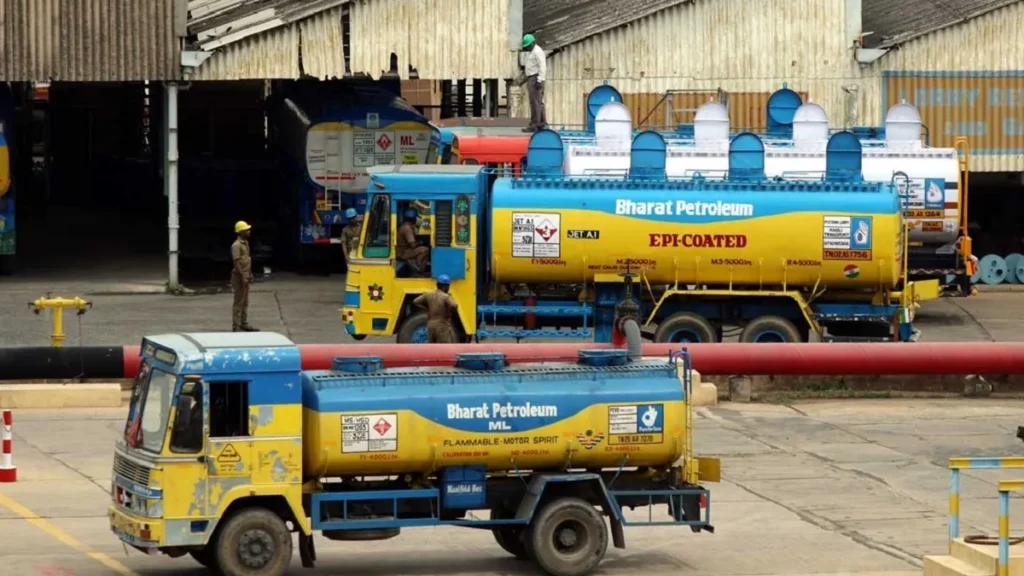
The war unmasked India’s heavy energy reliance on the Gulf countries, straining its long-held strategic autonomy. India, being the fifth largest economy, is the third largest consumer of oil. Being the third-largest importer of crude oil in the world, India is one of the world’s most energy-import-dependent economies. Today, India imports over 85% of its crude oil and 40% of its gas source from the Middle East. Most of these come through the Strait of Hormuz, which is now choked. This is driving up oil and gas prices. The crude oil price is now $109 per barrel, up from $65 in mid-February. LPG gas cylinder prices have already been raised in India by Rs 60 for households and Rs 144 for commercial users, who are also fearing disruption of supply. India’s Reserve Bank of India on 22nd April, 2026, noted that if supply chains are not restored early, it may create challenges in the form of higher energy costs and input cost pressures.
To stem over this huge dependence on the Gulf countries’ gas and oil, India has pursued a strategy that can best be described as “calibrated multi-alignment” or “strategic autonomy.” India has not sided with any country in the region and has nurtured “balanced” relationships with Iran, the Gulf monarchies, Israel, and the US. Due to this balanced relationship, India has been able to cushion the shock in petrol due to procurement from Russia, the US, and other suppliers. India also has stock cover of crude oil that can last for 60 days. Yet the crisis of gas is showing cracks in its domestic economy and foreign policy.
Gas Crisis and Livelihood Impacts
India’s heavy reliance on the Strait of Hormuz for its gas has created vulnerabilities for its people. India had taken fiscal measures to reduce the burden on the populace by keeping the oil prices pegged. But it has never maintained a surplus of gas and has largely relied on external sources. India can reroute its crude oil to Russia and the US, but it cannot do so in the case of gas. The country has around 332.1 million active domestic LPG connections and 104.29 million Pradhan Mantri Ujjwala Yojana (PMUY) connections. In March alone, there was over a 40% increase in LPG panic gas bookings, leading to 7.6 million daily requests.
The crisis of cooking gas has increased the anxieties of households. Labor-intensive industries such as the ceramics industry have gone cold as their kilns have been shut down, leading to a lack of wage work. The United Nations has estimated that 2.5 million people in India could fall into poverty as the crisis in West Asia continues, eroding household buying power. The war has also impacted the high growth rate of India, which has hovered at around 7% and is estimated to grow at 6.6 % in FY2027.
The government has been able to control the food prices due to record production of food grains and a resilient supply chain. But the cracks have started showing as the blockade at the Strait of Hormuz continues. Due to a crisis in supply for fertilizer and urea for agriculture, food prices are going up. Food inflation almost doubled between January and March in rural areas. Within food groups, vegetable oil (9%), along with eggs (5.5%), meat (12.5%), and fish (7.3%). An increase in gas prices and inflation has led to protests by wage laborers across cities in India to increase their wages. The crisis has also affected the huge Indian diaspora living in the Gulf states. The diaspora sends remittances, which stand at $45-50 billion, accounting for a substantial share of India’s foreign exchange. Several new graduates who were going on the job market have been put on hold in business and tech schools of India, bringing back memories of pandemic-era job uncertainty.
India’s Multi-Alignment Woes in West Asia
For a long time, India has relied on its strategic autonomy/multi-alignment approach towards West Asian countries, which have been historically inimical to each other. Both Iran and Israel have been important for India, as it is the largest customer of Israeli defense exports. Whereas Iran is geographically among India’s closest neighbors, it has oil and gas reserves and thus entails the lowest transportation costs. Iran is also important because it has long been India’s strategic gateway to Central Asia and a critical energy partner, reflected in its investments in Chabahar port and the International North–South Transport Corridor. This balance was broken due to Israel’s annihilatory attack against
India’s balanced approach towards both countries came under duress as Israel started annihilatory attacks against Iran. The crisis further makes India vulnerable and forces it to rely on the US and Russian supply more and more. As the Strait of Hormuz closed, India had begun to diversify its energy needs from Russia and Iran as well, which had allowed a few tankers to pass through the strait. India had started negotiating with Israel and the US for the safe passage. But the arrangement did not last long due to the current U.S. blockade of the Strait of Hormuz. In addition, an expert highlighted that “the Iran war also exposed India’s BRICS leadership. It dented India’s Global South leadership. In times of need, India did not do anything for the Global South countries.”
India’s Energy Security Plans
Amidst the crisis, several solutions have been floated in the public sphere, which center on the theme of energy sovereignty and a shift away from fossil fuels. Electrotechnology has been floated as an alternative to fossil fuels. Energy diversification technologies are being pursued, such as advances in blended petrol and blended diesel; a hydrogen program for hydrogen fuel is in the pipeline; and the redesigning of electric vehicles, which requires renewable infrastructure, including critical minerals. An expert noted that India is also making strides by developing a rare earth mineral corridor running through Indian states and participating in the Quad Critical Minerals Initiative to secure critical minerals. The recent progress in India’s Fast Breeder Reactor at Kalpakkam also created potential for nuclear energy.
The government’s immediate response has been emergency stabilization. It has invoked special powers to direct refineries and petrochemical complexes to maximize LPG production by diverting propane and butane into the domestic pool. The government has also invoked the Essential Commodities Act, 1955, to regulate the supply of LPG and natural gas. The government has diversified its energy imports and procures oil from wherever it is commercially viable. India has diversified its crude procurement sources to 41 countries and LNG to 30 countries.
To control the prices at the pumps, the government has cut excise duties on petrol and diesel to protect consumers ahead of three crucial upcoming elections where the incumbent government at the center is seeking to turn the tide. The government has responded to the crisis by proposing a $6.2 billion “economic stabilization fund”. The government is also mooting plans for a price stabilization fund to create a buffer to absorb the shocks of disruption in the energy supplies.
At the same time, India has been changing tack in its foreign policy. India’s Minister of State of External Affairs, Pabitra Margherita, attended the last day of the Chehelum (40-day mourning) ceremony for Iran’s late Supreme Leader Ayatollah Ali Khamenei at the Iranian embassy. What it suggests is that for India, there are some relationships that are more important than others. India realizes that its reliance on Gulf countries’ oil and Iran is far more important than its closeness with the US or Israel.
Simultaneously, India’s Foreign Secretary Vikram Misri visited the US to get assurances of the US’s promises on trade, tariffs, and defense cooperation as the ceasefire between the US and Iran was announced. India realizes that the Trump administration could exacerbate India’s tariffs and its energy woes. Positive signaling towards the US is deemed important in case Trump comes down heavily on India for its buying of the Russian oil during the war.
Summing up, the war is far from over as the US blockade on the Strait of Hormuz continues. It has led to far-reaching impacts on jobs and food prices. India’s struggles to balance its energy security and foreign policy will also heighten in the days to come.
Sidhant Kumar is a Visiting Fellow at NIICE and a PhD Candidate at Jawaharlal Nehru University, New Delhi, India.