15 April 2026, NIICE Commentary 12443
Dr Chander Shekhar
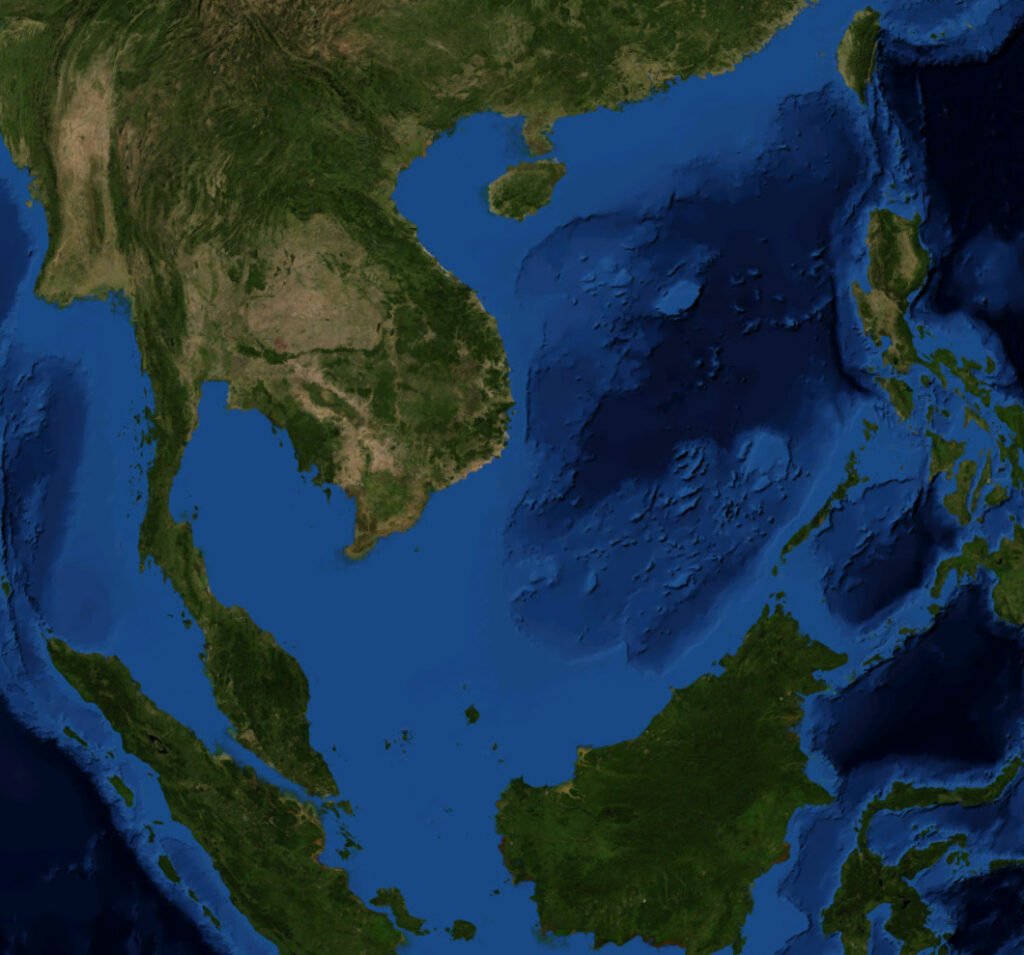
The last one and a half months show that there has been an active posturing by Southeast Asian countries to rename features in the South China Sea, which is practised in reciprocity. It arouses sentiments of other claimants and challenges the status quo by reinforcing and resetting claims. This is happening at a time when global public perception has been stuck in one spot, the Middle East situation, distracted from the Ukraine-Russia conflict. Global media has portrayed it and undermined other potential trouble spots. Indo-Pacific region and new episodes in the South China Sea have been sidelined. The survival question has overtaken other futuristic goals has opportunity costs for regional and international security. Although Manila’s renaming of features by Manila in the South China Sea is not a new phenomenon, as put forward, it has been done previously by other claimant states in the disputed sub-oceanic water. The act of renaming features at the critical juncture in the disputed water demonstrates important development in the South China Sea, which raises security questions amidst ongoing regional wars in Europe and the Middle East, and has lessons to be learned to manage potential conflicts there.
Politization of Renaming Features: Manila Case
South China Sea has been a troubled maritime issue after world wars, and the rise of cautiousness among countries has led to assertive claims as carrying potential oil, natural gas, and other minerals. Its geography makes it not just a complex subject between China and some Southeast Asian countries, but also a potential zone of cooperation between them. The sea is surrounded by several littorals whose stakes encourage external actors to influence regional geopolitics. It takes international character to maintain freedom of navigation, as East Asian economies are dependent on this busiest route for energy, fertilisers, and other goods.
As part of the recent advancement in the region, it is reported by the Philippines that it would rename more than 100 island features in the sea to strengthen its sovereignty claims; some islands are disputed with neighbouring countries, though. The renames will be done by President Marcos’ executive order. The Presidential Palace underlined on 31 March that “more than 100 Kalayaan Island Group (KIG) features, part of the Spratly islands, will have Philippine names, which strengthens administration and governance, as well as sovereignty, in Palawan and the West Philippine Sea”.
Other countries are also actively involved in the renaming process for the smooth administration of islands. China has also renamed around 100 geographical features in the South China Sea as part of a major initiative. In 2023, China’s Natural Resources Ministry issued a cartographic map underlining the nine-dash line. So, renaming features in the South China Sea has been part of countries’ increasing engagement and national interests. Besides, Indonesia, not a disputed party to the SCS, has renamed its EEZ as the North Natuna Sea in July 2017. This politicization of features has reinforced countries’ claims in the disputed water by rationalizing history, cultural and geopolitical connectivity.
China’s Response
The People’s Republic of China (PRC) has expressed “sharp disapproval of the Philippines’ decision” to rename features in the South China Sea, and stated the action is not legal, which would undermine China’s sovereignty and regional peace. It claims that the Philippines action has violated international law, the UN charter, and relevant documents as agreed between ASEAN and China, of which Manila is a part, to avoid creating an unfriendly environment in the South China Sea.
The Kalayaan islands are believed to be rich in resources and are also a contested site between various countries. China says the KIG islands have been part of its Nansha Qundao as per the white paper, Manila’s moves show “nothing but a stunt” and “act of duplicity” as seeking to provoke on the one hand and find cooperation on the other hand.
In spite of these manufactured experiences, China and the Philippines are two major trade partners and share a vision of the Global South. In 2025, their trade volume stands at USD 38-40 billion, which replaced the US in 2024, valued at USD 12.1 billion. The US’s deepening mistrust and anti-American policy protests across the world over its Iran attacks, the latter’s attacks on American military bases in different Arabian countries, show that distancing and restraint from the US could provide stability. America under Trump is not a guarantee, but a huge cost. The rise of Military Junta in different Global South countries needs to be tamed to avoid integration of a system that has the potential for military coup, which adds complexity, not durable stability and assurance. Disputed parties in the South China Sea already have several mechanisms to negotiate and manage, creating an unfriendly atmosphere is no one’s interests, which could affect bilateral and multilateral progress in the region.
Conclusion
Renaming features in the South China Sea is not a new phenomenon. This has been there at the onset; disputed countries have been renamed before to rationalize claims and manufactured history. The politics of renaming features to shape public perception is an emerging trend in the South China Sea. It will not affect peace and security. The 2016 verdict favoured Manila without due process, as China contends. Other regional actors are concerned that such minor acts could be misunderstood between the disputed parties, and ASEAN’s deep silence shows renaming is less concerned than military assertiveness. The South China Sea shall not be the third front chaotic strategy carrying huge cost and burden after Ukraine and Iran. Global Strategic Autonomy (GSA) is the need of the hour to distance itself from an unnecessarily lost battle.
Dr Chander Shekhar is a Researcher at the Center for International Politics, Organizations and Disarmament, Jawaharlal Nehru University, New Delhi, India.