17 March 2026, NIICE Commentary 12351
Dewang Ganesh Thosar
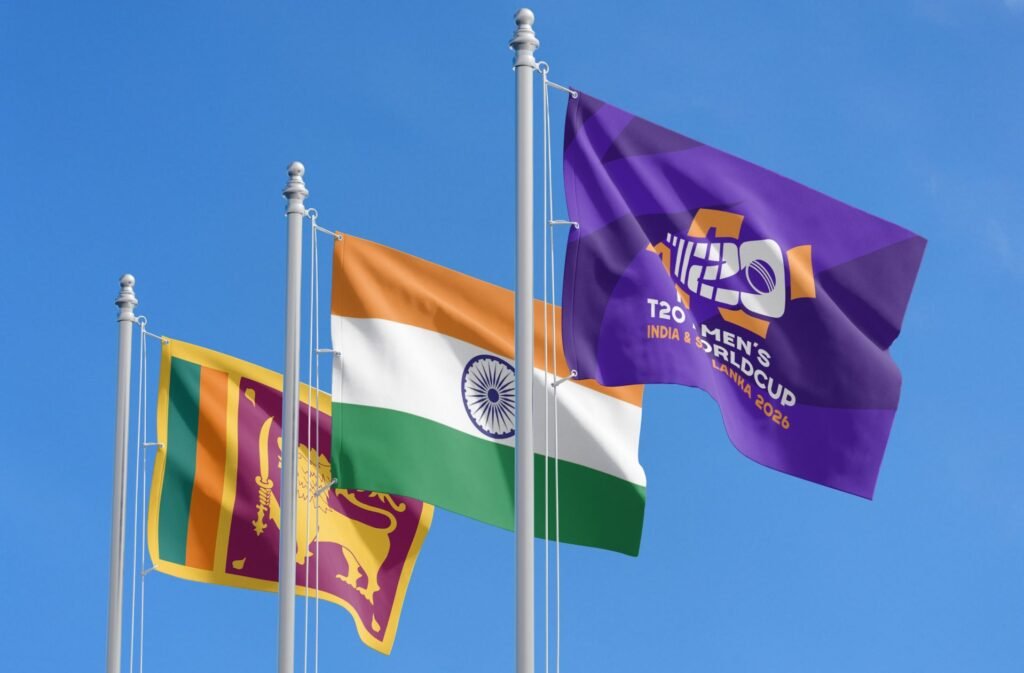
The ICC Men’s T20 World Cup has captured the public imagination across India and in major cricketing nations. Upsets such as Zimbabwe’s win over Australia and close contests like Nepal’s challenge to England, as well as Afghanistan’s test of South Africa, have dominated headlines. Yet beneath the spectacle of competition lies a quieter, more consequential development: the democratisation of cricket and the diplomatic opportunities it has created.
What was once regarded as a sport largely confined to the Commonwealth world is now steadily transcending historical and geographic boundaries. This transformation is not merely sporting. It carries implications for culture, diplomacy and international engagement. For New Delhi in particular, the widening geography of cricket opens new avenues for bilateral cooperation and strategic outreach.
Democratisation of Cricket: a Global Turn
The present ICC tournament features twenty countries, representing almost every inhabited continent except South America. The participation of teams ranging from Italy to Namibia and from India to the United States signals the sport’s widening social and geographic base. The increasing visibility of players from non-traditional cricketing regions reflects not only institutional support from the ICC but also grassroots enthusiasm driven by persistence and resilience.
The Italian team’s transition from practising predominantly on artificial surfaces to competing on grass and clay pitches illustrates the infrastructural and cultural shift underway. The United States team, with a significant number of players of Indian origin, demonstrates how migration patterns have facilitated the transplantation of cricketing cultures into new societies. These developments indicate that cricket is no longer confined to inherited colonial legacies but is becoming embedded in diverse social contexts.
This trend extends beyond the teams participating in the current tournament. In an opinion piece in a leading Indian daily, Noriaki Abe, Political Minister at the Japanese Embassy in New Delhi, noted that cricket is emerging as a catalyst in strengthening India-Japan bilateral relations. Japan reportedly has more than 3000 active players and over 200 domestic teams. Such figures underscore the extent to which cricket has found institutional and popular acceptance in a country traditionally associated with other sporting cultures.
Brazil presents another compelling example. With over 100,000 registered players under Cricket Brazil, the sport has witnessed remarkable growth since the early 2000s. The efforts of Matt Featherstone, a professional cricketer from England who relocated to Brazil and contributed to the sport’s development, culminated in Brazil securing ICC membership in 2006. These examples suggest that the democratisation of cricket over the past two decades has generated new constituencies and platforms that can be mobilised for diplomatic engagement.
Valuing Sport for Diplomacy beyond the Subcontinent
Cricket diplomacy is not an unfamiliar concept in the Indian subcontinent, particularly in the context of India-Pakistan relations. However, its contemporary relevance extends far beyond that bilateral frame. In an era marked by tensions in high politics such as security, trade disputes and technological rivalry, sport offers a relatively low conflict domain for constructive engagement.
A widely circulated image of the United States Ambassador to India, Sergio Gor, attending an India-United States T20 World Cup match at the Wankhede Stadium in Mumbai alongside industrialist Mukesh Ambani and International Olympic Committee member Nita Ambani underscores the symbolic capital of sporting events. Such moments reflect informal spaces where diplomatic signalling, business interests and cultural affinity intersect. Particularly in periods of strain in bilateral partnerships, these softer channels can complement formal diplomatic mechanisms.
Similarly, Japan’s Foreign Minister presented India’s External Affairs Minister, Dr S Jaishankar, with a Japanese cricket team jersey, highlighting the symbolic power of sport in reinforcing goodwill. The forthcoming inclusion of cricket in the Asian Games to be held in Nagoya in 2026 further strengthens the potential for sports-based engagement between India and Japan. These developments demonstrate that cricket can serve as an instrument of cultural diplomacy that operates alongside traditional statecraft.
The economic dimension is equally significant. India’s population of over 1.4 billion, combined with the populations of other participating countries and emerging cricket nations, represents a vast potential audience. The scale of viewership translates into advertising revenues, sponsorship deals and tourism flows. When integrated with economic diplomacy, cricket can contribute to market access and brand positioning for participating states. In a global order often preoccupied with strategic rivalry, such low politics domains provide relatively stable platforms for cooperation.
Significance from New Delhi’s Perspective
For New Delhi, the expanding geography of cricket carries particular strategic weight. Cricket occupies a central place in Indian society, and the Board of Control for Cricket in India (BCCI) commands considerable financial and organisational influence within the global cricketing ecosystem. This institutional strength can be leveraged to support capacity-building initiatives in emerging cricket nations.
India can facilitate coaching exchanges, infrastructure development and domestic league partnerships. Strengthening local leagues in newer cricketing countries would not only expand the sport’s base but also cultivate enduring institutional linkages. Given the large pool of Indian players, who often remain outside national visibility due to structural constraints, collaborative arrangements with emerging cricketing nations may generate mutually beneficial outcomes.
The Indian diaspora is a critical intermediary in this process. Teams such as those of Canada, the United States and the United Arab Emirates illustrate the leadership role played by people of Indian origin in popularising the sport abroad. This diaspora bridge enables New Delhi to deepen cultural ties while advancing its broader foreign policy objectives. Through structured engagement, cricket can become a medium for strengthening both state-to-state and people-to-people connections.
Moreover, the sport offers a potential gateway for engagement with regions such as South America, often described as a last frontier in India’s foreign policy outreach. As cricket gradually takes root in countries like Brazil, New Delhi can explore new partnerships that combine cultural diplomacy with trade, technology and development cooperation. The sport thus becomes not merely a recreational activity but a vector of strategic presence.
Conclusion
The democratisation of cricket represents more than an expansion of a sporting tournament. It reflects shifting cultural geographies and the emergence of new networks of affinity across continents. For India, whose social fabric and institutional capacity are deeply intertwined with the game, this transformation offers an opportunity to recalibrate aspects of its diplomatic outreach.
By recognising cricket as a domain of constructive engagement in an era otherwise defined by contestation in high politics, New Delhi can harness its symbolic and material capital in the sport to advance bilateral cooperation. From Japan to Brazil, from North America to Africa, the widening appeal of cricket signals the opening of new diplomatic vistas. If approached with strategic foresight, cricket diplomacy can complement India’s traditional foreign policy instruments and strengthen its presence in a rapidly evolving global order.
Dewang Ganesh Thosar is a Post Graduate Research Scholar at South Asian University, New Delhi, India.