16 March 2026, NIICE Commentary 12346
Shradha Arjyal Joshi
Political scientist Francis Fukuyama writes in “The Origins of Political Order” that the modern liberal democracies succeed only when three institutions remain in equilibrium: a strong state, the rule of law and accountable government. If there is a breakdown in this balance then democracy begins to lose its credibility. The greatest threat to democratic legitimacy isn’t the rejection of democratic principles themselves but rather the failure of political systems to deliver effective governance, justice and accountability. When citizens recurrently experience corruption, inefficiency and weaker institutions, frustration increasingly transforms into political cynicism. The political job of finding the right regulatory mechanism to tame socio-economic volatility hasn’t yet been achieved despite changes of many systems in Nepal’s political history.
On 5th March 2026, Nepali voters have given their verdict: with a resounding victory of Rabi Lamichhane-led RSP (Rastriya Swatantra Party) and the catastrophic defeat of the historically dominant parties like the Nepali Congress and Communists in Nepal. The RSP has secured an absolute majority in the lower house while the mainstream parties (Congress, Communist, and other smaller ones that ruled for decades) suffered their biggest historic defeat in the election, winning only a few seats when combined. While the RSP’s win and defeat of old parties were somewhat predictable, what was unexpected and shocking was the scale of their victory. RSP candidates swept Kathmandu, Bhaktapur, Jhapa as the epicenter and other major areas. RSP has emerged as a clear winner across country with wider geographic reach and dominance than any party in recent memory.
This election marked a seismic shift across Nepal’s political landscape. Activists like the late Ujwal Thapa had sown seeds of alternative politics and he named it “Bibek Sheel Nepali” in 2014. Its main ideology consisted of “pragmatism, reformism, and progressivism”. After some time, popular BBC Nepal journalist Rabindra Mishra even joined the path of Mr. Thapa. In 2017, the “Sajha” party was formed by Mishra which ignited intellectuals and former civil servants. Sajha aimed “to clean up the dirt in Nepali politics” and had strived for a welfare state on the back of STEM-system, transparency, integrity and meritocracy.
Before their courage and efforts in forming alternative politics. Nepalis were frustrated by the traditional parties but felt they had no better options. Many viewed politics as a dirty game and preferred to ignore it. In that scenario of newly molded alternative politics, young and urban voters began to slowly discuss reforms and question the failed system. Although candidates from Bibek Sheel and Sajha who made an alliance later, lost initially in the elections, yet they signaled that it was time to pitch out the entrenched leaders and party-centric politics. The electorate began to realize that their votes were essential to break the old patterns-the “silent revolution” was underway.
Nepal has held democratic elections since 1951 but has failed in establishing strong rule of law and accountability. The recent Gen Z protest expressed this weakness: corruption, abuse of power, and ban on social media raged anger of the younger generation into the streets and pertained to become major public domain to topple the Oli-led government. In short, the older mainstream parties were far from being accountable in economic and social justice. This has been one of the underlying factors in defeating the older established party this time through the election. They delivered a mandate for development, good governance and stability in the ballot box.
Before entering politics, Rabi Lamichhane was a combative television presenter engaged in exposing bureaucratic inertia and corruption. His punitive yet factual comments on the various socioeconomic and political issues earned mass attention. He was seen solving problems of ordinary people on air and gained a reputation for his accountability and courage. Within few years Lamichhane became a household name as someone “always there for people” solving their major issues. This immense public love and trust empowered him to leave his career in media and take a big yet courageous step in the world of politics, founding RSP. Lamichhane won the election in 2022, defeating his closest rival, Umesh Shrestha of the Nepali Congress, by a margin of 34,170 votes. Politics hasn’t been easy for him- he has been facing accusations (on cooperative funds) that are still being pursued in court.
Despite these hurdles, he continued to challenge the odds. He suffered jail time, the many transfers between courts, and the new accusations during the Gen Z protest. During the election campaign, he was seen with back-to-back remarks about his competitor, many of which were even highlighted in the media quickly. He was able to be a far sighter who brought his party again to the mainstream politics and this time with even big victory. Love him, hate him, but he cannot be ignored. Around three months ago, he formed an alliance with Balendra “Balen” Shah and their partnership was widely accepted across the country. Lamichhane’s passion and dedication for change in the country remain important driving forces in Nepali politics.
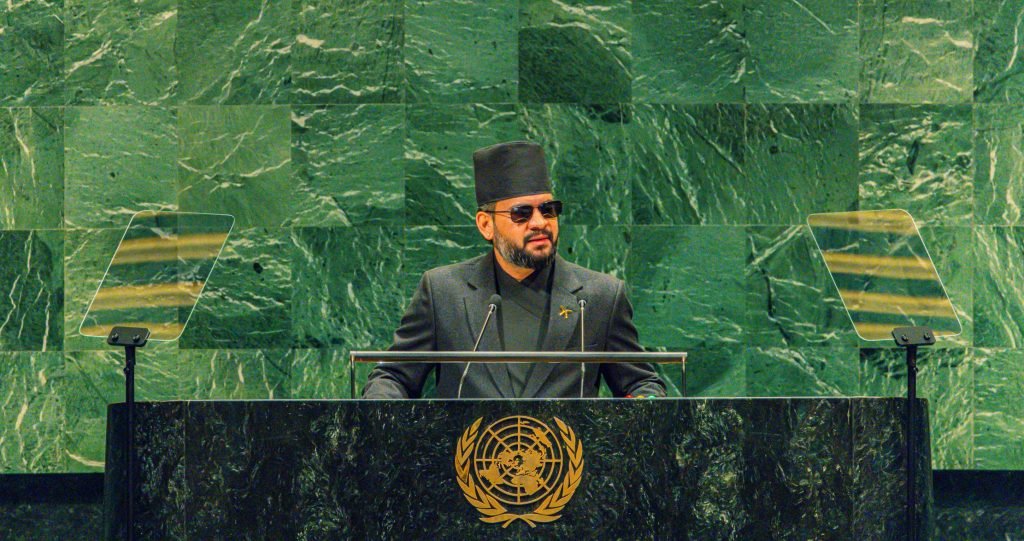
Balendra Shah- an engineer, rapper and Kathmandu’s former mayor- is now poised to become Nepal’s prime minister after defeating K. P Sharma Oli. Jhapa-5 was also presented as the epicenter of this election crofting two heavyweight candidates, Oli and Shah. Balen Shah’s public appearances as a mayor, characterized by his short-untrimmed beard, black sunglasses and dark suit-clad majority had already garnered national attention. Balen’s unconventional rise has made him a household name across all generations. Shah broke the mildew of a typical politician: in speeches, he could rarely be seen giving long introductions, instead jumping straight to everyday issues. As a rapper, he won fans with powerful lyrics attacking the failed system, corrupt politicians, and showcasing public frustration. His tenure as the mayor of Kathmandu city has been mixed: supporters praise his bold initiatives (expanding sidewalks, managing street market, cleaning city infrastructure, constructing waiting areas for the public in a traditional style) while critics fault his heavy-handed style (for example, the issue of garbage management still remains unsolved, and the way he handled street vendors drew backlash). Many see his firm leadership as exactly what Nepal needs; others worry about his hostile approach. In any case, he has vaulted from mayor to a national figure, and now faces huge expectations and challenges at the rudder of government.
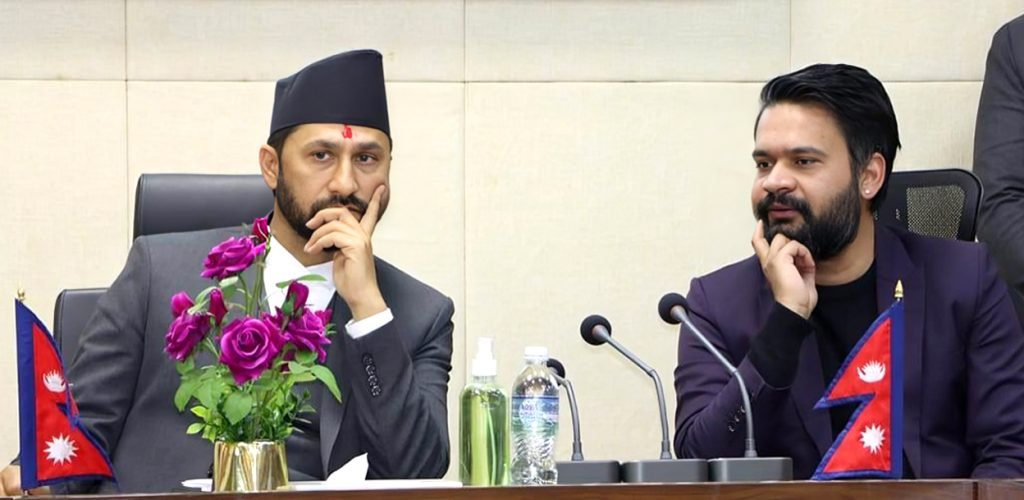
The meteoric rise of Rabi Lamichhane and Balen Shah has now sidelined the many established figures and political parties, heralding the ‘Rabi-Balen’ era. Although both have differences in personalities with their own strengths and weaknesses, their alliance has commenced new hope into Nepali politics. For decades, Nepali society has suffered from a lack of basics: poor service delivery, failed social justice, and stalled transformation. The economy underperformed due to corruption, policy failures, bureaucratic hurdles and lack of accountability. Politics in Nepal has become party-centered and corrupt, further weakening the state and the system’s delivery. All these frustrations built up and bubbled over in this election. This was a silent revolution in the voting booth to end the old guard’s vague promises. A much-needed revival seems to be underway, even among parties that lost badly. The Rabi-Balen era is just beginning and it carries both great expectations and healthy skepticism. One thing is clear: this change reflects voters’ demand for a fundamentally new path for Nepal’s road to development.
Shradha Arjyal Joshi is a development professional focusing in political and resource economics, diplomacy.