
15 March 2026, NIICE Commentary 12343
Mohan Kumar Mishra
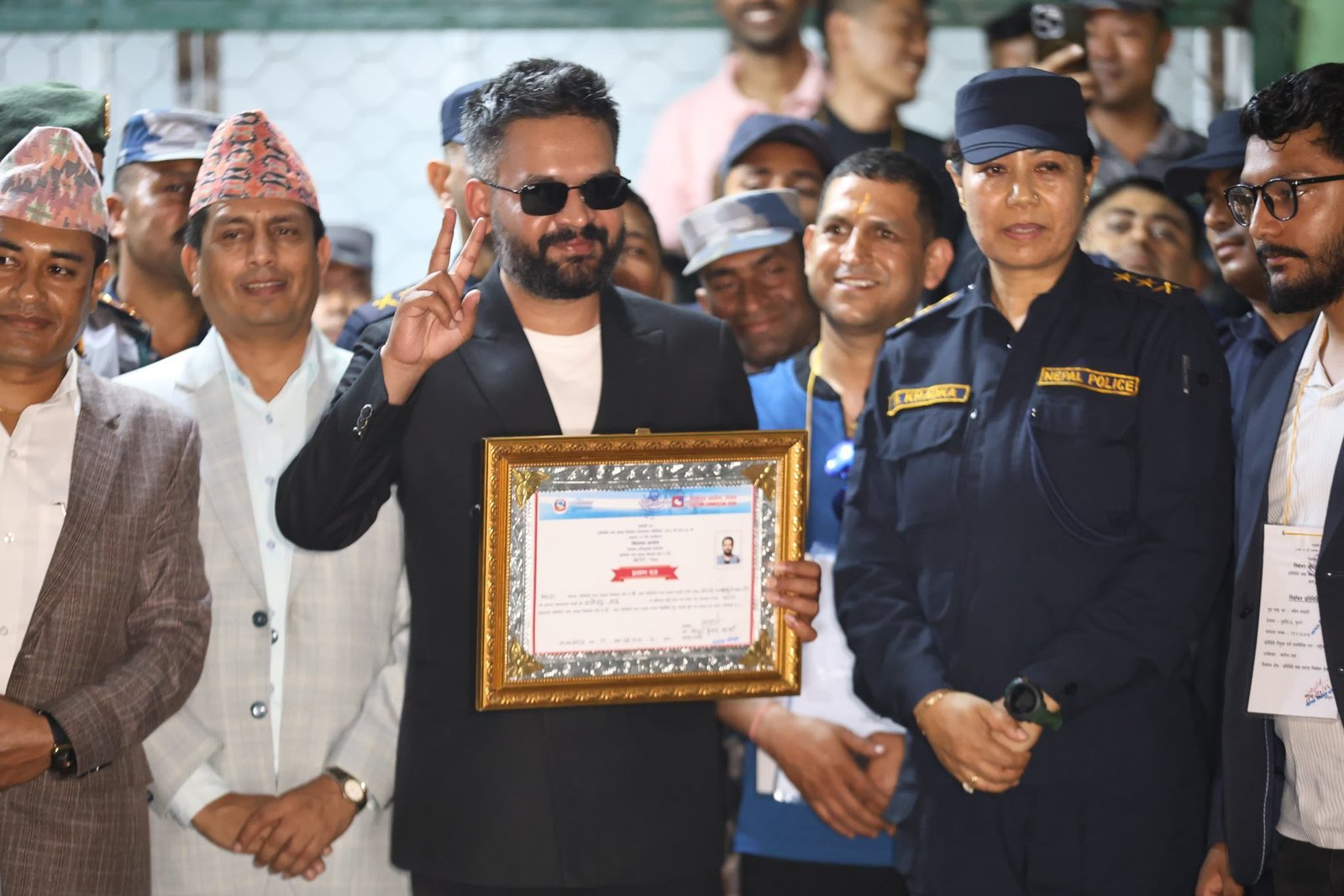
Last week, Nepal delivered a mature, decisive, and historic mandate, ending a long period of political instability and opportunistic coalition politics, as the RSP under the leadership of Balendra Shah Balen secured almost a two-thirds majority, long considered a herculean task under Nepal’s mixed representation system.
In 2017, during the elections, Balen wrote on social media I am an engineer, and I know how to build a country. At that time, no one could have imagined that this young man, who was raising a voice of resistance through hip-hop music, would, eight years later, be entrusted with leading the country. During these years, Balen used music to criticize poverty, corruption, nepotism, and inequality in Nepal and subsequently became popular among the youth.
This popularity eventually translated into electoral success. In 2022, Balen was elected mayor of Kathmandu. Even as mayor, he did not soften his tone or style. While he emphasized good governance, transparency, and the elimination of corruption, he maintained a confrontational stance toward old political parties. His criticism of the authoritarian tendencies of K. P. Oli invited criticism from some sections of society. But among the youth, his popularity continued to grow. Young people began to perceive him as the representative of their frustration and anger against the unresponsive political establishment.
Balen’s rise to the position of prime minister is also linked with the Gen Z movement. During this movement, it was perceived that Balen was guiding the direction of the protests from behind the scenes. After the movement, he emerged as the first choice for interim prime minister among young protesters. However, Balen seemed to have a long-term political strategy. When he declined the position, Sushila Karki became the interim prime minister.
Rabi Lamichhane, the chairman of the three-year-old Rastriya Swatantra Party who himself is facing allegations of embezzlement of funds, recognized the potential of Balen. Considering his growing popularity and appeal among youth, the RSP declared him the party’s prime-ministerial candidate for the 2026 elections. Under Balen’s leadership, the RSP won 125 out of the 165 seats under the FPTP system, along with 57 seats through the PR system in the 275-member House of Representatives.
These results are historic and remarkable for several reasons. Even Prachanda, who is widely credited with playing a major role in ending the 238-year-old monarchy, did not achieve such a decisive victory in the 2008 Nepal’s first CA election. The outcomes suggest that the desire for change among the Nepali people was even stronger in 2026 than it was in 2008. The election results could potentially end the long period of political instability and coalition politics in Nepal. With a clear majority in parliament, the era of fragile alliances may finally end. But whether this change will prove sustainable or whether it will ultimately follow the fate of earlier political movements will depend largely on the governance style and institutional capacity of the RSP.
The election also represents a significant shock to Nepal’s left-wing political history. In Jhapa, often referred to as the Leningrad of Nepal because of its historic association with communist politics, Balen defeated K. P. Oli, a four-time prime minister, by 49,614 votes. His defeat indicates a major shift in Nepal’s political landscape. Although Prachanda managed to win his own seat, his party, the Nepali Communist Party, suffered a heavy defeat. Even more strikingly, none of the Madhes-based political parties managed to win a single seat and they lost their status as national parties. The two major communist parties together are reduced to only 41 seats.
These results clearly reveal widespread public anger against traditional political parties. This change may bring not only a generational shift in Nepali politics but also an ideological one. Since the communist parties, often perceived as close to China, have been weakened, Beijing’s influence in Nepal may gradually decline. Meanwhile, the relatively liberal and open-economy orientation of the RSP could provide India with new avenues to strengthen its influence in Nepal. India must take advantage of this opportunity and maintain relations based on mutual respect and shared interests.
Most analysts predicted that Nepal would once again produce a coalition government. But, these predictions proved incorrect. Several factors appear to have contributed to the historic victory of the RSP.
First, after the Gen Z movement, the RSP successfully projected itself as the political force that could represent the aspirations of young voters. In its election manifesto, the party incorporated many demands that had emerged during the protests, including proposals for constitutional amendments. This strategy resonated strongly with young voters, who rallied behind the party.
Second, Madhes has traditionally played a crucial role in Nepali politics. Historically, Madhes has rarely favoured hill-dominated parties. However, the election results demonstrate a remarkable shift. The results suggest that the geographical divide between the Pahad and the Tarai is diminishing. Balen launched his campaign from Janakpur, and his speech proved effective in winning the trust of Madhesi voters. Balen’s own Madhesi identity (Madhesia Chhaura) and his clarity regarding federalism resonated strongly with voters. As a result, Madhesi voters supported the RSP, enabling the party to win most seats in Madhes and weakening Madhes-centered parties. In this sense, Balen’s emergence as a Madhesi national leader generated new hope among the people of the region.
Third, Balen also gained support from Nepal’s nationalist constituency. His criticism of India, particularly during controversies related to the border dispute and the dialogue in the film Adipurush, helped him cultivate a nationalist image. This stance convinced many traditional voters of the CPN-UML that Balen might adopt a firm stance toward India similar to that of K. P. Oli. Consequently, in constituencies dominated by the Khas-Arya community, the RSP performed better than Oli’s party.
Fourth, the Gen Z movement was fundamentally against old parties and leaders, widely blamed for corruption, poor governance, unemployment, and persistent instability. Many people felt that Nepali politics had become captive to three dominant leaders Oli, Prachanda, and Deuba. This perception persisted until the elections, enabling voters to support the RSP as a new alternative capable of translating the movement’s mandate into political reality.
Fifth, social media played a crucial role in shaping the election narrative. It served not only as a tool for mobilization but also as a platform to expose the shortcomings of the political system. The Nepali diaspora actively promoted Balen and campaigned for change online. Their efforts strengthened the desire for transformation and influenced public opinion. Many expatriate Nepalis also persuaded their families back home to support the RSP.
After the abolition of the monarchy, people trusted old political leaders, expecting them to lead the country toward equality and economic development. But, over time, these leaders became synonyms of corruption, nepotism, opportunism, and political instability. Taken together, these factors significantly contributed to the victory of Balen Shah.
In conclusion, while this victory is historic, it also brings enormous expectations. The electoral mandate clearly reflects a desire for change. To honour this mandate, the RSP must address the pressing problems of Nepali citizens particularly unemployment, corruption, and poor governance. Meeting these expectations will be the true test of the party’s credibility and of Balen Shah’s leadership.
Mohan Kumar Mishra is a PhD scholar in the Department of Political Science at Banaras Hindu University, Varanasi, India.
