
18 August 2026, NIICE Commentary 12668
Mohd Asif
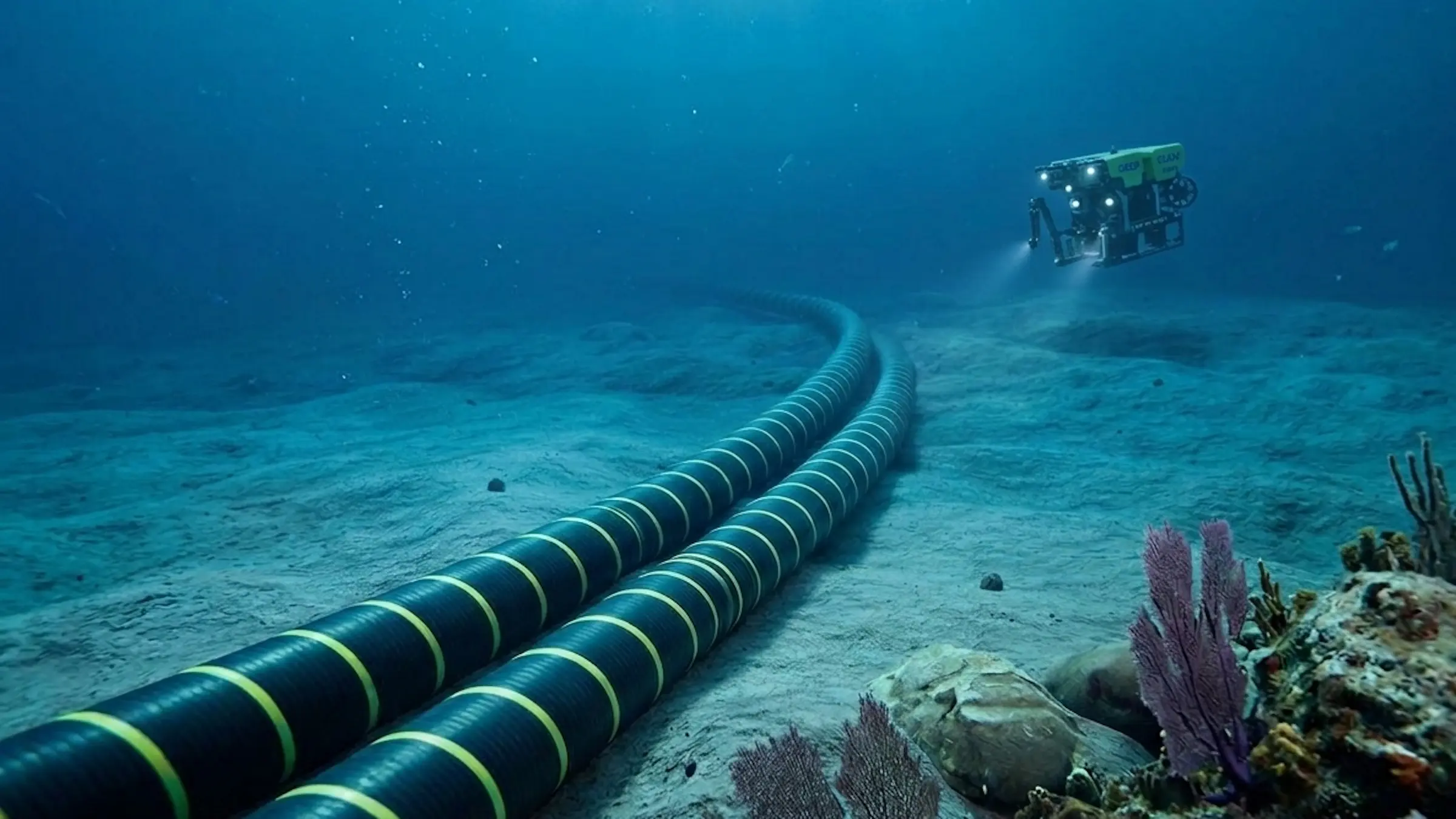
The modern digital world depends on a system of components that most people do not see in their daily lives. Beneath the water's surface, there is a massive network of optical fiber cables that carry more than 95% of the internet traffic around the globe. These underwater cables are responsible for carrying internet traffic in seconds, and this includes money transfers, governmental communications, and even social media activities. The network of these cables covers a distance of 1.4 million kilometers, which makes it possible to go around the Earth 35 times. Despite being out of the sight of many people, the significance of these cables has increased since they became an important part of national security and politics.
The Strategic Importance of Undersea Cables
Unlike satellites, which account for a tiny percentage of international communications, submarine fiber optic cables deliver most of the internet communications globally. All international banking operations, stock markets, e-commerce sites, cloud computing, military communications, and government computer networks depend upon the continuous operation of cables. Interruption can lead to severe economic and communication failures. The importance of cables in global communications has made them strategic assets like maritime channels and oil pipelines. Governments now view these cables as vital infrastructure that needs to be protected. Natural disasters, accidents resulting from fishing boats and ship anchors, and sabotage can result in disruption of communications. Since these cables traverse through narrow waterways and areas of political tensions, they are vulnerable to security risks.
Undersea Rivalry in the Twenty-First Century
Rivalry between the US and China has increasingly been shifting towards the cyber world, where submarine cables are considered one of the domains in contention between the two sides. Both states understand that control over the international communication network is not about improving the digital network but gaining power through it. United States has made considerable efforts in promoting its reliable and trusted digital infrastructure through partnerships with its allies and the private companies that build the submarine cables. Moreover, the United States has intensified monitoring of the involvement of foreign entities in the process of cable construction due to cybersecurity concerns, espionage, and critical infrastructure protection problems.
In contrast, China keeps growing its influence in the global digital infrastructure by building submarine cables and investing in telecommunications infrastructure. Chinese companies have been working on building cable infrastructure throughout Asia, Africa, and Europe. These investments have helped improve connectivity in different regions; yet, these ventures are viewed as an issue by the majority of Western countries. Competition between China and other states proves that digital infrastructure should not be regarded as only a business issue anymore. Communication infrastructure has already become strategic and is being viewed in the same way as ports, naval bases, and oil routes.
Emerging Security Challenges
Recent events have shown that sub-marine cable systems are way more vulnerable than thought before. Security concerns in the Baltic Sea, Taiwan Strait, and Red Sea have drawn attention to the vulnerability of this crucial infrastructure. Even though most of the vulnerabilities of submarine cables come from natural causes, fishing activities, and commercial transportation, the damage that occurs without any reason is now considered a security problem by governments. This has made the situation difficult due to the introduction of hybrid warfare. Hybrid warfare makes nations not just use their conventional forces but also apply pressure on their enemy by damaging their infrastructure facilities. Submarine cables become highly vulnerable since every interruption brings trouble in different fields. Another issue to be taken into consideration is cybersecurity. Due to the increased usage of cloud computing, artificial intelligence, digital finance and e-governance, it becomes just as important to keep the information safe as the cables themselves.
India's Strategic Interests
For India, undersea internet cables are becoming increasingly important with the development of its digital economy, financial technology and presence in the Indo-Pacific. India has more than one billion internet users and a booming digital service industry, which means that its economic prosperity is intertwined with its secure access to international internet connectivity. The major financial transactions, digital payment systems, cloud computing services, and governmental services require submarine cable connectivity of India with Europe, Southeast Asia, the Middle East, and North America. India situated in a strategically advantageous place for submarine cables in the Indian Ocean, India finds itself in a unique position to develop into a regional hub of digital connectivity, but it is also a heavy responsibility to secure the critical maritime infrastructure. The development projects initiated by India, including Digital India, data centers, and digital public infrastructure, further contribute to the necessity of resilient communication channels. In response to the growing threats, India has reinforced its cooperation in the context of frameworks like the Quad. Maritime domain awareness, information exchange, cybersecurity cooperation, and infrastructure resilience have become integral parts of regional security discussions.
The Indo-Pacific Dimension
The Indo-Pacific region is rapidly developing into one of the world’s most important regions, and the internet cable connection across various parts of the world is still an important part of this ever-developing strategic environment. Many of the world’s international trade routes run through this region, and a considerable number of digital transactions in the world also take place through this region. Thus, making sure that there is safety of the submarine cable network goes beyond maintaining internet connectivity. This has become imperative for economic stability, regional security, and even international trade operations. Countries are spending money to have a range of cable connections instead of having only a few main communication links. This will also ensure safety from any kind of damage or disruption of communications because of natural calamities, equipment failures, or even geopolitical reasons. Such developments also reflect a fear of dependence on the technology of a particular nation. Digital connectivity has become a driver of investment and strategic cooperation. The Indo-Pacific region has made it evident that digital infrastructure is intricately intertwined with conventional geopolitical matters. Marine security is not just about protecting merchant boats and sea roads anymore. It is also about guarding the enormous underwater communication cable network, the key element of the modern digital economy.
Governance Challenges and Way Forward
The governance of undersea cable networks is not really well set up, and control is quite split among different parties. The strategic character of undersea cable routes makes their protection increasingly vital. Still, a very limited amount of protection against cyber threats, hybrid warfare, and interference by state-sponsored organizations is provided by the international legal system and UNCLOS in particular. Moreover, most submarine cable networks are privately owned, while governments remain responsible for protecting this critical infrastructure. This shared responsibility often creates coordination and regulatory challenges, especially during emergencies. To resolve this, governments, companies, and international partners should be in much closer coordination. By means of, for example, better tracking systems, faster reaction times, more comprehensive cybersecurity collaboration, and more effective sharing of intelligence between agencies, this type of network can be made safe. In parallel, laying out new submarine cable routes and developing a more robust digital backbone will assist in keeping disruptions to a minimum, guaranteeing the smooth functioning of critical sectors.
Mohd Asif holds a Master's degree in Conflict Analysis and Peacebuilding from Jamia Millia Islamia University, New Delhi, India.
