
07 September 2026, NIICE Commentary 12718
Iffat Jahan Sharmin
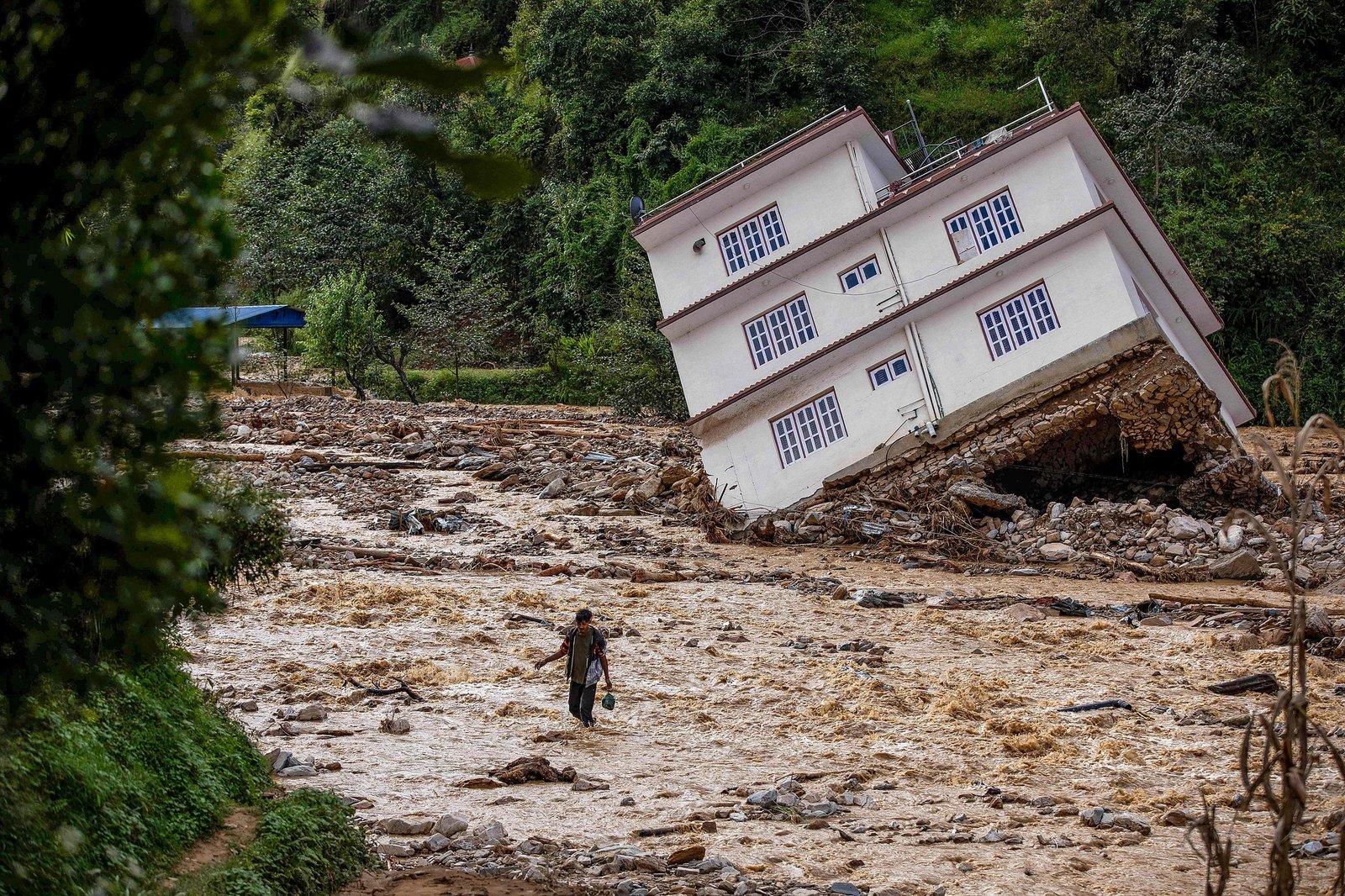
Climate change has widely been characterized as a vulnerability for Nepal. Tucked within the Hindu Kush Himalaya (HKH), the geographical conditions place Nepal in the path of retreating glaciers, altered precipitation, floods, landslides, glacial lake outburst floods, and myriad other climate-induced hazards. In fact, Nepal’s vulnerability creates its dilemma. Despite this unique physical proximity, what truly matters is how Nepal can leverage its climate vulnerabilities. How can Nepal turn climate vulnerability into diplomatic leverage? While Nepal plays a minor role in the global GHG emissions profile, it will play a disproportionate role in a climate-changed world. Several scientific reports document the significant accelerating retreat and melting of Himalayan glaciers. This melting contributes to growing concern, as thousands of HKH glaciers support almost two billion people across Asia. Reports have shown accelerated ice loss throughout the region resulting from a rise in both global and regional temperatures. For example, ICIMOD’s recent 2026 assessment stated that glacier ice loss in the HKH accelerated dramatically in the 21st century, with twice as much ice loss as occurred between 1970–1990 and 2000-2020. This has thus transcended from an environmental problem for Nepal to a question of foreign policy, security, and strategically significant influence.
Structural weaknesses usually constrain the actions of small states. Small states have relatively weak resources (economic, military, and political), and so often need to combine diplomacy, institutions, and coalition power to maximize their interests. Having two great powers on two borders, India and China, helps consolidate this approach to Nepali strategy, while climate change presents the small states with an opportunity for building new kinds of strategic power. Nepal has standing and legitimacy, a “natural” authority, to use to argue for climate justice, funding for adaptation and loss and damage, and the preservation of the mountainous environment.
From Vulnerability to Agency
Nepal’s interests in the Himalayan region mean it has “natural” affinities with countries downstream. Alterations to snow and glaciers, driven by climate change, will impact water availability, agriculture, hydropower, and disaster risk throughout the region. The first ‘2025 HKH Snow Update,’ published in April 2025, notes “record lows of snow persistence recorded in the 2023 season”.
As a result, Nepal can move from defining itself as merely a victim to being a major player within the governance structure of the entire Himalayas. Small states face considerable structural constraints. Lacking capabilities- economically, militarily or politically to large states in terms of interaction, and instead must rely on the diplomacy of compromise to increase influence, engage with international institutions, and form alliances. While Nepal’s location between two great powers (India and China) has traditionally underscored the importance of strategic balancing, climate change creates a different kind of power balance. Nepal’s precarious situation gives it a unique right to champion climate justice, adaptation finance, loss and damage, and the conservation of the mountainous ecosystem. In addition to it, its location in the Himalayas also aligns its concerns with the countries located downstream. Himalayan snow and glaciers impact the water resources of almost all major South Asian countries, directly impact crop production, affect hydroelectric power, influences flood, landslides and erosion in various regions. The HKH Snow Update, 2025, for example, documented an unusually low seasonal snow persistence, warning of severe water shortage for river basins down south.
The Emergence of Himalayan Climate Diplomacy
Nepal is already in pursuit of the very end: Climate diplomacy increasingly puts a premium on the inherent vulnerability of the Himalayan region and the necessity of mainstreaming the mountain argument into a larger international climate negotiation framework. The recent submission of its NDC3.0, as released in May 2025, also constitutes added momentum and a useful framework to link its domestic climate actions to global challenges. Further highlighting the above attempt and ambition, Sagarmartha Sambad is being reanimated.
This places mountains, along with climate change and humanity’s future, within a diplomatic framework and not as the regional concern of only mountain ranges. These sorts of efforts also lend themselves to the much larger Himalayas diplomacy that could place Nepal as a mediator of dialogue between mountain people, vulnerable developing nations, and the international climate establishment regime. To transform this endeavor into a substantive strategic endeavor, Nepal must graduate from advocacy to institution building.
Water Diplomacy and Regional Influence
Nepal is linked to both India and to Bangladesh through common river systems (the Himalayan rivers linking the nations together and the larger Ganga-Brahmaputra basin). Increased water security risks will arise as changes to the climate cause fluctuations in timing and magnitude of snowmelt, rainfall, and river flows. These risks offer the opportunity for transboundary cooperation.
This allows Nepal to move beyond a water diplomacy focused on resource distribution and hydropower and to make climate resilience central to its water negotiations with India and Bangladesh. A climate-resilient framework of river-basin governance, early warning systems, sharing of scientific data, and disaster-related mitigation becomes more prominent than one based on purely political considerations of water resource management.
Climate-related natural disasters don’t recognize sovereignty and can cause destruction in downstream countries even when stemming from upstream nations. A 2025 flood on Nepal’s Bhote Koshi River was related to the drainage of a supraglacial lake in Tibet by ICIMOD, clearly indicating transboundary consequences of environmental risks derived from a changing climate. Therefore, the changing climate argument forces Nepal to solidify its transboundary environmental efforts instead of remaining locked in water considerations shaped by traditional geopolitical perspectives.
From Hydropower to Green Diplomacy
For a long time, Nepal has seen hydropower as the bedrock on which it is building its economy. Diplomacy can expand that agenda, however, by introducing Nepal to others not merely as a disaster-prone Himalayan nation, but as one of a region’s alternative renewable power suppliers. Cooperation on electricity among Nepal, India and Bangladesh can lead to positive-sum outcomes for each while furthering energy diversification within South Asia and merging energy policy and climate policy in the process. However, only the hydropower sector itself must be climate-resilient. Floods, landslides and hazards to infrastructure caused by glacial lake outburst floods or altered hydrological patterns increasingly pose a threat and diplomacy toward cleaner futures can be dismissed as weak unless the planning for infrastructure construction is climatically responsible.
Climate Justice as a Foreign Policy Strategy
Kathmandu's fundamental asymmetry – the imbalance between its minuscule role in climate change and its extreme vulnerability to climate change effects – provides it ample legitimacy to demand increased international aid in terms of adaptation, resilience to natural disaster and in, loss and damage, and protecting the mountain environment. But there is very little that is permanent with appeals based purely on morality. Nepal needs to consolidate alliances with other climate-fragile developing countries, especially small states, LDCs, and mountainous states, so that collective diplomacy of such countries gives Nepal more negotiation power than an individually approached international community. Rather, Nepal’s diplomatic pursuit to obtain money for climate adaptation cannot be perceived only as a country begging for money; Nepal needs to make arguments on why Himalayan climate action as a public good is important to everybody even beyond the borders, as the resilience of mountain ecosystems and of inhabitants of the mountains has broader implications for food security, water and energy security and ecological security on a wider scale.
From Symbolism to Strategy
Nepal’s ultimate test lies in translating its enhanced climatic identity into sustained strategic leverage. Three steps stand crucial here. Second, it should bolster its regional Himalayan cooperative action through scientific data sharing, early warning systems, disaster response preparedness, and climate-resilient infrastructure. The end state desired here should not make the Himalayas just an icon of climate vulnerability, but establish mountains not just as symbols of vulnerability to the changing climate, but make them a primary focal point of global climate governance.
Conclusion
Nepal does not aspire to compete with larger powers in traditional terms of economy or military. Global clout is not only dependent on hard power. Geography, diplomacy, moral authority, scientific know-how, and coalition-building may not be enough to make it a global leader, but they can provide significant strategic leverage. Nepal’s location in the Himalayas provides just that capacity. The glaciers, rivers, and mountains of the region are not only an important source of resources in Nepal itself but part of the broader Asian ecological landscape, a reality which will become increasingly pressing in the face of mounting pressure on water resources, food, energy, and human security throughout the continent as the impacts of climate change accelerate. The key strategic task for Kathmandu will thus not be a struggle for sympathy but a demonstration of why it is imperative for all of South Asia-and the rest of the world-to preserve the Himalayas. Should Nepal be able to marry climate justice, Himalayan diplomacy, water cooperation, and the diplomacy of renewable energy, vulnerability could transform into diplomatic leverage. In a globally, institutionally, and diplomatically climate-aware world order, Nepal’s most significant asset is likely not its size or economic might but simply its position at the apex of Asia.
Iffat Jahan Sharmin is currently pursuing a Master of Arts in International Relations and Peace Studies at Nalanda University, India.
