
28 July 2026, NIICE Commentary 12653
Chaudhary Aditya Ashok
On June 16, 2026, the Pentagon dropped "Indo" from INDOPACOM, reverting to the pre-2018 name Pacific Command. The next day, at the G7 summit in Evian, France, Modi met Trump for the first time in sixteen months. The meeting produced no trade deal, no Quad mention, no defence breakthrough. Trump's most notable regional remark concerned his next summit, which he described in his opening remarks as a "G-2" engagement with China. Two events, a day apart, same direction.
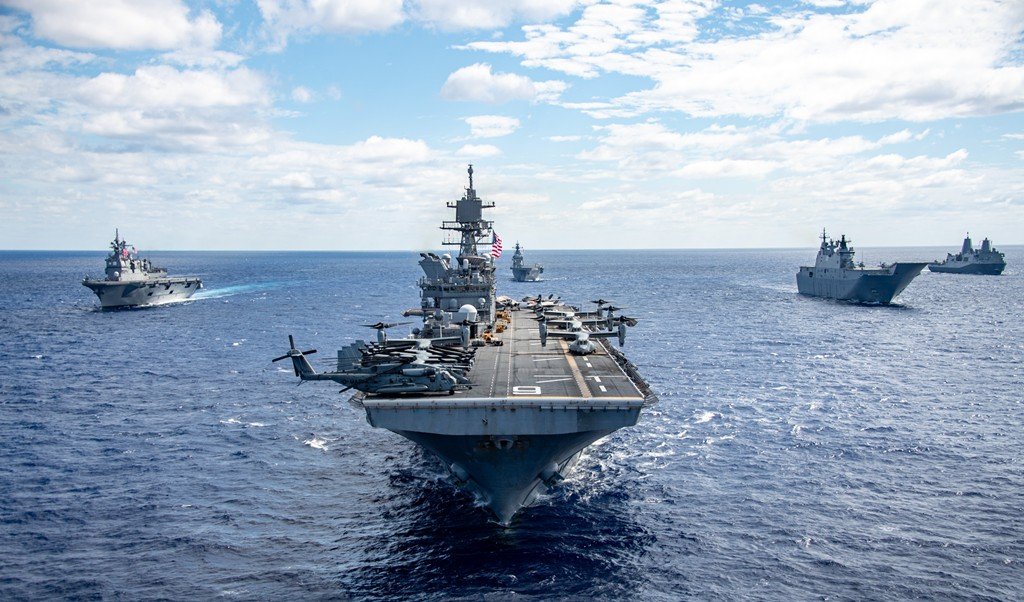
The 2018 rename was deliberate. Defense Secretary James Mattis tied it to the growing connectivity between the Indian and Pacific Oceans. The 2026 reversal points the other way. The Pentagon says mission and geography are unchanged, still spanning the US West Coast to India's western maritime boundary, and that is technically true: statutory references to INDOPACOM remain in effect unless Congress acts, the same legal workaround used for the Department of War rebrand. Names in geopolitics carry intent anyway. Dropping "Indo" pulls India out of the primary rhetorical frame of America's largest military command. Cheap administrative move, expensive symbolic cost.
The Evian meeting followed sixteen turbulent months of tariffs on Indian exports, stalled defence purchases, and, days before the summit, US strikes enforcing the Hormuz blockade that killed three Indian sailors aboard the tanker Settebello, which led New Delhi to summon Washington's chargé d'affaires. Expectations were high. Little was delivered. There was no timeline on trade, no defence discussion, no mention of the Quad. Trump instead flagged his coming meeting with Xi as the one that mattered.
Trump had used the "G-2" line before, describing his October 2025 meeting with Xi in Busan the same way. His May 2026 Beijing summit with Xi produced real, if modest, stabilization: purchase agreements, two new bilateral coordination boards, and a shared pledge to "constructive strategic stability," with Taiwan and technology controls still unresolved. Even a partial US-China accommodation complicates India's position. New Delhi's standing in Washington's calculus has rested on treating China's rise as a problem requiring a counterweight. Soften that logic and the Quad loses urgency for its American anchor.
India has not waited on Washington. From July 1 to 3, Japanese Prime Minister Sanae Takaichi visited for the 16th India-Japan Annual Summit, her first trip to India since taking office. The two sides signed sixteen agreements, including their first joint defence technology co-development project and a joint declaration on economic security, with more than 150 Japanese firms committing fresh investment. Modi then went to Indonesia, where 14 agreements covered critical minerals and maritime security, then on to Australia, where the two countries advanced the Comprehensive Strategic Partnership and signed a rare-earths supply agreement tied to India's magnet manufacturing plans. Taken together, the visits look like a deliberate strengthening of the spokes while the Quad's hub in Washington stays quiet.
This shifts the Quad's centre of gravity downward, toward the working level. A grouping anchored by strong India-Japan and India-Australia partnerships can keep functioning without a leaders' summit or a firm American commitment. The agreements signed in July are built to outlast Trump's calendar, not depend on it. For smaller Indo-Pacific states watching Washington step back, India's diplomacy offers partial reassurance that the region's security architecture rests on more than one pillar.
A renamed command, a hollow bilateral, a recurring "G-2" framing, and a Quad summit now well over a year overdue describe a United States stepping back from the strategic architecture it built after 2017. India's response, three weeks of intensive bilateral diplomacy with Japan, Indonesia, and Australia, suggests New Delhi has read the situation clearly. If Washington is distracted, others will have to hold the Indo-Pacific together, and India appears to have decided that means doing it itself.
Chaudhary Aditya Ashok is a Research Intern at NIICE.
